
Safety GearArticle
Waterproof Motorcycle Gear for Delivery Riders 2026: The Full Setup Guide
Rain suit, gloves, shoe covers, and base layer. The full waterproof setup for delivery riders who work through wet shifts without losing income. Here is what to buy and in what order.
Most wet-weather gear advice covers one product at a time. Buy a rain suit. Buy waterproof gloves. Buy shoe covers. What those articles do not tell you is that one missing piece in the system breaks the whole setup.
I learned this the hard way. I had a rain suit and waterproof gloves before I had shoe covers. The top half of me was dry. My feet were soaked by the second stop. Cold feet end shifts early. I went home two hours into a block that I should have worked through.
The other lesson I learned: the right order to build the system matters if budget is a constraint. Not everything needs to be bought at once. Some pieces matter more than others in specific conditions. This article tells you which piece does what, which to buy first, and how they work together as a system rather than as four separate products.
The Complete Wet-Weather Delivery Rider Stack
Four layers. Each does a specific job. None of them fully substitutes for another.
Layer 1: Rain Suit: keeps your upper body and legs dry while riding between stops
Layer 2: Waterproof Gloves: keeps hands dry and maintains brake lever grip in wet conditions
Layer 3: Waterproof Shoe Covers: keeps feet dry at every restaurant stop in standing water
Layer 4: Base Layer: manages body temperature inside the rain suit across a full shift
I will cover each one with enough detail to make the right purchase decision, then tell you what order to buy them if you are building the system on a budget.
Layer 1: The Rain Suit
The rain suit is the foundation of the system. Without it, the other pieces do not matter because your core is wet and your temperature is dropping regardless of what your hands and feet are doing.
What it does: The rain suit goes on over your existing jacket and pants. It creates a waterproof shell that keeps rain off your clothing while you are riding between pickups and standing outside restaurant doors. A good rain suit also provides wind protection that matters at delivery speeds in cold rain.
What to look for:
Two-piece suits are better than one-piece for delivery riding. You can put on just the jacket in light conditions and add the pants when rain gets heavier. You do not have to make an all-or-nothing deployment decision every time the weather changes.
Reflective strips are not optional for night delivery shifts. Visibility drops in rain regardless of how early it is in the evening. Front, back, and sleeve reflectivity is the standard to look for.
Sealed seams are the specification that separates suits that hold up in sustained heavy rain from suits that eventually let moisture through at the stitch holes. Partially sealed or unsealed seams will fail in a long block.
The picks:
The Tourmaster Defender 2.0 is the best overall pick for full-time rain shift riders. Fully sealed seams, aqua-barrier collar, underarm vents, motorcycle-specific construction. Around $90 to $110.
The KEMIMOTO Waterproof Rain Gear at $45 to $65 is the best value option at a lower price. 15,000mm waterproof rating, 360-degree reflective strips, adequate for most delivery rain conditions.
The HWK Motorcycle Rain Suit at $40 to $60 is the best packable option that lives in your delivery bag as a permanent backup for unexpected rain.
Full breakdown of all three with honest limitations on each: Best Motorcycle Rain Suit for Delivery Riders 2026
For budget-constrained riders building the system on less than $80 total for the suit: Best Motorcycle Rain Suit Under $80
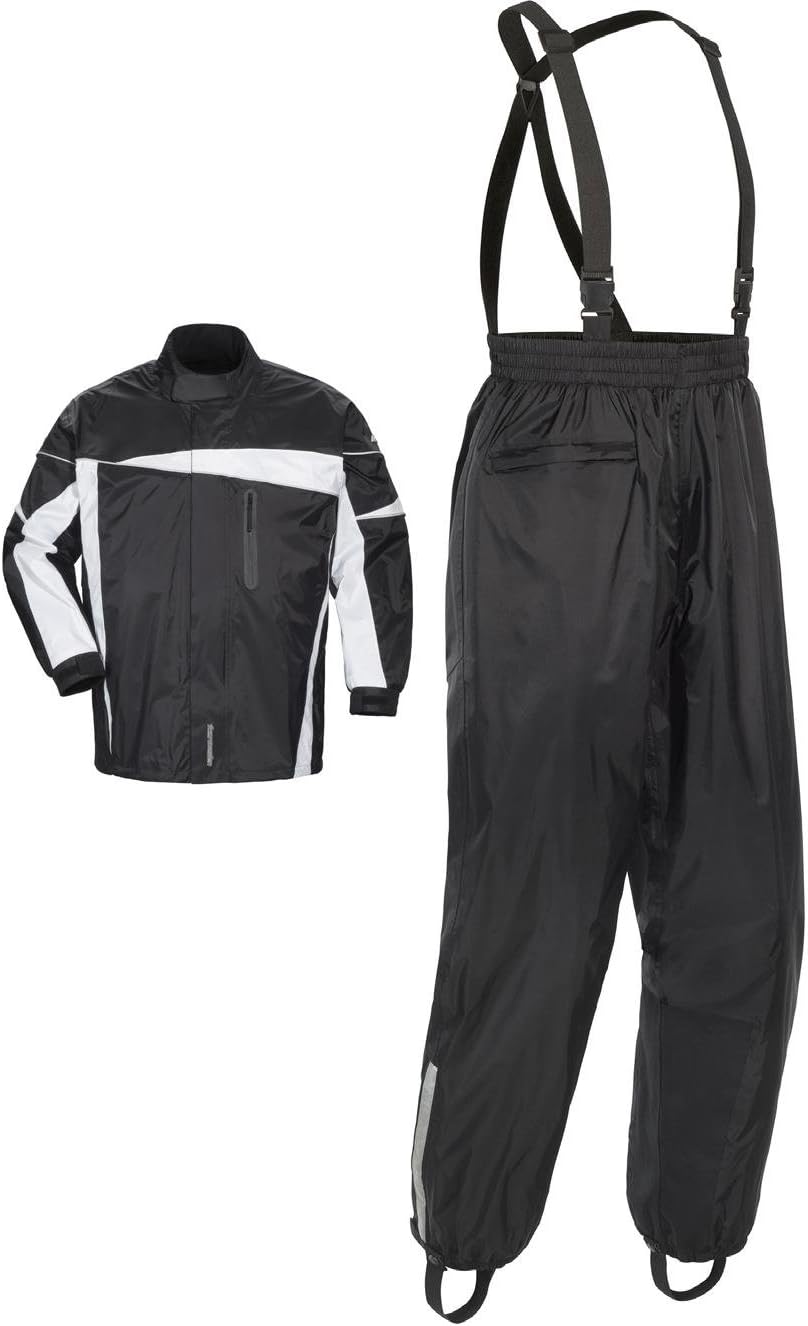
- Fully sealed seams, the spec budget suits always compromise on first
- Aqua-barrier collar blocks vertical rain at restaurant stops
- Suspender pants keep waist seal intact across 25+ stops per shift
- Underarm vents manage heat between pickups in warm-weather rain
- Motorcycle-specific design, not an adapted outdoor jacket
- Snug ankle fit, may require removing boots to get pants on
- Higher price point (~$90–$110) versus the other two options
- First deployment takes ~5 minutes until you build the routine
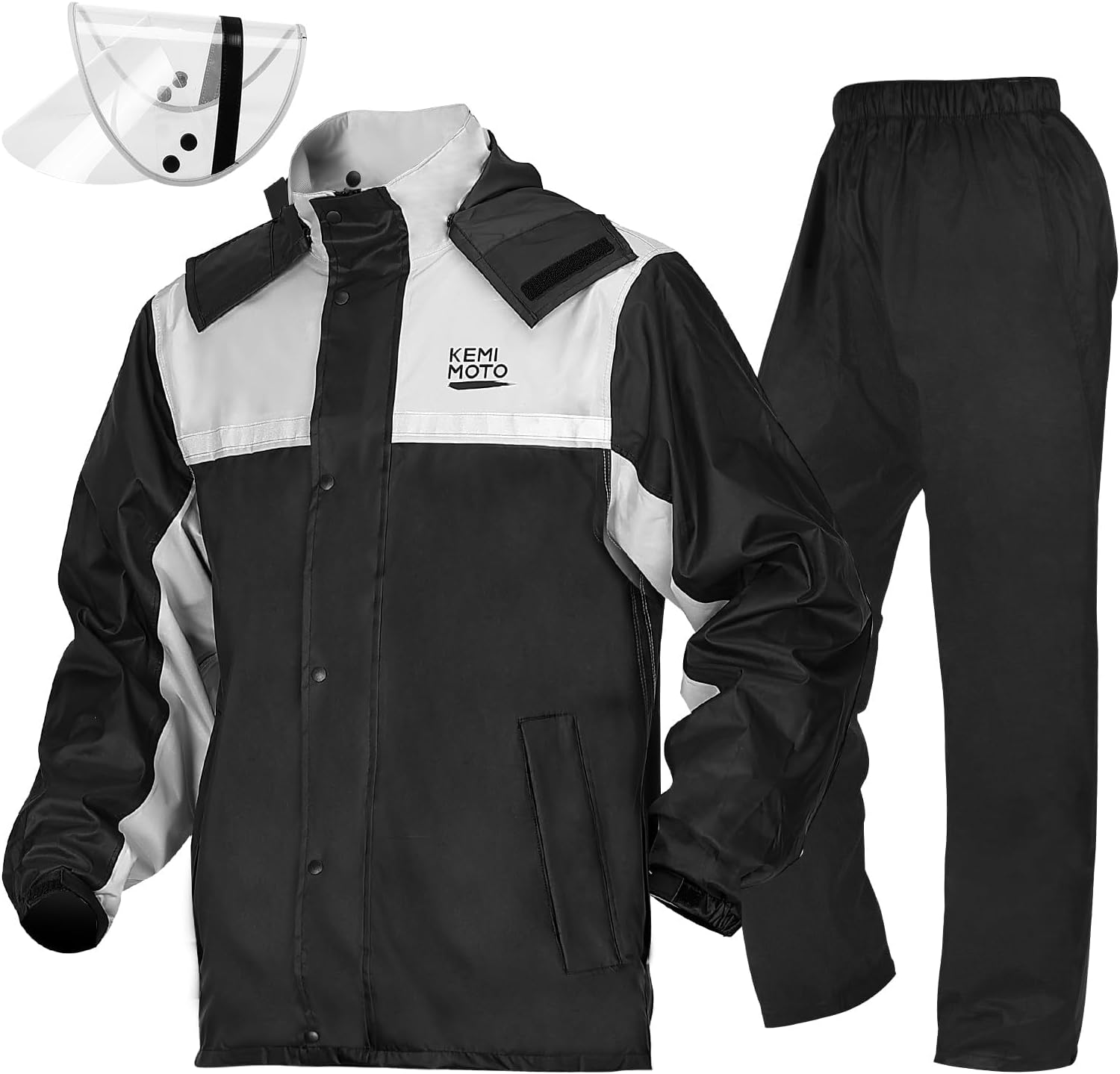
- 15,000mm waterproof rating at $45–$65 is genuine value
- 360-degree reflective strips well-placed for night work
- Mesh inner lining reduces clamminess without adding cost
- Solid choice for riders doing rain shifts a few times a week
- Noticeable breathability gap versus the Tourmaster on long shifts
- Heat buildup becomes uncomfortable in warm-weather rain after ~2 hours
- Slightly restrictive in the shoulder area for high-frequency dismounts
Layer 2: Waterproof Gloves
This is where most riders underinvest relative to how much it matters. Standard gloves in rain have two problems: your hands get wet and cold, reducing dexterity and grip, and your brake lever grip is compromised by wet glove material on a wet metal surface.
What it does: Waterproof gloves keep hands dry through a rain shift so your fingers maintain function across the full block and your contact with the brake lever stays reliable regardless of how hard it is raining.
The critical distinction: Water-resistant is not the same as waterproof. A water-resistant glove handles drizzle and light rain for the first 30 to 45 minutes of a shift. In sustained heavy rain, water eventually penetrates through the palm material and the seams. A glove with a genuine waterproof membrane holds through a full shift regardless of rain intensity.
What to look for:
A waterproof membrane such as Hydratex rather than a water-resistant coating. A wrist closure system that seals against rain running in from above when your rain suit sleeve is over the cuff. Touchscreen material that maintains conductivity in wet conditions so you can use the delivery app reliably throughout the shift.
The picks:
The REV'IT! Convergent H2O has a full Hydratex waterproof membrane, a reliable wrist seal, and touchscreen capability that works in wet conditions. Around $75 to $95. The right pick for riders who regularly work rain shifts and need full-shift hand protection.
For men's sizing specifically, the Milwaukee Leather Men's Waterproof Gloves provide a men's-cut waterproof option at $40 to $60.
Full gloves breakdown across all seasons: Best Motorcycle Gloves for Delivery Riders 2026
Men's specific picks and sizing guide: Best Men's Motorcycle Gloves for Uber Eats & DoorDash Riders
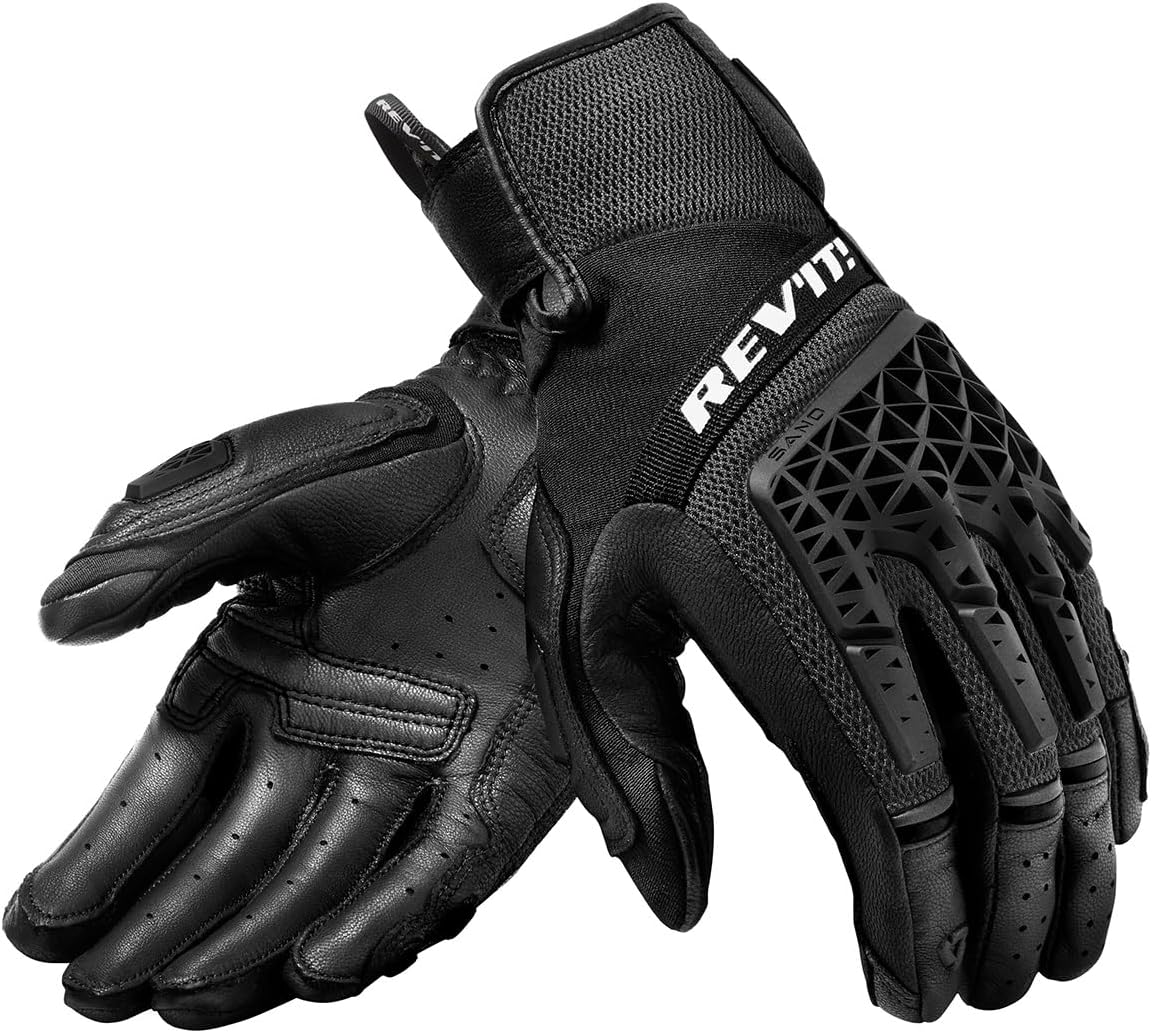
- Premium goatskin
- Full TPR protection package
- Damp-condition touchscreen
- Fast on/off
- Lowest cost-per-shift over two years
- Covering the price
- Partial mesh construction
- Sizing
- Upfront spend barrier for new riders
Layer 3: Waterproof Shoe Covers
This is the piece of the system that most delivery riders are missing. It is also the piece that most directly ends shifts early when absent.
What it does: At every restaurant stop, you step off the bike and walk to the door. If there is standing water at the curb, a wet sidewalk, or rain falling while you wait, your shoes are in contact with moisture multiple times per hour. Over a four-hour block that can be 20 to 30 individual exposures. Standard shoes saturate. Cold wet feet lose temperature and make the back half of any shift uncomfortable enough to end early.
Waterproof shoe covers slip over your existing shoes before a shift and eliminate that exposure entirely. You step through the puddle. You pull your foot out dry.
The critical distinction for delivery riders: There are two types of waterproof shoe covers and buying the wrong one for your shoe type is the most common mistake in this category.
Cycling overshoes with a cleat cutout at the sole are designed for clipless cycling shoes. If you are on flat pedals in regular sneakers or work shoes, you need silicone rubber rain covers that encase the full shoe with no cutout. The silicone type works over any shoe. The cycling overshoe type does not.
The picks:
ROCKBROS Thermal Cycling Shoe Covers for clipless pedal riders: water-resistant, fleece-lined, Kevlar sole, good for light to moderate rain. Around $20 to $30.
Silicone rubber rain covers for flat-pedal sneaker riders: fully waterproof, fits any shoe, completely seals the sole. Around $10 to $20.
GIYO Neoprene Cycling Overshoes for riders who work through sustained heavy rain: neoprene is fully waterproof in all conditions, available in larger sizes through XXXL. Around $25 to $40.
Full breakdown including the silicone vs cycling overshoe decision and how to size both correctly: Best Waterproof Shoe Covers for Bike Delivery Riders
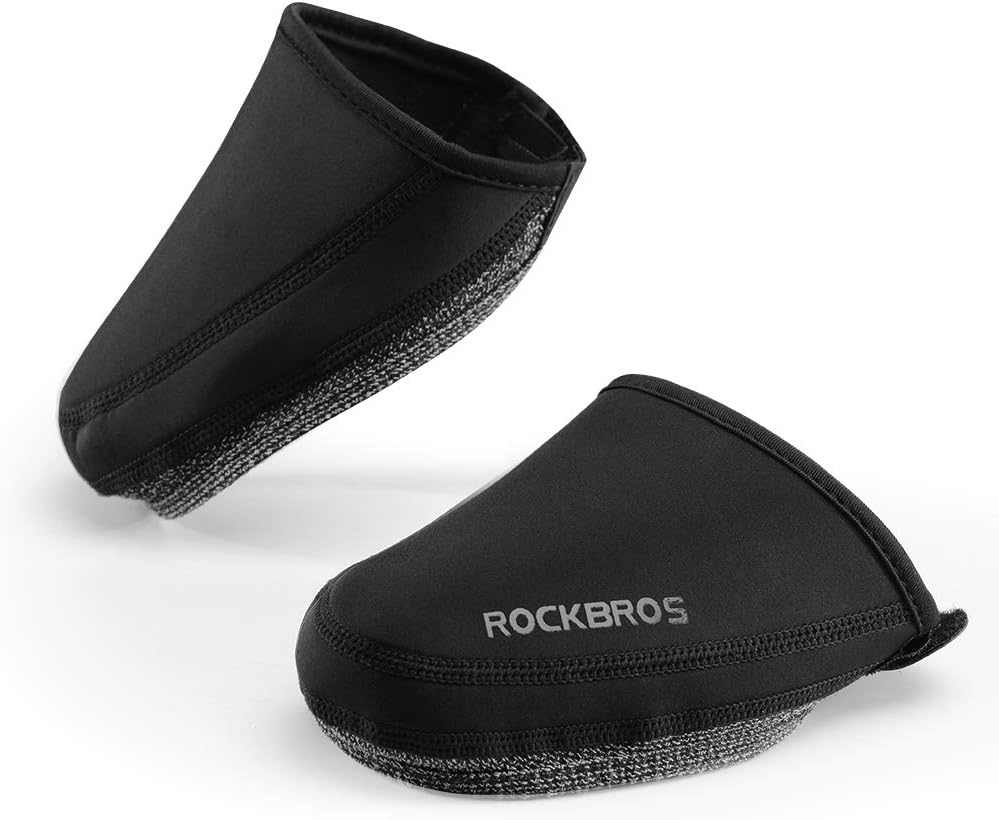
- Water-resistant composite Lycra sheds light to moderate rain well
- Fleece inner stays insulating even when damp
- Kevlar-reinforced sole handles repeated clip-in/out without wearing through
- Reflective rear logo adds night visibility
- Easier to put on than neoprene
- Water-resistant only, not fully waterproof
- Seams and zipper let moisture through in sustained heavy rain after ~45 minutes
- Sizing runs small, requiring a size up
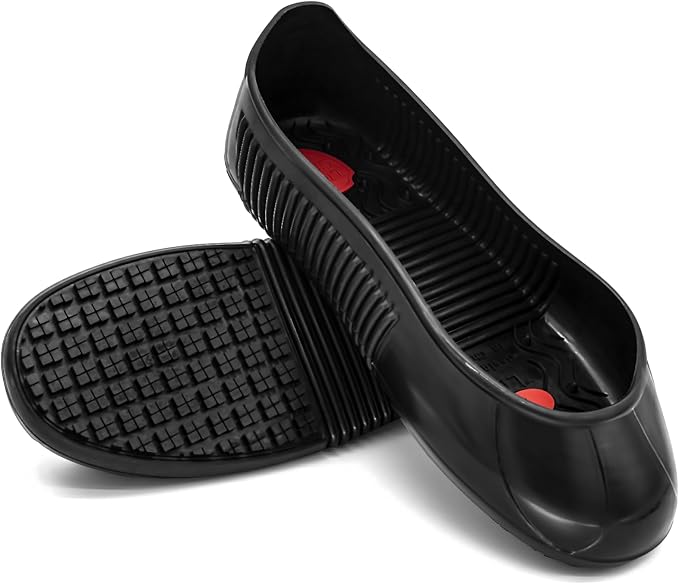
- Fully waterproof with no cleat cutout
- Fits over any shoe; completely seals the sole
- lets riders step directly into standing water without wet feet
- Anti-slip sole texture wears down quickly under daily use (3–4 months); noticeably bulky, which can be awkward in tight restaurant spaces; requires replacement 1–2 times per season for full-time riders
Layer 4: The Base Layer
The base layer is the piece of the system that determines your comfort inside the rain suit across a full shift. The rain suit keeps water out. The base layer manages what happens on the inside.
What it does: In cold rain, a thermal base layer keeps your core temperature up inside the suit. In warm rain, a moisture-wicking base layer prevents the sweat-soaked feeling that makes a long summer rain block miserable.
Cold rain (below 50 degrees):
A thermal base layer under your existing jacket, then the rain suit over everything. The base layer traps warmth. The rain suit prevents the cold rain from stripping that warmth away. Without a thermal base layer in a January rain shift, the rain suit is a windbreak but your core temperature still drops over a long block.
A midweight merino wool or synthetic thermal base layer works best. Merino wool manages moisture while insulating, which matters when you are generating heat from pedaling and sweating inside the suit. Cotton does not work as a base layer under a rain suit in cold conditions. It absorbs moisture and holds it against your skin, accelerating heat loss.
Warm rain (above 65 degrees):
A moisture-wicking synthetic layer rather than an insulating one. The goal is managing the sweat that builds up inside the suit rather than trapping warmth. A light polyester or nylon wicking base moves moisture away from your skin and toward the outer layers where it can dissipate.
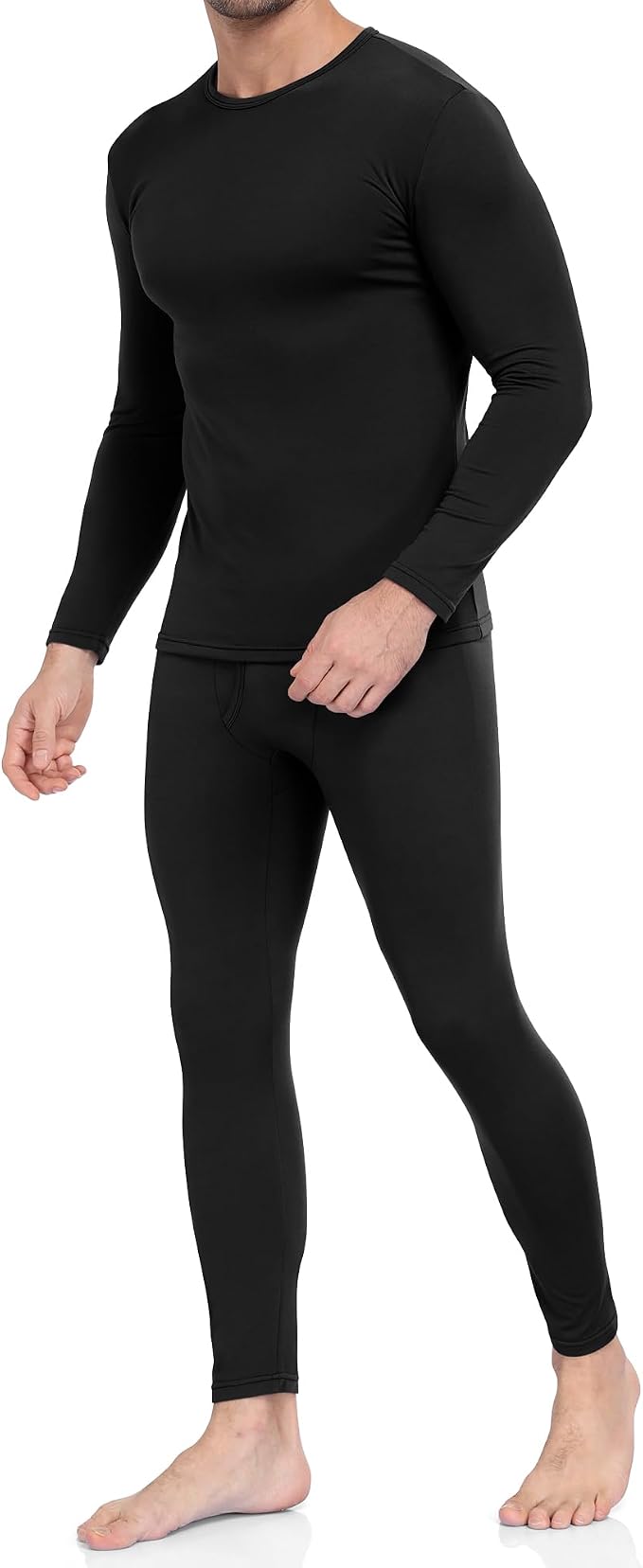
- Manages comfort inside the suit, not just outside it
- Prevents heat loss in cold rain specifically
- Merino wool option manages moisture while insulating
- Adaptable to conditions
- Doesn't change whether you stay dry
- Requires frequent washing
What Order to Buy If You Are Starting From Zero
If budget means you are building this system over several pay periods rather than all at once, here is the sequence that makes sense.
Buy first: Rain suit. It is the piece with the most surface area coverage and the most significant impact on whether you can stay on the road through a block. A rider with a rain suit but no shoe covers can still work through rain. A rider with shoe covers but no rain suit cannot.
Buy second: Shoe covers. This is the piece most riders skip first and regret most specifically during city delivery. Standing water at restaurant stops is unavoidable in New York rain. Shoe covers cost $10 to $30. The shift-length extension they provide is immediate.
Buy third: Waterproof gloves. Standard gloves with water-resistant palms handle most delivery rain conditions adequately for the first 45 minutes. If your shifts are under two hours or if your rain conditions are typically light, standard gloves are a reasonable short-term compromise while you budget for the waterproof option. Beyond two hours in heavy rain, the limitation becomes real.
Buy when comfortable: Base layer. A base layer improves comfort inside the system but does not change whether you stay dry. For new riders building the system on a tight budget, it is the piece to add last.
Storing and Drying Wet Gear After a Shift
How you treat the gear after a wet shift matters as much as what you buy.
Rain suit: Hang to air dry at room temperature. Do not fold and store wet. Wet material stored folded creates mildew and weakens the waterproof coating at the crease points. Dry it completely before the next shift, ideally overnight.
Waterproof gloves: Air dry at room temperature, not near a heat source. Rapid heat drying stiffens leather gloves and degrades the waterproof membrane in textile gloves faster than normal wear does. Stuff the fingers loosely to maintain their shape while drying.
Shoe covers: Rinse in clean water if they have picked up road grime and hang to dry. For silicone covers, check the sole grip surface after drying. When the grip texture has smoothed out, replace them.
Base layer: Wash after every shift if it has been a long wet block. Sweat-saturated base layers that are not washed begin to hold odor quickly. Wash in cold water, air dry.
The Long Delivery Shift: What Changes After Hour Three
There is a specific wet-weather challenge that appears after the three-hour mark of a sustained rain shift that does not show up in short-shift testing.
The suit seams experience more cumulative pressure the longer you ride. Suits with partially sealed seams that handled the first two hours without incident can begin to show seepage through the stitch holes in hours three and four. This is why fully sealed seams are the specification that separates suits worth buying for serious rain shift riders from suits that are adequate for occasional use.
Your gloves will have been gripping the handlebar and the brake lever continuously for three-plus hours. At this point, the difference between a waterproof membrane and a water-resistant coating is fully apparent. Water-resistant gloves that started the shift dry are allowing moisture through by hour three. Waterproof membrane gloves are not.
Your shoe covers have been through 30 or more on-and-off dismount cycles. The ankle seal on lower-quality silicone covers begins to relax after extensive flexing. The GIYO neoprene overshoes, which do not rely on a perimeter seal the same way silicone covers do, maintain their performance longer through extended shift conditions.
For riders who regularly work long rain shifts of four hours or more, this information should move you toward the higher-quality option in each category rather than the budget entry point.
Full guide specifically for long-shift rain riding: Best Motorcycle Rain Gear for Long Delivery Shifts: Full Kit Breakdown
The Bottom Line
One missing piece in this system ends shifts early. The rain suit keeps you dry from the shoulder to the knee. The shoe covers handle what happens at every stop. The gloves handle what happens at the handlebar. The base layer handles what happens inside all of it.
Build the system in the order that makes financial sense for where you are. Start with the rain suit. Add shoe covers next. Add waterproof gloves when the rain shifts are happening regularly enough to justify the investment. Add a base layer when you want to optimize comfort inside an otherwise complete system.
The riders who work through rain in New York on a Tuesday night in November are earning more per hour than the riders who stayed home. This is the gear that makes that possible.