
Safety GearArticle
Best Leather Motorcycle Gloves for Delivery Riders 2026: All-Weather Picks That Last a Shift
Leather motorcycle gloves outlast synthetic on daily delivery use. Here are the best leather picks for delivery riders by season and condition, with honest limitations on each.
Leather outlasts synthetic under daily delivery conditions. That is the practical reason most experienced delivery riders end up in leather gloves, not the aesthetic one.
A synthetic glove at $25 that sees four-hour delivery shifts six days a week will have degraded palm material, a loosening wrist closure, and reduced touchscreen response within three to four months. A leather glove maintained properly handles the same schedule for eight to twelve months before showing equivalent wear. Over a year of riding, the leather glove costs less and performs better for longer.
The reason is material. Leather, specifically goatskin and full-grain cowhide, is naturally tear-resistant, molds to your hand with use, and maintains its grip and structural integrity under the repeated stress of handlebar contact, brake lever cycling, and daily weather exposure. Goatskin in particular is lighter and more supple than cowhide, which matters for the dexterity needed to operate a phone touchscreen and release the brake lever precisely in city traffic.
This article covers the best leather motorcycle gloves for delivery riders across all seasons and conditions.
Quick Comparison: Best Leather Motorcycle Gloves for Delivery Riders 2026
| Glove | Best For | Leather Type | Touchscreen | Buy Now |
| ILM DN01 Goatskin Perforated | Best overall, daily spring-fall use | Goatskin, perforated | Yes, thumb + forefinger | CHECK AMAZON PRICE |
| ILM GRC01L Long-Cuff Leather | Best for wrist protection and longer shifts | Goatskin, long-cuff gauntlet | Yes | CHECK AMAZON PRICE |
| REV'IT! Sand 4 | Best premium leather, long-term daily use | Goatskin palm + mesh back | Yes, Connect Finger Tip | CHECK AMAZON PRICE |
| Hand Fellow Premium Leather Gloves | Best budget cowhide, multi-season value | Full-grain cowhide, perforated | Yes, thumb + 2 fingers | CHECK AMAZON PRICE |
Why Goatskin vs Cowhide Matters for Delivery Riding
Most leather gloves use cowhide or goatskin. For delivery riding, the distinction has a direct effect on daily performance.
Goatskin is lighter, thinner, and more supple than cowhide without sacrificing durability under the impact and abrasion scenarios delivery riders actually face. It breaks in faster, conforming to your hand within the first 50 miles, and because it sits closer to the fingertip, touchscreen material maintains better contact with your phone screen. For spring through fall daily delivery work, goatskin is the correct leather.
Cowhide is thicker and more abrasion-resistant. It handles cold weather better because of its density and is an excellent all-round leather for riders who want maximum toughness at an accessible price. The trade-off is a slightly longer break-in period and marginally less dexterity compared to goatskin. The Hand Fellow gloves in this guide use full-grain cowhide and deliver outstanding durability for the price.
Best Overall: ILM DN01 Goatskin Perforated Motorcycle Gloves
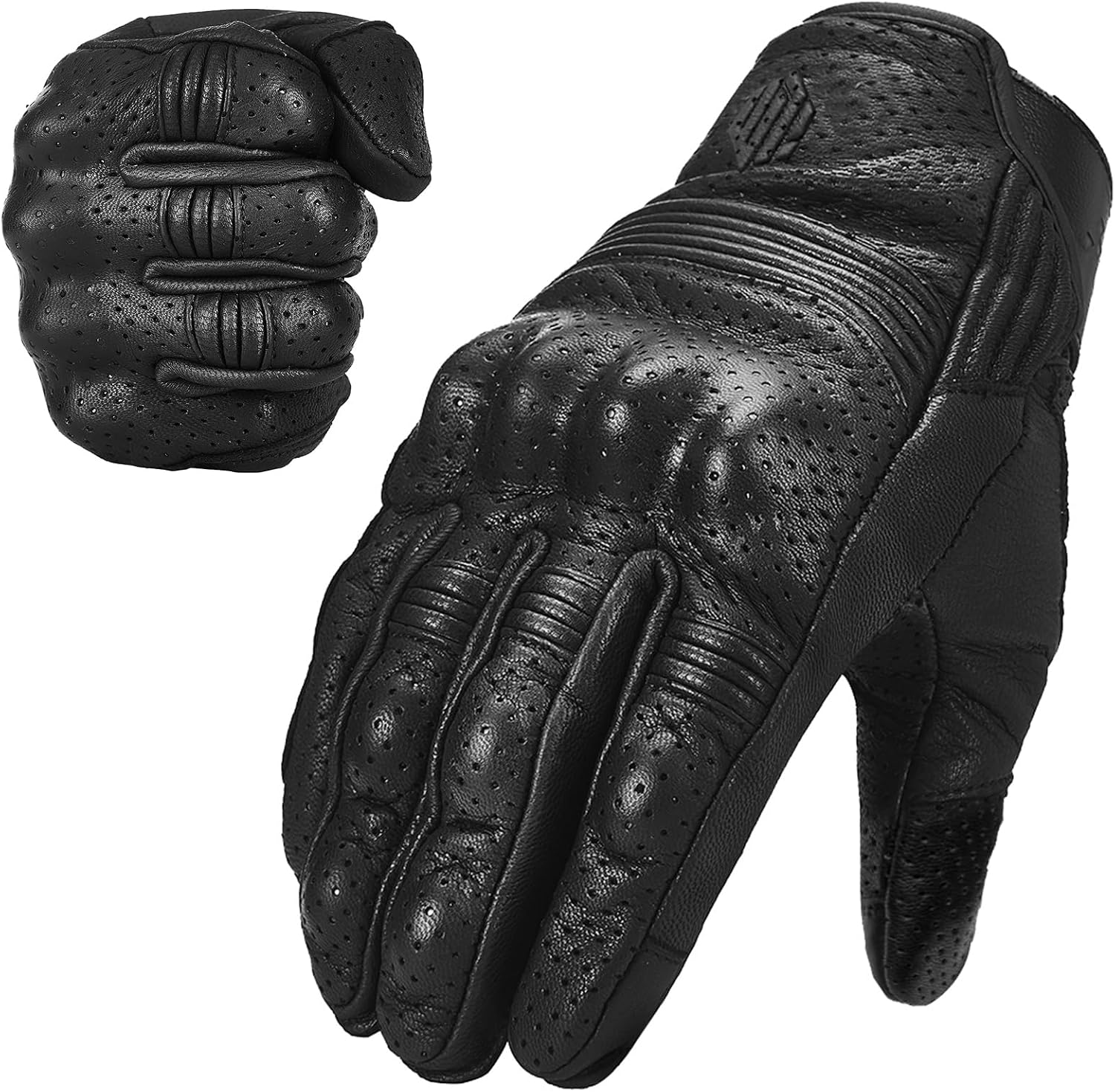
The ILM DN01 is the workhorse leather glove for delivery riders from spring through fall. Goatskin construction throughout, hard-shell PVC knuckle protection covered in matching goatskin leather, touchscreen capability on the thumb and forefinger, and perforated panels across the palm and back of the hand for airflow during warm-weather shifts.
The perforations are the defining feature here. At delivery speeds of 12 to 20 mph through city streets, the airflow through those holes is real and noticeable. Hands stay dry and functional through a four-hour dinner block even when temperatures push above 75°F. Without the perforations, a solid leather glove in summer becomes a sweat trap within 90 minutes.
The stretch panels at the finger openings and wrist are a practical detail that doesn't get enough attention. They allow the glove to flex with your hand as grip pressure changes across a long shift. Brake lever, throttle, phone without bunching or restricting movement. The elastic and Velcro wrist closure system works in tandem to dial in fit and holds through repeated mount-and-dismount cycles without loosening.
The goatskin-covered hard knuckles give the glove a clean look while keeping the protection integrated rather than bolted on. Palm padding provides additional safety at the heel of the palm where contact in a fall is most likely.
One thing to know going in:
The DN01, like most ILM leather gloves, runs small. Their own listing confirms this. Size up one full size from your palm measurement. If you measure a medium, order a large. New leather will feel snug for the first 20 to 30 miles; this is break-in, not a fit problem. By mile 50 it conforms. By mile 100 it feels like it was made for your hand.
The perforations that make this glove excellent in dry heat also allow water through in sustained rain. On a summer shift where rain rolls in unexpectedly, the DN01 will wet through at the perforations. For heavy rain days, have a waterproof overmitt or swap to a solid leather glove. For the eight to nine months of the year where this is not an issue, the DN01 is the right daily glove.
- Covering the goatskin quality
- Airflow
- Touchscreen
- Wrist closure
- Wet-grip performance
- Covering rain vulnerability
- Sizing quirks
- Areak-in stiffness
- Absent wrist coverage
Best for Wrist Coverage: ILM GRC01L Long-Cuff Goatskin Gloves
The ILM GRC01L is the extended-cuff version in ILM's goatskin lineup, designed for riders who want the wrist and lower forearm covered. It is a meaningful upgrade on shifts where jacket-sleeve gaps let cold air in, or where full coverage at the wrist matters in a fall.
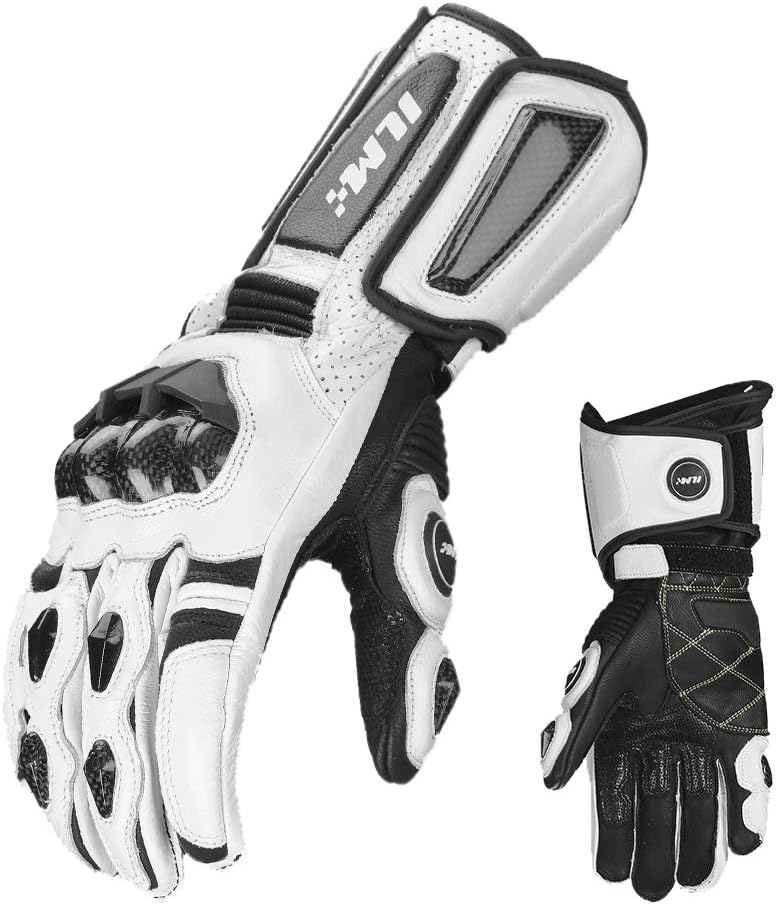
The GRC01L is inspired by professional racing glove construction and retains most of those functional features scaled to daily street use. It provides 360° external protection across the knuckles, palm, fingers, back of the hand, and side of the hand. That coverage profile goes beyond most delivery-priced gloves. The hard shells are carbon fiber, not plastic PVC. That means lighter weight and equivalent impact resistance.
The double leather layer and additional foam on the palm, cuff, and fingers are what separates this glove's protection from the standard DN01. In a slide scenario, the reinforced areas extend abrasion resistance significantly beyond single-layer construction. For a delivery rider logging 200+ miles per week across wet pavement and road debris, that redundancy matters.
The goatskin pre-shaping is a comfort detail worth noting. The glove arrives with a slight pre-curve at the fingers that matches natural hand position on a handlebar. Combined with finger seams stitched on the outside rather than inside, there's no seam pressure on the fingertip across a long shift. That makes a real difference on 30-stop delivery blocks.
The long cuff integrates cleanly over a jacket sleeve, eliminating the gap that lets wind in at the wrist during cold morning shifts. The air channel system on the back of the hand maintains breathability without compromising the coverage.
One thing to know going in:
The GRC01L runs on the snugger side due to the pre-shaped construction. Size up one size as with all ILM leather. The long cuff can feel slightly stiff initially but softens quickly with the same break-in timeline as the DN01. This is not the lightest glove in this guide. It is the most protective one, and the weight reflects that.
- Highlighting the 360° protection
- Carbon fiber shells
- Double-layer reinforcement
- Pre-curved fit
- Long cuff cold-weather sealing
- Noting the heavier build
- Sizing
- Reduced dexterity
- Break-in
Best Premium Leather: REV'IT! Sand 4 Adventure Motorcycle Gloves
The REV'IT! Sand 4 is the step up for delivery riders who have been doing this long enough to know they are staying and want a glove engineered for two or more years of sustained daily use rather than annual replacement.
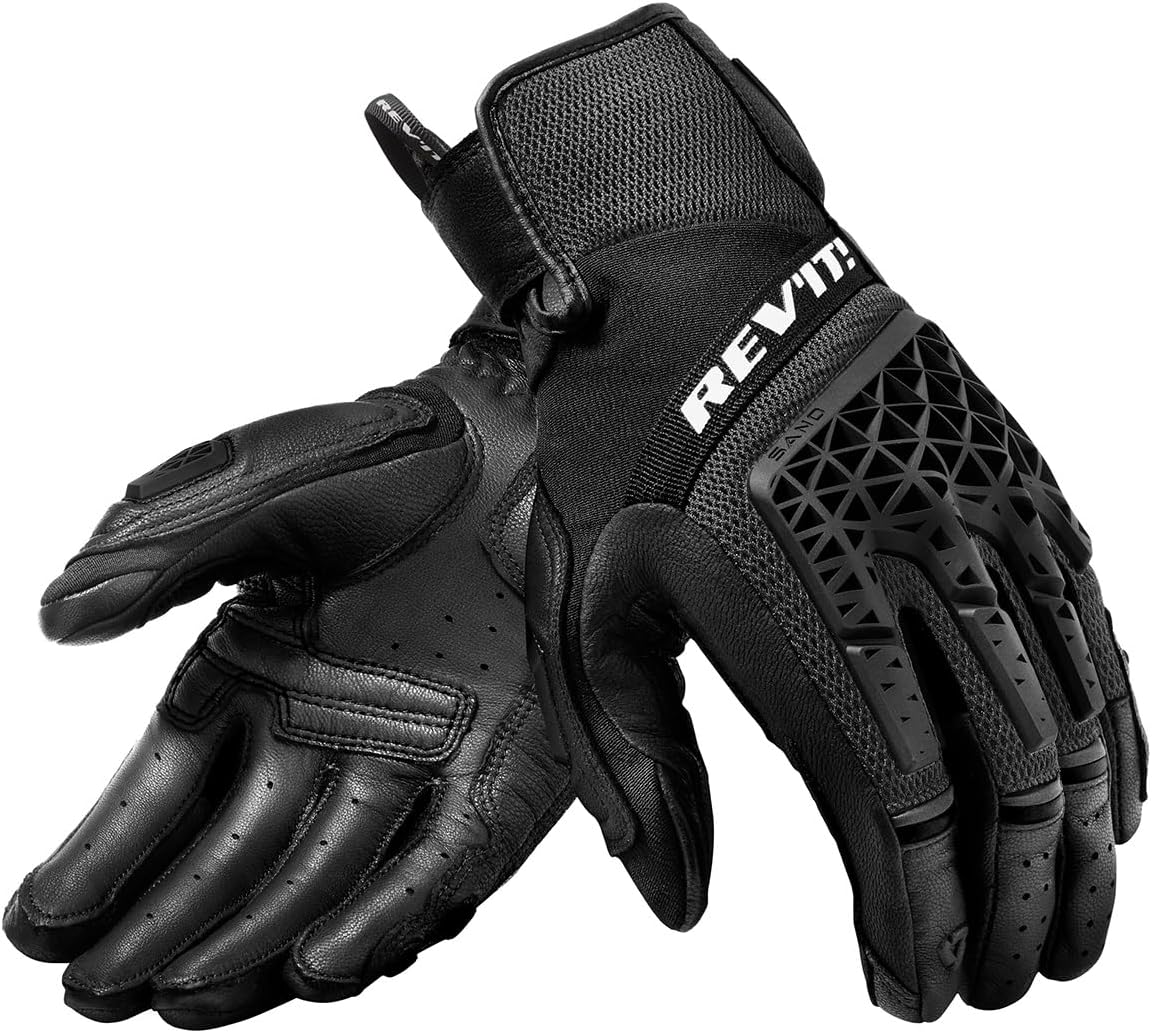
The Sand 4 is built on a goatskin palm construction that extends along the underside of the fingers. That is the exact surface in continuous contact with your handlebar and brake lever all shift. The goatskin here is high-grade PWR|Shell material, not budget-spec leather. The mesh stretch fabric panels on the back of the hand deliver genuine ventilation for warmer shifts while the leather construction handles all the high-wear contact points.
The protection package is built around TPR (thermoplastic rubber) components: a TPR knuckle protector with an integrated airflow channel that routes air directly over the hand, TPR protectors on the fingers and thumbs, and a TPR palm slider positioned exactly where the heel of the hand contacts pavement in a fall. This is a meaningful step up from the PVC hard shells on the budget ILM options. TPR is more flexible, lighter, and maintains its protective properties across a wider temperature range.
The Connect Finger Tip touchscreen system is a REV'IT! proprietary material that outperforms the touchscreen patches on budget gloves in real-world use. It works reliably in damp conditions where cheaper touchscreen leather begins to lose contact. On a wet delivery shift where you're confirming orders and checking navigation every few stops, this distinction shows up constantly.
The hook-and-loop wrist strap and pull tab on the cuff make on/off fast enough that you're not fighting the glove at every restaurant stop. The adjustable wrist closure holds position through an entire block without re-adjustment.
One thing to know going in:
At $120 to $150, this is a committed purchase for a delivery rider spending their own earnings. The argument for it is cost per shift over a full year. A Sand 4 that lasts two-plus years of daily riding costs less per shift than a budget leather glove replaced every eight months. The math works in the Sand 4's favor over time, but it requires the upfront spend.
If you're new to delivery riding or working through the break-in phase of leather gloves, start with the ILM DN01. Come back to the Sand 4 when the income is consistent, you know you're staying in this, and the upgrade makes financial sense on your own schedule.
- Premium goatskin
- Full TPR protection package
- Damp-condition touchscreen
- Fast on/off
- Lowest cost-per-shift over two years
- Covering the price
- Partial mesh construction
- Sizing
- Upfront spend barrier for new riders
Best Budget Cowhide: Hand Fellow Premium Leather Motorcycle Gloves
The Hand Fellow gloves are the entry point for delivery riders who want full-grain cowhide leather at a budget price point and are willing to accept a slightly longer break-in in exchange for material quality above what synthetics offer.
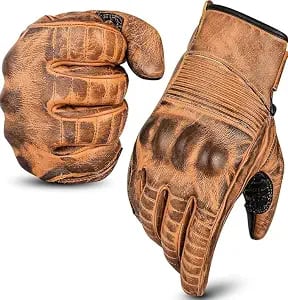
Full-grain cowhide is the key detail here. Full-grain means the top layer of the hide is intact. It is the densest, most abrasion-resistant part of the leather. Budget synthetic gloves at similar price points do not offer this. The Hand Fellow gloves use full-grain cowhide throughout the palm and main body, which directly translates to longer wear life under the repeated handlebar friction of daily delivery riding.
The perforated ventilation holes with moisture-wicking breathable lining give the gloves airflow that performs across a wide temperature range. They are cool enough for autumn shoulder-season riding and breathable enough for hot summer runs. The moisture-wicking lining manages sweat buildup across a long shift, which becomes a comfort issue on any ride above an hour in warm weather.
The double-layered leather at the knuckles with padded knuckle protection is the standout safety feature. Double-layering at the exact point most likely to contact pavement in an urban low-side is a practical design choice that goes beyond what most budget gloves provide. The palm includes additional padding for vibration reduction across long stints on city roads.
Touchscreen capability covers the thumb and two fingers, which is the right configuration for delivery work. It covers enough fingers to operate the app, confirm a drop, and pull up navigation without removing the glove at every stop.
The Velcro wrist closure with pre-curved finger construction means the gloves fit correctly from the first ride rather than requiring extended break-in to find their shape.
One thing to know going in:
Customer feedback notes some variability in the Velcro closure durability over extended daily use. The stitching on the cuff can show wear before the leather body does. This is a known trade-off on the budget end of the cowhide market. For daily delivery use on a budget, the Hand Fellow gloves deliver well above their price point for the first six to eight months. If the closure shows wear, a leather repair kit and a few minutes of maintenance extends their life significantly. The leather itself outlasts the hardware.
- Full-grain cowhide quality
- Double-knuckle layering
- Perforated breathability
- Three-finger touchscreen
- Accessible price
- Flagging the Velcro closure durability
- Cowhide break-in
- No cold-weather capability
- Hardware quality control
Leather for Every Season: The Quick Decision
Spring and fall (40-70°F): ILM DN01 perforated goatskin. Handles temperature variation well. The perforations provide enough airflow in warm conditions while the goatskin retains warmth in cooler mornings.
Summer (above 70°F): ILM DN01 again for dry days. The perforations earn their keep above 75°F. Swap to a solid leather glove when rain is in the forecast.
Multi-season budget rider: Hand Fellow full-grain cowhide. The perforations and moisture-wicking lining work across more conditions than their price suggests. Good for spring through fall without needing a separate summer-specific glove.
Long-shift coverage priority: ILM GRC01L long-cuff. The extended wrist coverage and double-layer reinforcement make it the right call for riders doing back-to-back long blocks or riding in cooler mornings where jacket gaps are a comfort issue.
Year-round investment glove: REV'IT! Sand 4. When the budget allows and the riding schedule is consistent, this is the glove that costs least per shift over two years.
Why Leather Gloves Cost Less Per Year Than Synthetic
The cost comparison on daily delivery use is worth running once.
A $25 synthetic glove on a six-day-per-week delivery schedule shows degraded palm grip, loosening wrist closure, and reduced touchscreen response at three to four months. At $25 per pair, that is $75 to $100 per year in gloves.
A $30 to $45 leather glove maintained with a monthly conditioner application lasts eight to twelve months on the same schedule. At that price point, annual glove cost drops to $30 to $55.
The maintenance that creates this difference costs $8 to $10 per year in leather conditioner and 10 minutes per month. That is the full investment required to close the durability gap between leather and synthetic.
Leather Glove Care on a Delivery Schedule
After a rain shift: Air dry at room temperature. Do not use a heater or direct sunlight. Rapid heat permanently stiffens leather. Stuff the fingers loosely with paper to maintain shape while drying.
Once per month: Apply leather conditioner to the palm, fingers, and back of the hand. Work it in and let it absorb for 10 minutes before wiping off the excess. Conditioned leather stays supple and resists cracking at the palm seams where the most flexing occurs.
When to replace: The palm shows cracking or seam separation. The wrist closure no longer holds position through a full shift. The touchscreen material stops making reliable contact in dry conditions at room temperature.
Sizing Leather Gloves
Measure the circumference of your hand around the widest point of the palm, excluding the thumb. Match to the brand's size chart.
Between sizes: Go up one size in leather. New leather is smaller than worn leather. A glove that feels snug on day one fits correctly at day 30.
ILM gloves (DN01 and GRC01L): Size up one full size from your measurement. Both their listings confirm they run small.
REV'IT! Sand 4: Also runs snug relative to US sizing standards. Go one size up from your palm measurement.
Hand Fellow: Sizing runs closer to true, but between sizes, go up rather than down. The pre-curved construction has less give initially than non-pre-curved gloves.
The Gloves and the Rest of the Setup
Hand guards reduce the wind load reaching your gloves in cold and rain conditions, effectively extending the usable temperature range of every leather glove on this list without requiring you to buy a heavier winter glove. A $26 to $30 installation that makes every glove here perform better. Best Motorcycle Hand Guards for Delivery Riders
Rain suit keeps rain from running down the sleeve into the wrist gap on a sustained wet shift. Pairs directly with the ILM GRC01L's long cuff for full coverage in heavy rain. Best Motorcycle Rain Suit for Delivery Riders
For men's-specific sizing and fit guidance: Best Men's Motorcycle Gloves for Uber Eats & DoorDash Riders
For the full material comparison between leather and textile with a seasonal decision matrix: Leather vs Textile Motorcycle Gloves for Delivery Riders
The Bottom Line
Leather motorcycle gloves outlast synthetic under daily delivery conditions and cost less over a full year when you factor in replacement frequency. Goatskin is the right leather for spring through fall. Perforated goatskin for summer. Full-grain cowhide for budget-conscious riders who want maximum durability per dollar.
Start with the ILM DN01 perforated as your year-round base glove. Add the ILM GRC01L when wrist coverage and heavier protection become a priority. Pick up the Hand Fellow cowhide gloves as a durable backup pair or entry point. Step up to the REV'IT! Sand 4 when you're ready for a glove that lasts two-plus years.
Size up one size on all ILM gloves. Condition once a month. Dry at room temperature after wet shifts.