
Safety GearArticle
Best Waterproof Shoe Covers for Bike Delivery Riders 2026: Keep Your Feet Dry on Every Shift
Standing water outside a restaurant in February is not optional. Waterproof shoe covers are the most overlooked piece of wet-weather gear for delivery riders. Here are the ones that actually keep your feet dry.
I left a dinner block early in February because I could not feel my toes. Not because it was dangerously cold. Because my sneakers were soaked through from standing in a puddle outside a restaurant on Atlantic Avenue for three minutes while waiting for my order. That was a $40 shift I cut short.
Shoe covers fix that. I bought my first pair the following week for $22. I have not left a shift early because of wet feet since.
This article exists because shoe covers are the most overlooked piece of wet-weather gear for delivery riders. Everyone talks about rain suits. Nobody talks about what happens to your feet at every restaurant stop when you step off the bike into standing water. The rain suit keeps your upper body dry. Wet shoes end shifts.
Quick Comparison: Best Waterproof Shoe Covers for Delivery Riders 2026
| Cover | Best For | Shoe Type | Waterproof Level | Buy Now |
| ROCKBROS Thermal Cycling Shoe Covers | All-around winter and rain shifts | Cycling shoes (clipless) | Water-resistant | CHECK PRICE ON AMAZON |
| Silicone Rubber Rain Shoe Covers | Sneaker and regular shoe wearers | Any shoe | Fully waterproof | CHECK PRICE ON AMAZON |
| GIYO Neoprene Cycling Overshoes | Heavy sustained rain, colder shifts | Cycling shoes (clipless) | Fully waterproof | CHECK PRICE ON AMAZON |
| ROCKBROS Toe Covers | Mild cold and light rain only | Cycling shoes (clipless) | Water-resistant | CHECK PRICE ON AMAZON |
Before you pick one, you need to know which shoe type you are riding in. Cycling overshoes with cleat cutouts are built for clipless pedal shoes. If you are riding in regular sneakers on flat pedals, which most e-bike delivery riders are, you need the silicone rubber type that fits over any shoe. I will explain both.
Why Shoe Covers Are the Most Overlooked Wet-Weather Gear
A rain suit covers your upper body. Waterproof gloves keep your hands dry. But at every restaurant stop, you step off the bike, walk to the door, wait, walk back. If there is standing water at the curb or a wet sidewalk, your feet are in contact with it every single time.
In New York in winter, water pools at nearly every curb cut. The gutters on a rainy Tuesday night in Brooklyn are running. Restaurant entrances that have awnings trap puddles right at the door. I step into water every two or three pickups on a wet shift. Over a four-hour block that is a lot of accumulated moisture working through the seams and fabric of a regular sneaker.
Wet feet are also a cold problem that accelerates. A dry foot in 35-degree weather is manageable. A wet foot in 35-degree weather loses warmth fast. Once your feet are wet and cold, you are thinking about your feet instead of your shift. You make slower decisions. You take fewer orders. Eventually you go home.
The rain suit gets the attention because it is more expensive and more visible. Shoe covers are a $15 to $40 fix that most riders have not thought about. That gap is what this article is for.
Understanding the Two Types: Cycling Overshoes vs Silicone Rain Covers
This is the most important thing to get right before you buy anything.
Cycling overshoes are designed to go over clipless cycling shoes. They have a cutout at the bottom for the cleat. They are neoprene or stretch fabric. They fit snugly over the shoe profile. If you are riding in regular sneakers or any flat-pedal shoe, these will not fit correctly and the cleat cutout leaves the sole exposed to water, which defeats the purpose.
Silicone rubber rain covers work over any shoe. They are slip-on, fully waterproof rubber or silicone shells that encase the entire shoe. No cutout. No cleat compatibility needed. They seal around the ankle and cover the full sole. For e-bike delivery riders on flat pedals wearing regular shoes, these are the right choice.
Most shoe cover articles assume you are a road cyclist in cleated shoes. Most delivery riders are not. I am going to cover both properly.
Best All-Around Pick: ROCKBROS Thermal Cycling Shoe Covers
For riders on clipless pedal setups
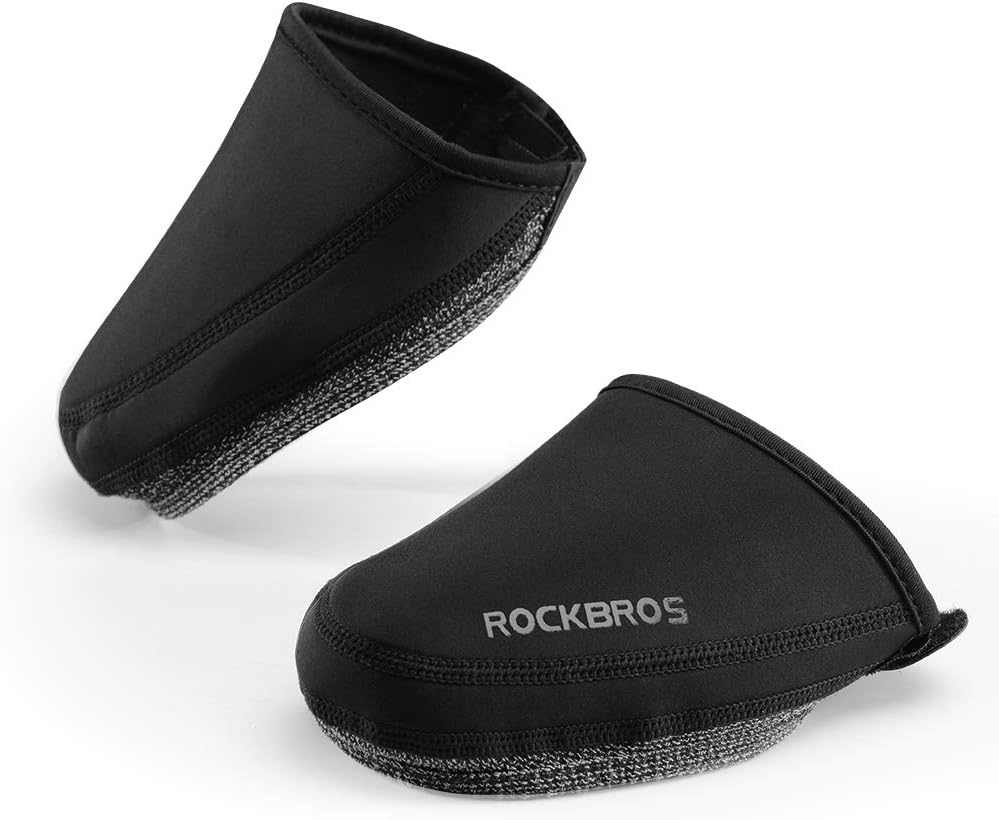
The ROCKBROS full cycling shoe covers are what I use on wet winter shifts when I am on a bike with clipless pedals. They are made from composite Lycra with water-resistant outer material, fleece inner lining, a Kevlar-reinforced sole that handles abrasion when you clip in and out, and a reflective logo on the rear that adds visibility at night.
The zipper runs along the back of the ankle and clips shut. Over my test shifts in wet conditions in Brooklyn and lower Manhattan, the outer material shed light to moderate rain without saturation for the first 30 to 45 minutes. In sustained heavy rain they eventually let some moisture through at the seams, but the fleece inner stays insulating even when the outer layer is damp.
The reflective rear logo is not a marketing detail. At 9pm on a wet night, anything that adds visibility at intersections matters. The Kevlar sole handles the repeated clip-in and clip-out without wearing through, which budget covers do not manage past a few weeks of daily use.
The one thing I do not love about them:
They are water-resistant, not fully waterproof. In a light drizzle or wet roads they perform well. In a sustained downpour over an hour they will eventually let moisture through at the zipper and seam areas. If your shift runs through heavy rain for more than 45 minutes, step up to the GIYO neoprene covers below. For mixed conditions, drizzle, wet roads, and the standing water at restaurant stops, the ROCKBROS handles everything I need on most shifts.
Sizing note: ROCKBROS sizing runs small against US sizes. Size up by at least one full size from your regular shoe size. Their size chart is conservative. Check the chart against your shoe size before ordering and when in doubt, go larger.
- Water-resistant composite Lycra sheds light to moderate rain well
- Fleece inner stays insulating even when damp
- Kevlar-reinforced sole handles repeated clip-in/out without wearing through
- Reflective rear logo adds night visibility
- Easier to put on than neoprene
- Water-resistant only, not fully waterproof
- Seams and zipper let moisture through in sustained heavy rain after ~45 minutes
- Sizing runs small, requiring a size up
Best for Sneaker and Regular Shoe Wearers: Silicone Rubber Rain Shoe Covers
For e-bike riders on flat pedals wearing any shoe
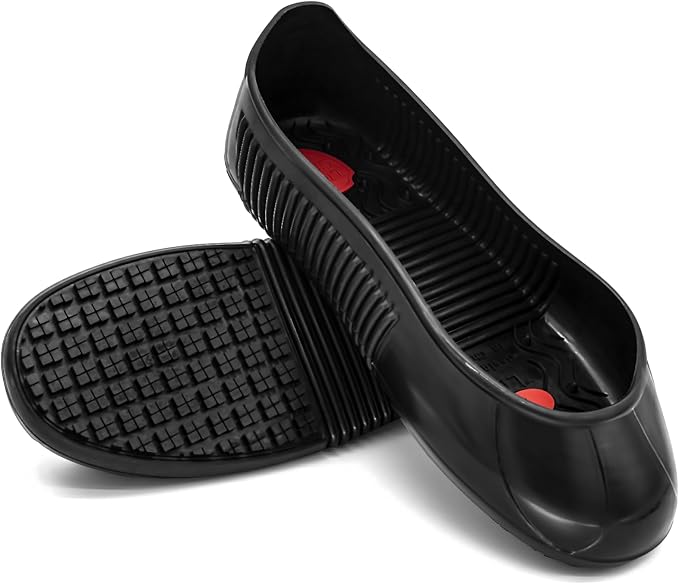
If you are riding in regular sneakers, work shoes, or any flat-pedal setup, this is your pick. Silicone rubber rain covers slip over any shoe, fully seal the sole, and are completely waterproof. There is no cleat cutout. No seam at the bottom. The rubber or silicone material does not absorb water.
The available options on Amazon range from $10 to $25 across several brands. The key features to look for are a full sole seal with anti-slip texture on the bottom, an ankle seal that fits snugly enough to keep water from running in from above, and a zipper or pull tab that actually opens wide enough to get your shoe in without a wrestling match.
I use these on shifts where I am on a flat-pedal e-bike and I need to be confident about stepping into puddles. You can step directly into standing water with a good pair of these and pull your foot back out completely dry. That changes how you feel about a wet shift entirely.
The one thing I do not love about them:
The anti-slip sole texture wears down faster than you want it to. After three to four months of daily delivery use, the grip pattern on cheaper silicone covers smooths out, and a smooth silicone sole on a wet restaurant floor or wet sidewalk tile is not something you want to find out the hard way. Check the sole every few months and replace when the grip pattern is gone. Budget around one to two pairs per season if you are doing this full time.
They are also bulkier than cycling overshoes. Your foot looks noticeably larger with them on. That is fine on the bike. It can be awkward walking through a tight restaurant space. Not a dealbreaker, just worth knowing.
- Fully waterproof with no cleat cutout
- Fits over any shoe; completely seals the sole
- lets riders step directly into standing water without wet feet
- Anti-slip sole texture wears down quickly under daily use (3–4 months); noticeably bulky, which can be awkward in tight restaurant spaces; requires replacement 1–2 times per season for full-time riders
Best for Sustained Heavy Rain: GIYO Neoprene Cycling Overshoes
For clipless pedal riders working through serious rain
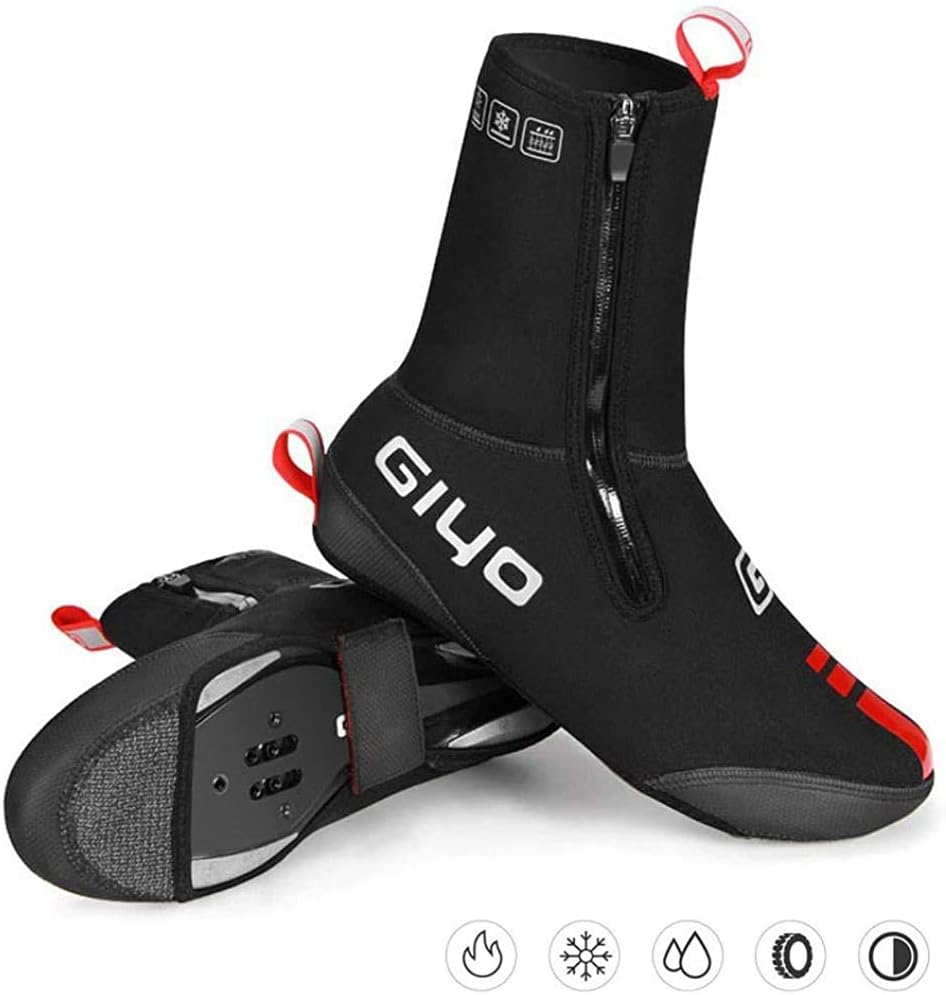
GIYO makes neoprene overshoes in sizes from S through XXXL, which covers almost any foot size including larger men's sizes that other brands do not accommodate. Neoprene is a different material from the composite Lycra on the ROCKBROS. It is the same material used in wetsuits. It does not let water through. Period.
In a sustained downpour over a full dinner block, the GIYO neoprene covers keep feet fully dry in a way the ROCKBROS does not guarantee after the first hour. The thermal insulation is also better. Neoprene traps warmth regardless of whether the outer surface is wet. On a February evening with cold rain and wind, that distinction matters.
The wider size range is a real advantage for riders who have struggled to find overshoes that fit. GIYO goes up to XXXL. Most brands stop at XL. If you have larger feet, GIYO is often the only option that works.
The one thing I do not love about them:
Neoprene is harder to put on and take off than Lycra covers. Getting them over your shoes before a shift takes more time and patience, especially with cold hands. In winter, that is the moment you most want the process to be fast. Budget an extra minute at the start of a wet shift. They are worth the effort for the waterproofing they provide, but the slip-on ease of the ROCKBROS is better for riders who want quick on-and-off between shifts.
They are also warmer than the ROCKBROS, which is an advantage in January but can become uncomfortable in milder wet conditions in spring or fall. If you are in a climate or season where temperatures are above 50 degrees and it is raining, neoprene may be too warm for sustained use.
- Fully waterproof neoprene (wetsuit material), no moisture penetration even in sustained downpours
- Superior thermal insulation stays warm even when wet
- Widest size range (up to XXXL) accommodating riders other brands exclude
- Harder and slower to put on/take off, especially with cold hands
- Runs warmer than Lycra covers, making them uncomfortable in milder wet conditions above ~50°F
Budget Pick: ROCKBROS Toe Covers
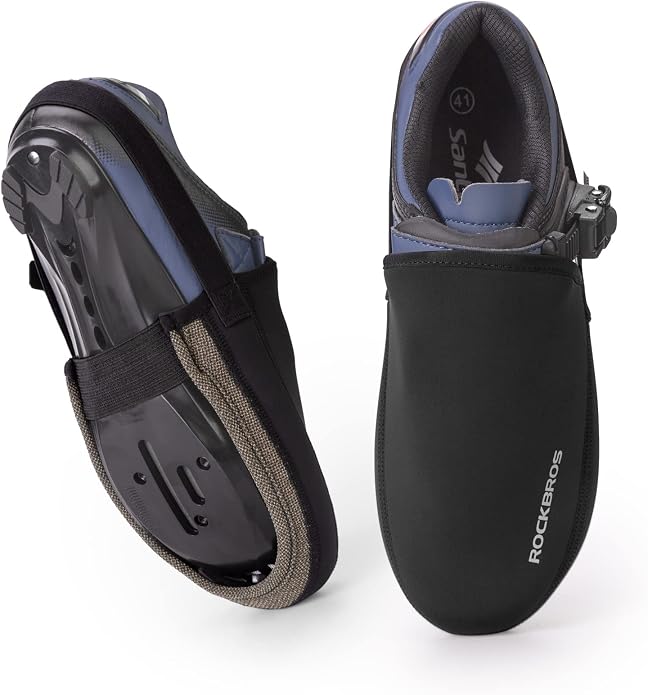
If you are not ready to spend on full shoe covers and your main problem is cold toes in dry or lightly damp conditions rather than standing water on a wet shift, the ROCKBROS toe covers are the minimum viable option. They cover the toe box and front third of the shoe. They are Kevlar reinforced, windproof, and water-resistant enough to handle road spray and light drizzle.
They do nothing for standing water at restaurant stops because the heel and sole are uncovered. They are not a rain solution. They are a cold-toe solution. If your problem is wind chill killing your toe feeling during transit between orders rather than wet feet at stops, these handle that specific problem at a lower price.
The one thing I do not love about them: they do not fix the actual problem most delivery riders have in wet weather. If it is raining, buy the full covers. If it is dry but cold, the toe covers work.
- Lower price point
- Windproof and water-resistant enough for road spray and light drizzle
- Kevlar-reinforced for durability
- Longer lifespan than full covers since the sole doesn't contact the ground
- Only covers the toe box, leaves heel and sole fully exposed
- Does nothing for standing water at restaurant stops
- Addresses cold toes specifically, not wet-weather riding generally
- The article's own author says it doesn't fix the actual problem most riders have
Sizing Waterproof Shoe Covers: How to Get This Right the First Time
The single most common complaint across all shoe cover reviews is sizing. Here is how to avoid it:
For cycling overshoes (ROCKBROS, GIYO): Measure the length of your foot in centimeters, not your standard shoe size. Shoe covers size against foot length, not US shoe sizes, and the conversion is not always accurate on the listing. A US men's size 10 might correspond to a different size on different brands. Foot length is the reliable measurement.
For silicone rubber covers: These are typically labeled S, M, L, XL by shoe size range. They stretch, so err on the side of the size that covers your shoe length at the upper range rather than the lower range. A too-small silicone cover does not stretch enough to fit. A slightly larger one still seals adequately.
If you are in between sizes: Go larger. A cover that is slightly loose at the ankle is manageable. A cover that does not fit over your shoe is useless.
For riders wearing thick winter socks: Size up one full size from what the chart suggests. The sock thickness adds meaningful volume to the foot profile, and a cover that fits a thin summer sock may not fit at all over a thick wool sock in January.
How Long Do Shoe Covers Last Under Daily Delivery Use?
Cycling overshoes: three to six months of daily use depending on how much walking you do and how rough the surfaces are. The Kevlar sole extends the life of the ROCKBROS and GIYO covers compared to budget options with standard rubber soles. Walk gently in them and avoid dragging the sole on curbs.
Silicone rubber covers: one to two pairs per season is realistic for full-time delivery use. The grip texture wears faster than the waterproofing fails. Replace when the sole feels smooth.
Toe covers: longer than full covers because the sole is not in contact with the ground. Six to twelve months of regular use is realistic.
The signs to replace: visible cracks in the silicone, zipper that no longer seals flat, or inner fleece that no longer dries between shifts. None of those are disasters when they happen. Shoe covers at this price point are a seasonal consumable, not a long-term investment.
E-Bike and Bicycle Riders: Which Type Is Right for You?
Most content about shoe covers assumes you are on a road bike with clipless pedals and cycling-specific shoes. A lot of delivery riders are not.
If you are on an e-bike with flat pedals in regular sneakers, the silicone rubber covers are your answer. Full stop. The cycling overshoes will not fit correctly over a regular sneaker and the sole will be partially exposed.
If you are on an e-bike or bicycle with clipless pedals and cycling shoes, the ROCKBROS or GIYO covers are the right pick based on how much rain you regularly work through.
If you are on a moped or motorcycle, none of these covers work for you. Look at waterproof motorcycle boot covers or invest in a dedicated waterproof riding boot.
The Full Wet-Weather Stack
Shoe covers solve the feet problem. They do not solve the rest. For a complete wet-weather setup that keeps you earning through rain shifts:
Rain suit: The upper body layer that keeps your jacket and pants dry so your core stays warm through a full shift. Best Motorcycle Rain Suit for Delivery Riders →
Waterproof gloves: Wet brake levers and wet touch screens are both problems. Gloves that handle rain without losing grip or phone compatibility solve both. Best Motorcycle Gloves for Delivery Riders →
Full wet-weather gear guide: The full system from layering to drying gear between shifts. Waterproof Motorcycle Gear for Delivery Riders: Full Setup Guide →
The Bottom Line
Shoe covers are the cheapest per-dollar improvement to a wet-weather shift available to a delivery rider. The total cost of a good pair is less than two orders. The cost of a shift cut short because your feet are wet and numb is everything you would have earned in the last two hours.
Buy the silicone rubber covers if you are on flat pedals in regular shoes. Buy the ROCKBROS if you are on clipless pedals in moderate rain conditions. Buy the GIYO neoprene if you regularly work through sustained heavy rain.
Do not go into a winter shift without them.