Delivery GearArticle
Funhang EB-S1 Review for Delivery Riders: The Honest Truth About the Cheapest Defensible E-Bike on Amazon
The EB-S1 costs around $450 to $500 on Amazon, clears the UL certification bar, comes with a rear rack rated to 60 lbs, and runs on a real 48V 13Ah battery. Here is exactly where it earns that money and where it doesn't
Quick Verdict
The right bike if your budget starts at $500 and goes no higher. Not the right bike if you have $999.
I have not put this bike through a full NYC delivery shift myself. I want to be clear about that upfront, because it matters. What I did do is confirm the certifications are real, the specs are verified against the actual Amazon listing, and the real-world range numbers come from multiple independent sources including verified buyer reports. If you need absolute certainty, the Lectric XP4 at $999 is the bike I have ridden extensively and can vouch for completely. But if $400 is your ceiling right now, the EB-S1 is the most defensible option at this price on Amazon. Here is why, and here is what you need to know before you buy it.
- UL 2849 and UL 2271 certified through SGS
- Rear rack rated to 60 lbs
- Real 48V 13Ah battery
- Lowest price point on the list
- Mechanical disc brakes instead of hydraulic
- Slower 6.5-hour charge time and shorter 12-month warranty
Key Specs
| Spec | Detail |
| Motor | 500W nominal / 1000W peak, rear hub |
| Battery | 48V 13Ah Li-ion, removable, IPX5 |
| Range (PAS) | 55-60 miles spec / ~35-45 miles real-world |
| Range (throttle only) | 28-35 miles spec / ~20-25 miles real-world |
| Top Speed | 21.7 mph stock (~25 mph unlocked) |
| Tires | 26" × 4.0" puncture-resistant fat tire |
| Frame | Carbon steel, non-folding |
| Weight | 68.3 lbs |
| Max load | 330 lbs rider / 60 lbs rear rack |
| Brakes | 180mm mechanical disc, front & rear |
| Suspension | Lockable front fork |
| Gears | 7-speed |
| Charge time | ~6.5 hours (54.6V 2A charger) |
| Certifications | UL 2849 (SGS/TÜV) + UL 2271 (battery) |
| Warranty | 12 months |
| Price | CHECK ON AMAZON |
Why I Put This Bike on the Comparison Table at All
Most Amazon e-bikes under $500 do not belong anywhere near a working delivery rider's shortlist. The certification is fake or absent. The battery capacity is overstated. The rear rack is a clip-on afterthought that flexes under anything heavier than a paper bag. Cables get cut and the seller's support line goes quiet.
The EB-S1 clears enough of those bars to be worth a serious look when money is genuinely tight. I confirmed the UL 2849 certification through SGS and TÜV. The UL 2271 certification on the battery is separately verified. These are real third-party certifications, not brand claims. If you are in New York City and you need to charge inside a residential building, those certificates are the difference between being allowed through the door and being turned away or fined.
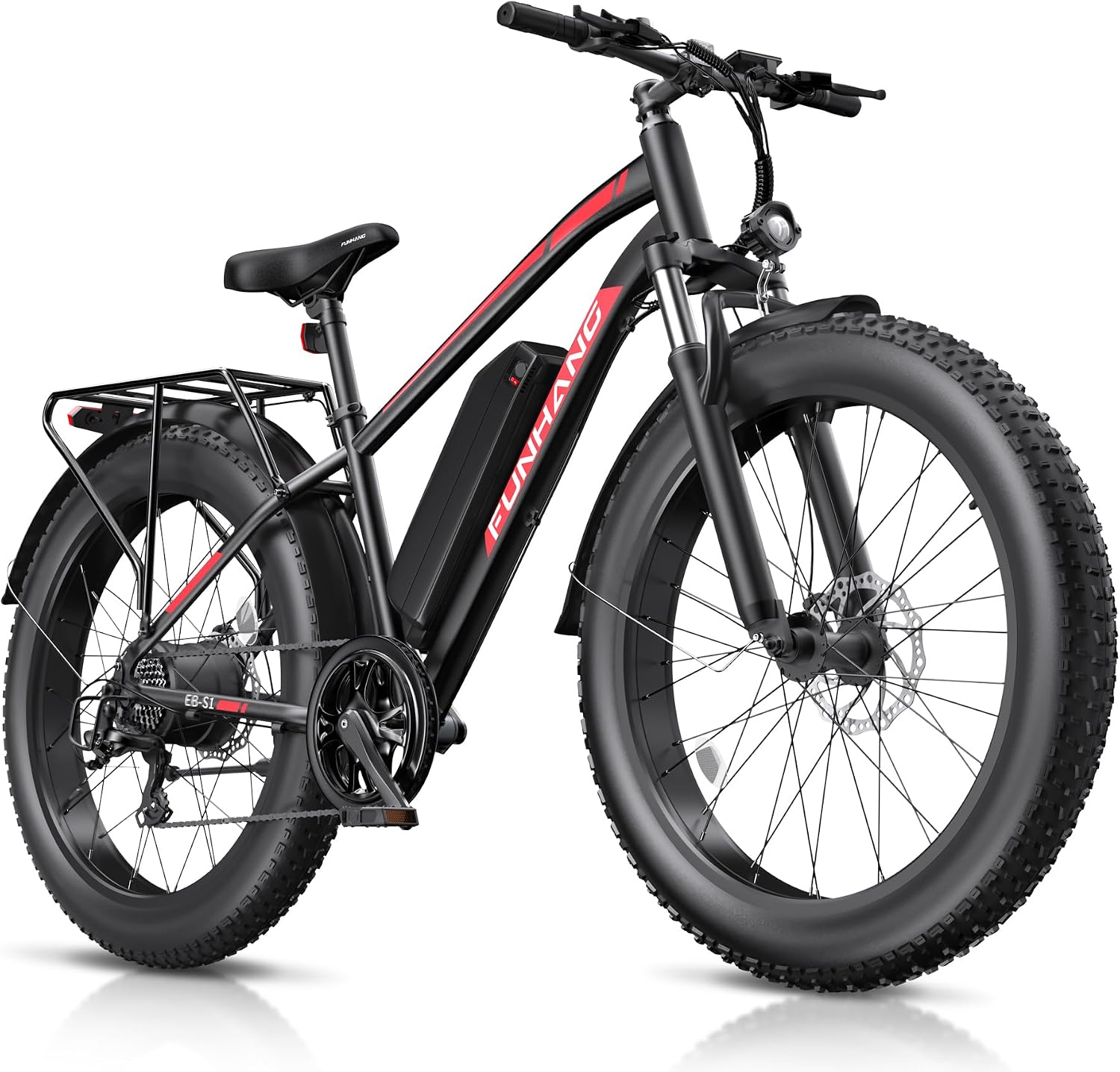
Beyond certifications, the specs are consistent with the actual product. The 48V 13Ah battery is real. The rear rack is a genuine integrated rack rated to 60 lbs. The 180mm disc brakes are mechanical, not hydraulic, but they are at least the right size for this frame. These details sound basic, but at this price point they are not guaranteed. On a lot of Amazon bikes in this range, at least two of those things are wrong in the listing. On the EB-S1, they check out.
That is what earns it a spot on the table. It is not an endorsement. It is the minimum defensible threshold for a working vehicle at this price.
What the EB-S1 Actually Gets Right
The battery is the right size for a full shift
A 48V 13Ah battery is 624 watt-hours. That is a real-sized battery for a delivery bike, not a budget cut. The spec range of 55 to 60 miles on pedal assist is marketing math run on a flat road at low assist. Real-world deliveries with a loaded rear rack and mixed pedal and throttle use will land closer to 35 to 45 miles per charge depending on your route, your weight, and the temperature. In January in the Bronx, subtract another 15 to 20 percent from wherever that number settles for you.
The battery is removable. That matters if you are in a walkup apartment and you are not comfortable leaving the whole bike in the hallway overnight. You can pull the battery, bring it upstairs, and charge it on your kitchen counter. The lock and key system on the battery also means it is not something a quick thief can yank out at a stop.
Real-world range by condition:
| Condition | Spec Range | Realistic Range |
| Pedal assist, warm weather, flat route | 55-60 miles | 40-48 miles |
| Mixed throttle/PAS, loaded bag, warm | 35-45 miles | 28-36 miles |
| Throttle-heavy, cold weather (below 35°F) | 28-35 miles | 18-25 miles |
| NYC winter shift, loaded, hills involved | - | 20-28 miles |
For most single-block delivery shifts in the 20 to 30 mile range, a full overnight charge gets you through. Back-to-back shifts in cold weather will push the edge of that. Know your number before you commit to a long shift without a charging plan.
The rear rack is built in and it holds
This sounds obvious. It is not. A large number of bikes at this price range list a rear rack in the title and ship you a frame with two small mounting holes and a separate rack piece you have to hope fits correctly. The EB-S1 ships with an integrated rear rack rated to 60 lbs. The rack sits flush and does not wobble under a loaded insulated bag. That is what you need. You are not doing catering runs on this bike, but you can run a standard large delivery bag without the back end moving around.
The lighting setup is genuinely good for the price
The EB-S1 ships with a front headlight, a rear taillight, and integrated turn signals. When you hit the light button, both the front and rear lights come on together. The turn signals work off the handlebar controls. For a bike under $400, this is an unusual amount of visibility hardware. Most budget bikes at this price ship with a single small light that is basically decorative. The integrated lighting on the EB-S1 is not a premium setup, but it is enough to be visible at night and to avoid a ticket in the city.
The certifications pass for NYC residential charging
UL 2849 covers the complete e-bike electrical system. UL 2271 covers the battery pack specifically. Both are independently verified through SGS and TÜV on this model. If your building management requires proof of certification before allowing a bike to be charged indoors, these certs will hold up. This is not a minor point for New York riders. Battery fires from uncertified bikes have triggered real enforcement action in the boroughs, and buildings are increasingly asking for documentation. The EB-S1 has it.
The One Thing I Don't Love About It
Honest Limitation: This bike weighs 68.3 lbs and uses mechanical disc brakes. Those two facts combined are the reason I would not recommend it as a primary vehicle for anyone who can find an extra $600. The weight becomes a genuine daily friction point the moment you have stairs between you and storage. A three-story walkup at the end of a dinner shift is hard work on any bike. At 68 lbs it becomes something you dread. In NYC, where street-level storage with any security is rare, the weight is a real operational constraint and not a minor inconvenience. The mechanical disc brakes are the second issue. On a dry road they stop the bike fine. In January rain on wet steel subway grate covers, which every NYC rider hits multiple times per shift, mechanical discs require noticeably more hand pressure than hydraulic units. That gap in confidence at intersections adds up over a full shift.
I want to be fair here. Mechanical disc brakes are not dangerous on a $400 bike. You compensate with more lead time before intersections, and most riders adjust instinctively. But after you ride a bike with hydraulic brakes through a wet NYC winter, you feel the difference every time you go back. The Lectric XP4 has hydraulic brakes at $999. That gap is part of what the extra $600 is buying you.
The weight is the harder constraint to work around. You can ride around brake feel. You cannot make a 68-lb non-folding bike weigh less. If your storage situation is a fifth-floor walkup, this bike is a problem you will feel every single day.
NYC-Specific Considerations
Stairs and storage
Say this clearly before you buy: the EB-S1 does not fold. It is a full-size, non-folding 26-inch fat tire bike that weighs 68.3 lbs. If you are in a New York walkup without lobby storage, you are carrying that weight up stairs every day. I have done that with bikes in the mid-50-lb range and it becomes exhausting by the end of the week. At 68 lbs, it is worse. Secure ground-floor or lobby storage makes this bike fully workable. No ground-level storage option makes it genuinely painful as a daily setup.
Locking at delivery stops
The fat tires are actually an advantage in one specific scenario: someone trying to roll your bike quickly while you are inside a restaurant. A 68-lb fat tire bike with a U-lock through the frame and rear wheel is a harder target to move fast than a lightweight folding bike with a cable through the front wheel. Weight works against you at the end of the shift and works for you when theft speed is the variable. That said, two locks still apply every time. The EB-S1's weight is not a substitute for a secondary cable lock. Midtown stops where you are in and out in two minutes are exactly where opportunistic theft happens fastest. Lock every time.
Double-parked delivery truck situations
The 26-inch fat tire frame is not a small bike. In tight alleys, the kind behind restaurant kitchen doors on narrow cross streets in Manhattan, the width of the fat tires means you are navigating differently than you would on a narrower tire bike. That is not a disqualifying issue for most riders. But if you are regularly doing pickups on particularly narrow blocks where you are squeezing between a double-parked food truck and a stack of restaurant produce boxes, the extra width is something you feel. More maneuverable bikes in the $800 to $1,000 range have an edge in those situations.
Winter riding
The fat tires are a genuine advantage here. 26 × 4.0-inch tires on wet pavement, slush, or light snow give you a level of grip stability that a narrow-tire commuter bike does not. Riders who have used fat tire bikes in winter consistently report more confidence on slick surfaces than their lighter-tire counterparts. That is a real benefit for NYC riders who keep running through the winter months when some riders stop. The IPX5 waterproofing on the battery means you do not have to worry about charging a battery that got thoroughly soaked on a wet shift. These are not small things at this price point.
Can It Handle a Full NYC Delivery Shift?
For a moderate shift of four to five hours in a single zone covering 20 to 30 miles, yes. Charged overnight, the EB-S1 has more than enough battery for that workload in warm weather. In winter, a 20-mile shift still comes in comfortably. You lose some range to cold air and battery thermal management, but the 624Wh battery starts from a large enough base that it handles a single moderate shift without cutting short.
Where it starts to show strain is back-to-back shifts or long single sessions above 35 miles in cold weather. At that point you are watching the display more carefully than I want a rider to have to. A mid-shift charge at a coffee shop or restaurant you trust is a workaround, but it adds friction to your shift planning that a bike with more battery range does not create.
For a first vehicle while you verify your earnings, the EB-S1 covers enough ground. Plan a single full shift per charge and recharge overnight. That discipline works with this battery in a way it would not with a smaller pack.
How It Compares to the Lectric XP4
The Lectric XP4 costs around $999 to $1,299 and is the bike I recommend to most riders starting out. The comparison is worth being explicit about because the price gap is real and so are the differences.
The Lectric folds. For apartment storage and staircase situations, that alone changes the daily routine. The Lectric runs hydraulic disc brakes. In wet conditions that is a confidence difference you feel at every intersection. The Lectric uses a torque sensor. The EB-S1 uses a cadence sensor, which responds to whether you are pedaling rather than how hard. Over a full shift with constant stop-and-go, the torque sensor makes the Lectric feel noticeably smoother and less fatiguing. The Lectric also ships with 12 months of direct manufacturer warranty with a well-established US-based support line. The EB-S1's 12-month warranty runs through a smaller brand with Amazon as the retail layer.
What you get from the EB-S1 in return for those trade-offs is a $600 lower price point and fat tires. If $999 is genuinely out of reach right now, the EB-S1 is the most defensible alternative I have found on Amazon. If $999 is reachable with one extra week of work, the Lectric is a significantly better working vehicle and the right call.
Who This Is For (And Who Should Skip It)
Good fit if you are:
- Working with a hard $500 ceiling right now
- Starting out and verifying this income before spending more
- Doing moderate shifts under 30 miles per session
- Riding through winter and want fat-tire traction on slush
- Charging in a building that requires UL certification
- Sitting on ground-floor or lobby storage so stairs are not a daily fight
Wrong fit if you are:
- In a third-floor walkup with no other storage option
- Planning to do back-to-back long shifts in cold weather
- Earning consistently and can stretch to $999
- Riding primarily in tight Manhattan alleys where bike width matters
- Expecting hydraulic brake feel on wet NYC streets
- Looking for a folding bike for apartment storage
The Bottom Line
The Funhang EB-S1 is not the bike I would buy today if I were starting fresh. The Lectric XP4 is. But the Lectric costs $999 and not everyone has $999 when they are trying to figure out whether delivery work is going to be a real income source for them.
If your budget is genuinely $500 and no more right now, the EB-S1 is the most honest entry point I can point you to at this price on Amazon. The certifications are real. The battery is sized correctly. The rear rack is functional. Those three things are not given at this price, and the EB-S1 gets all of them right.
The weight and the mechanical brakes are the real trade-offs. You will feel them. Budget for an upgrade to the Lectric or the RadRunner within six months once you have verified your earnings. The EB-S1 gets you started. It is not the bike you want to still be riding eighteen months from now if the income is real.
Related Guides
- Best Electric Bike for Delivery Riders 2026 - Full comparison of the EB-S1 against the Lectric XP4, RadRunner Plus, and Aventon Abound
- Kryptonite New York U-Lock Review - The lock I use at every stop, including a two-minute one
- Insulated Delivery Bag Review - Your ratings live inside this. It is not optional
- 9 Things Every Delivery Rider Needs Before Their First Shift