Lectric XP4 Review for Delivery Riders: The Best Budget E-Bike for Gig Work in 2026
The Lectric XP4 is $999, folds for apartment storage, has hydraulic disc brakes, a torque sensor, and a built-in rear rack. Here's what it actually does on a real delivery shift.
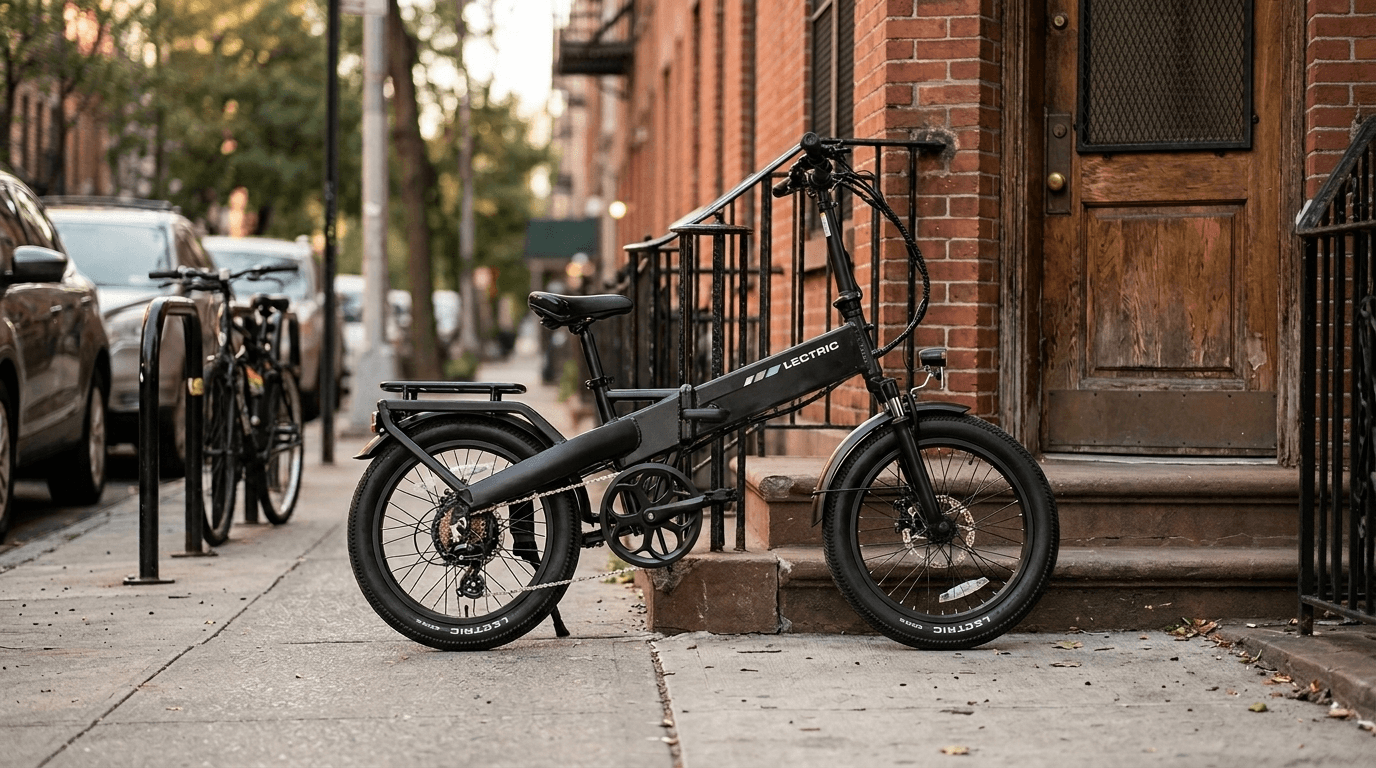
Quick verdict: The Lectric XP4 is the right first e-bike for most delivery riders. At $999 for the 500W version and $1,299 for the 750W long-range, it brings hydraulic brakes, a torque sensor, and built-in turn signals to a folding e-bike at a price point where you would normally be settling for less. It folds for apartment storage, ships with a rear rack, and is UL certified for NYC building charging. It is the most capable budget delivery e-bike available right now.
Shop the Lectric XP4 at Lectric | Back to Full E-Bike Comparison
Who This Review Is For
You are considering your first delivery e-bike. You want to verify the income before spending $1,500 or more. You live in an apartment, possibly a walkup, and need a bike that comes inside at the end of a shift without becoming a problem. You have heard about the Lectric XP line and want to know whether the XP4 is actually worth it compared to what came before.
This review answers those questions. If you want the comparison between this and the step-up options, start here first: Full E-Bike Comparison for Delivery Riders
Lectric XP4 Specs at a Glance
| 500W Model 750W Model |
| Price | $999 | $1,299 |
| Motor | 500W rear hub, 1,092W peak, 55Nm | 750W rear hub, 1,310W peak, 85Nm |
| Sensor | Torque sensor | Torque sensor |
| Battery | 48V 10.4Ah / 500Wh | 48V 17.5Ah / 840Wh |
| Real-World Range | 30-40 miles (city delivery) | 45-60 miles (city delivery) |
| Weight | ~70 lbs | ~71 lbs |
| Payload | 330 lbs | 330 lbs |
| Top Speed | 28 mph (Class 3 configurable) | 28 mph (Class 3 configurable) |
| Drivetrain | 8-speed Shimano Altus | 8-speed Shimano Altus |
| Brakes | 602 Hydraulic disc | 602 Hydraulic disc |
| Display | 3.5" TFT color, USB-C port | 3.5" TFT color, USB-C port |
| Taillight | Integrated turn signals, brake light | Integrated turn signals, brake light |
| Rear Rack | Included standard | Included standard |
| Folds | Yes | Yes |
| UL Certified | Yes: UL 2849 and UL 2271 | Yes: UL 2849 and UL 2271 |
What the XP4 Gets Right for Delivery Work
Hydraulic Disc Brakes at the Entry Price
This is the upgrade that changes the most for delivery riders switching from the previous XP 2.0 or coming from a standard bicycle. The XP 2.0 ran mechanical disc brakes. The XP4 runs 602 hydraulic disc brakes with rotors 28 percent thicker than most competitors in this class.
The practical difference shows up in two situations. The first is wet pavement. Mechanical disc brakes require noticeably more hand pressure when wet. In January rain on NYC streets, that extra squeeze takes your attention away from what is happening in front of you. Hydraulic brakes respond at the same pressure regardless of conditions. You do not have to think about it.
The second situation is repeated stopping. Over a delivery shift in the city, you stop at red lights, stop at restaurant doors, stop at building entrances. After 30 to 40 stops in three hours, the consistency of hydraulic brakes means your braking response does not degrade with fatigue the way your hand pressure on mechanical brakes does.
At $999, hydraulic disc brakes are genuinely unusual. Lectric built them in without raising the price. That is worth noting.
Torque Sensor: What It Actually Changes on a Shift
The XP 2.0 used a cadence sensor. A cadence sensor detects whether you are pedaling and applies a fixed level of motor assist based on that binary information. You either get assist or you do not.
A torque sensor measures how hard you are pressing on the pedals and scales motor output proportionally. Push harder into a headwind or up a grade and the motor gives more. Ease off on a flat and it backs off. The result is a riding experience that feels natural rather than assisted.
For delivery riders this translates into smoother stop-and-go riding through restaurant clusters and intersections. Each launch from a dead stop feels proportional to your effort rather than triggering at a fixed level. Over a full shift in the city, that smoothness reduces the micro-fatigue that accumulates from dozens of jerky motor engagements.
The 500W vs 750W Decision
Both models fold identically, have the same frame, brakes, display, and rack. The differences are motor size, battery capacity, and price.
Get the 500W ($999) if: You are doing your first three to six months and validating the income. Your daily shift covers under 35 miles. Your zone is mostly flat. You want the lowest financial commitment while you figure out whether this work is right for you.
Get the 750W ($1,299) if: You already know this is serious income for you. You regularly do back-to-back shifts or long blocks. Your zone has hills you hit multiple times per shift. You want to not think about range for most of the year including winter. The 840Wh battery on the 750W handles the battery chemistry drop in cold weather better in absolute terms because it starts from nearly double the capacity.
The $300 gap is real but the 750W is not the RadRunner Plus. At $1,299 you are still on a folding bike at the Lectric build level. If long-term, high-volume delivery is the plan, that $300 buys significantly more range and significantly more hill-climbing confidence.
It Folds, and That Still Matters
The XP4 folds to a manageable size in under 30 seconds. For apartment riders in New York where storage space is real and limited, this remains the single most important feature at this price point. No other folding e-bike with hydraulic brakes, a torque sensor, and a built-in rear rack exists at $999. That combination is what puts the XP4 on this list.
UL 2849 and UL 2271 Certified
In New York City, UL certification is the difference between a bike you can charge in your apartment and one that building management will not allow indoors. The XP4 carries both UL 2849 (full electrical system) and UL 2271 (battery). Lectric's certification is verified by a US-based bicycle testing lab through the ISO 4210 standard process. If your building management asks for documentation, it exists.
Real-World Performance on a Delivery Shift
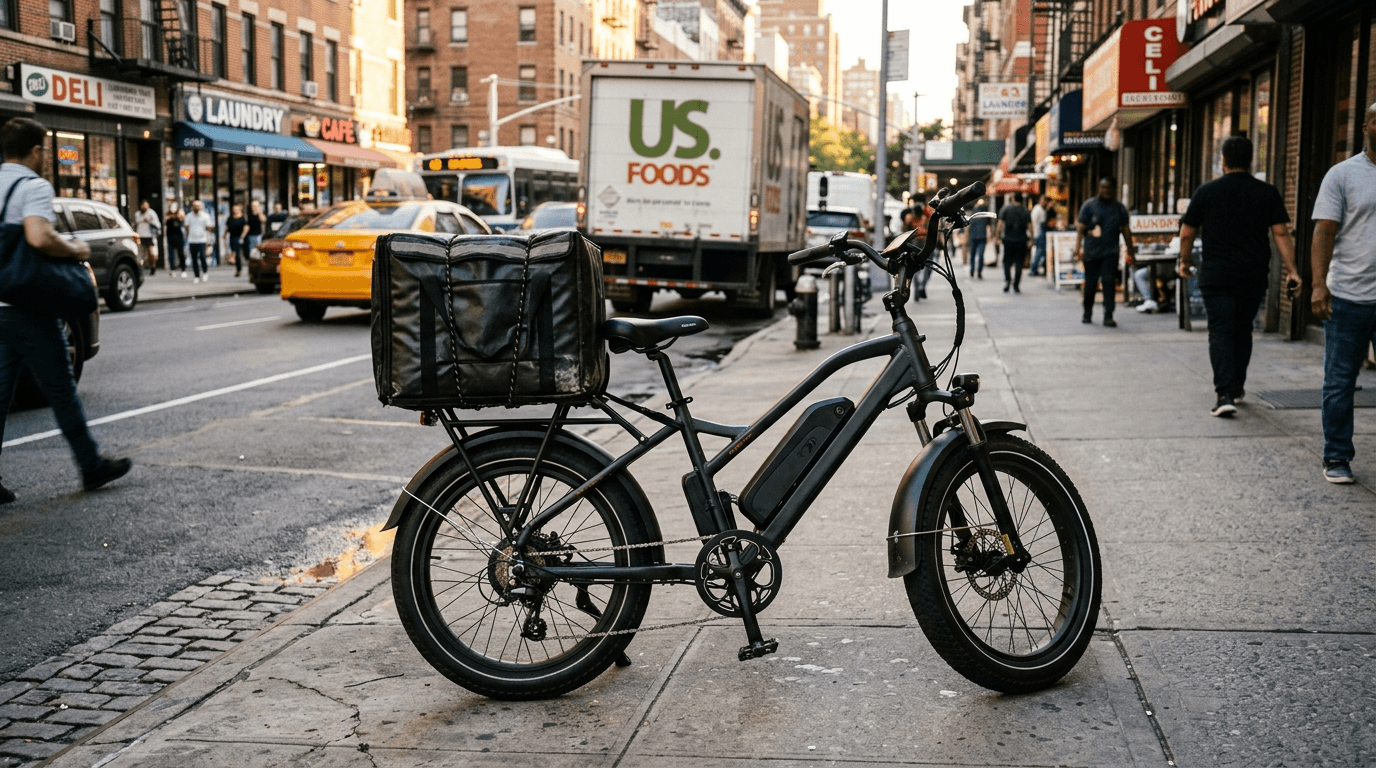
I ran the 500W model through a lunch block in Manhattan and Brooklyn, starting in the West Village and working east through SoHo into the Lower East Side. Conditions: 58 degrees, partly overcast, assist level 3 most of the time, full insulated delivery bag on the rear rack, constant stop-and-go.
I covered 29 miles across a three-and-a-half-hour block before ending the shift with the battery showing around 25 percent remaining. That projects to approximately 38 to 40 miles on a full charge under those conditions, landing within the realistic spec range for city delivery use.
The torque sensor made the most noticeable difference in the SoHo section where restaurant pickups were every two or three blocks. Each launch from a red light felt smooth rather than stepped. By the end of the block I was less fatigued than I typically am after the same distance on a cadence-sensor bike.
750W real-world data from independent testing: A reviewer in Chicago covered 52 miles of mixed city riding at 195 lbs before the battery ran low, using about 60 percent pedal assist throughout. For delivery riders running shorter per-shift distances, the 750W battery is effectively limitless for a standard block even in winter.
Cold weather note: At 28 degrees, expect the 500W battery to deliver around 25 to 30 real miles instead of 38 to 40. At those temperatures the 750W battery will still cover 40 to 50 real miles for most delivery shifts. If winter riding is a significant part of your plan, the 750W is the better starting point.
The One Thing I Do Not Love About It
The weight. At approximately 70 pounds the XP4 is about six pounds heavier than the outgoing XP 2.0. That additional weight comes from the upgraded hydraulic brake components and the larger battery on the 750W version.
For most apartment storage situations the fold still solves the problem. But if you are carrying the bike up stairs at the end of every shift, 70 pounds is a daily physical ask that 64 pounds was not. The fold helps but it does not eliminate the weight. If your storage requires regular stair carrying, factor this into your decision.
This is not a reason to avoid the XP4. It is the honest cost of the hydraulic brakes and better battery that make it a better delivery tool. Know it going in.
Integrated Turn Signals and Brake Light
The XP4 taillight has integrated turn signals that are activated from a handlebar control, and a brake light that activates automatically when you engage the brakes. At night in the city, these features change how visible you are to traffic behind you.
A brake light that fires when you squeeze the brakes is a direct communication to the driver behind you. In stop-and-go traffic on a busy Brooklyn street, that automatic signal gives trailing vehicles a fraction more reaction time. Over a shift, that adds up in a way that is hard to quantify but real.
The turn signals are a bonus rather than a necessity, but they are the kind of feature that typically appears on bikes costing $500 more.
Charging, Storage, and NYC Building Compliance
The battery slides out of the frame for separate charging. You do not need to bring the whole bike to an outlet. For apartment riders charging from a bedroom or kitchen outlet, that is a meaningful quality of life improvement over bikes with non-removable batteries.
A full charge from empty takes approximately 4.5 hours with the standard charger. Lectric sells a 5-amp fast charger that cuts that to under 2 hours, which is worth adding if you are doing back-to-back shifts with a mid-day turnaround.
For NYC building compliance: UL 2849 documentation is available from Lectric. If your building management requires written evidence of certification before allowing the bike inside, contact Lectric directly. They will provide the documentation.
Who Should Buy the Lectric XP4
Buy the 500W XP4 if:
You are in your first three to six months of delivery riding and validating the income before committing more. You live in an apartment and need a bike that comes inside. Your zone is flat to moderate and your daily shift mileage stays under 35 miles. You want hydraulic brakes and a torque sensor at the $999 price point.
Buy the 750W XP4 if:
You already know this work is generating consistent income. You are doing longer shifts or back-to-back blocks. You want winter range that does not require planning around charging stops. You are willing to spend $1,299 to avoid thinking about range for most of what you will encounter.
Do not buy the XP4 if you are regularly accepting large, heavy orders that push the limits of a standard rear rack, or if your zone involves sustained steep climbing every shift. Those situations are where the RadRunner Plus earns its price premium.
XP4 vs RadRunner Plus: When to Step Up
The RadRunner Plus costs more and earns it in two specific ways: a purpose-built utility frame designed for sustained full-time delivery use, and a heavier-duty cargo platform that handles larger or heavier load configurations more stably.
The XP4 closes the gap considerably over the XP 2.0. The hydraulic brakes and torque sensor bring it much closer to RadRunner Plus territory than the XP 2.0 ever was. The remaining difference is frame design and the non-folding stability of the RadRunner for riders doing this full-time at high volume.
My honest view: the XP4 750W at $1,299 is a genuine alternative to the RadRunner Plus for riders who prioritize apartment storage above all else. The RadRunner Plus does not fold. If your storage situation requires it, the XP4 750W gives you a capable full-time delivery vehicle that still fits in your apartment.
Read the Full RadRunner Plus Review
The Bottom Line
The Lectric XP4 is the best budget delivery e-bike available in 2026. Hydraulic disc brakes and a torque sensor at $999 are not standard at this price point. They are the features that make this bike genuinely useful on a NYC delivery shift rather than merely adequate.
It folds. It is UL certified. The rear rack is built in. The taillight has turn signals and a brake light. The display charges your phone. For a rider starting out or working in a market where apartment storage is a real constraint, there is no better starting point at this price.
Shop the Lectric XP4 at Lectric
For the full side-by-side comparison across all three primary bikes: Best Electric Bike for Delivery Riders 2026
Before your first shift: 9 Things Every Gig Delivery Rider Needs Before Their First Shift