9 Things Every Gig Delivery Rider Needs Before Their First Shift (2026)
Most new gig riders lose money in their first months because of gaps they didn't see coming. Here's the exact setup I wish someone gave me before my first order.
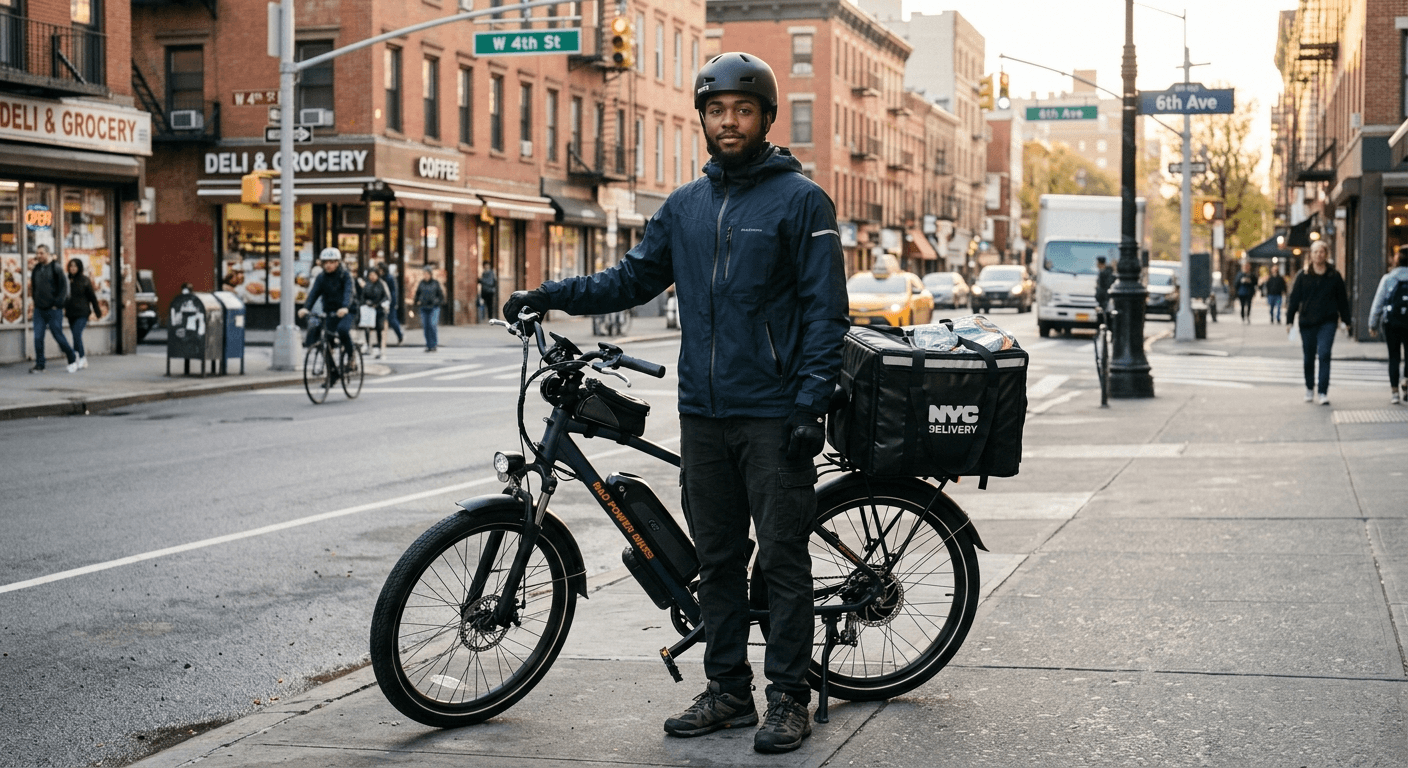
If you came from my What Pays More: Uber Eats or DoorDash - 2026 Breakdown, you already know which platform pays more. That is the right first question. This is the second one: are you actually set up to keep what you earn?
The gross hourly numbers in that article assume your costs are under control. They assume your gear handles the conditions. They assume you can finish a shift when something goes wrong. Most new riders are not set up for any of that in month one, and that is where the money disappears.
Your e-bike matters. What you carry matters. Whether you can ride through rain, handle a flat at 9pm, and still be on the road six hours in that matters just as much and gets talked about far less.
This is what I wish someone had handed me before I took my first order. Some of it costs money upfront. None of it costs as much as getting it wrong.
1. Your E-bike: Get This Right Before You Touch Anything Else
Your e-bike is not a vehicle choice. It is a business decision. It sets your earning ceiling, your running costs, and how many orders you can physically complete in a shift before the battery or your body gives out.
Most beginners either underspend on something that breaks in two months or overspend before they know if this work suits them. There is a middle path.
The Pick: Funhang EB-S1

- UL 2849 and UL 2271 certified through SGS
- Rear rack rated to 60 lbs
- Real 48V 13Ah battery
- Lowest price point on the list
- Mechanical disc brakes instead of hydraulic
- Slower 6.5-hour charge time and shorter 12-month warranty
This is the bike I would hand to someone starting out today. It sits in the sweet spot, sturdy enough for daily delivery use, priced low enough that you are not taking a serious financial risk before your first paycheck clears.
What you get: a rear rack built in for cargo bags, a motor that handles city hills without drama, and a battery range that covers most full shifts without a mid-day charge. It folds for apartment storage, which matters if you are in a city. It is available on Amazon with Prime delivery, which means you are riding within the week.
The one thing I do not love about it: like most bikes in this price range, the battery range drops noticeably in cold weather. If you are doing winter shifts, expect 20 to 25% less range than the spec sheet says and plan your charges accordingly.
Already have an e-bike? Skip to the kit list below and start with section 2.
Want to compare before you commit?
Best Electric Bike for Delivery Riders 2026: Which E-Bike Earns More Per Hour? I tested four models against each other on battery range, cargo load, and net earnings per hour. If you want the full picture before buying, that is the article.
Also worth reading if you are considering stepping up:
- Lectric XP4 Review for Delivery Riders - best budget pick for riders who want hydraulic disc brakes and a torque sensor at under $1,000
- Rad Power RadRunner Plus Review - the step-up for riders going full-time who need more cargo capacity and longer real-world range
- Aventon Abound SR Review - the serious cargo option for riders doing high-volume city work who need a 440lb payload and built-in GPS
What to Buy First If You Already Have an E-bike
Rear rack cargo bag or insulated backpack, phone mount, U-lock, portable tyre inflator. Budget $100 to $180. All on Amazon. The sections below cover each one in detail.
2. Delivery Bags: Your Rating Lives in This Bag
A dropped drink. A crushed burger. A lukewarm pizza at the door. Any one of those gets you a one-star rating, and ratings gate your access to peak pay periods and high-value orders. One bad week of ratings costs you more than a good bag ever will.
I used a reusable grocery bag for my first two weeks. I understand how much it cost me now.
The Pick: Insulated Food Delivery Backpack

- Expandable design adapts from solo to multi-item pickups
- Leakproof lining handles interior spills
- Reflective strips for night and evening shift visibility
- Padded chest and waist strap, reduces sway on a bike
- Multiple pockets for organised carrying
- Capacity ceiling limits full-time high-volume use
- Cannot sustain 60+ min retention windows
Hard base so containers sit flat, zipper top so nothing tips in transit, wipes clean between shifts. No rack required to start - keeps your hands free and fits through the tight back-door entrances you will encounter at every busy restaurant.
The one thing I do not love about it: the straps are not great for rides over 40 minutes with a heavy load. Once you are doing longer suburban runs or taking multiple orders at once, move to a rack setup.
When you are ready to step up to a rack setup:

- Enables a full pannier setup
- Noticeable comfort benefit
- Natural upgrade path
- Supports multi-order stacking
- Not needed on day one
- Requires frame compatibility
Pair it with a pannier bag and you take the weight off your back entirely on longer shifts. Your lower back will notice the difference around the two-hour mark.
Want to compare bags before buying?
- Best Insulated Food Delivery Bags for Bike Riders - 2026 - five bags tested for heat retention, rack fit, and multi-order runs on DoorDash and Uber Eats.
- Insulated Food Delivery Bag Review - Cheap to Pro-Grade - if you are not sure how much to spend, this breaks down exactly what each price tier actually delivers so you stop wasting money on the wrong bag.
3. Weather Protection: The Thing That Ends Most Beginner Shifts Early
Nobody tells you this before your first shift. Most riders who quit in their first month did not quit because the pay was bad. They had one genuinely miserable ride in the rain with no gear and decided the whole thing was not worth it.
Weather is not a factor you work around. It is a factor you equip for. The riders who are still on the road in November while everyone else has paused their accounts are almost always the ones who spent $100 to $150 upfront on the right clothing.
The Pick: Waterproof Class 3 Safety Jacket

- Taped seams hold in sustained rain
- High-visibility panels built in
- Tested over two New York winters
- Combines weatherproofing and safety
- Wrist cuffs degrade over time
- Incomplete on its own
I wore this through two New York winters. It solves two problems in one garment: taped seams that hold in sustained rain, and high-visibility panels built in for night riding. If you buy one piece of weather gear, make it this.
The one thing I do not love about it: the wrist cuffs start to let water in after about 18 months of regular use. Hit them with waterproofing spray before that point and you will extend the life significantly.
Add these alongside it:
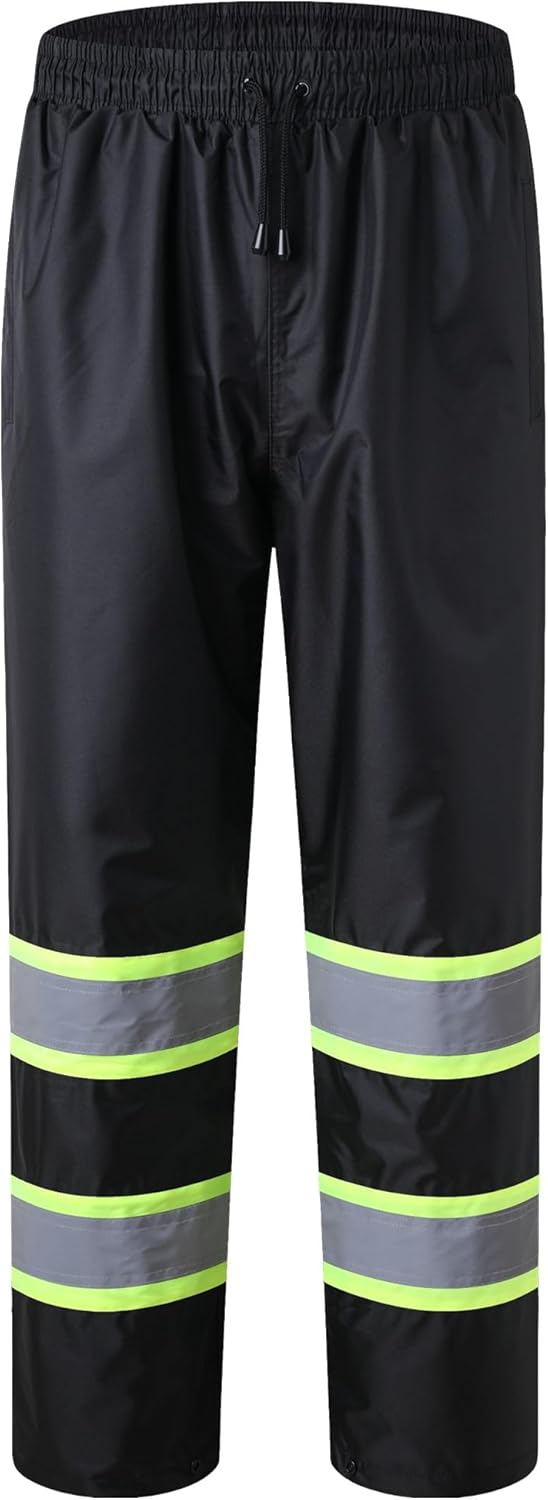
- Closes the gap the jacket leaves open
- High-visibility design
- Completes the rain system
- Pairs directly with the recommended jacket
- Often skipped by riders
- No specific longevity or seam detail given
The jacket alone is not enough if you are doing shifts longer than 90 minutes in the rain. Most riders cut corners on the trousers. Most riders end shifts soaked from the waist down.
Waterproof gloves with touchscreen-compatible fingertips. If you have to pull your gloves off to accept an order every time it rains, you will stop wearing them within a week. Get ones that work with your screen.
Thermal base layer for cold weather. Not a cotton long sleeve. Cotton holds moisture against your skin. Merino or synthetic wicks it away. The difference on a four-hour February shift is about two extra hours of riding time before your body starts shutting things down.
Want to go deeper on glove options?
- Best Motorcycle Gloves Under $50 for Delivery Shifts - matched by weather, season, and riding style. Most of these work just as well for e-bike riders.
- Leather vs Textile Motorbike Gloves - Delivery Rider Guide - if you want to understand what you are actually buying before you spend money.
4. Comfort Upgrades: Why Most Riders Quit in Month Two (And How to Not Be One of Them)
Everyone talks about the platform, the pay, the vehicle. Nobody mentions that six hours in the saddle on a stock seat with no padding is the thing that actually makes people stop doing this work.
Body fatigue is a real cost that does not show up in your hourly calculation. A rider who is uncomfortable quits early. A rider who quits early earns less per shift. Over a month, that gap between what you earned and what you could have earned is significant.
The riders I know who are still doing this after a year have all made at least a few of these upgrades. Most of them wish they had done it sooner.
The Pick: Gel Seat Cushion Cover

- Very low cost
- Installs in 30 seconds
- Pays for itself fast
- Addresses the actual reason riders quit
- Doesn't solve everything
- Limited durability info
Your stock saddle is not designed for six consecutive hours. A gel seat cover is $15 to $25, installs in 30 seconds, and recovers its cost in the first week of longer shifts. If you buy nothing else from this section, buy this.
Add these for longer shifts:

- Hands-free hydration
- 3-litre capacity
- Addresses a real, overlooked cost
- Low-maintenance design
- Bite valve needs annual replacement
- Adds another layer to wear
Dehydration hits faster than you expect when you are working physically. Riders who are dehydrated make slower decisions, miss orders, and end shifts early. Carry water. The 3-litre reservoir fits over a delivery backpack and keeps your hands free. Stock up on replacement bite valves, they need replacing roughly once a year with daily use.
Padded cycling shorts. If you are on an e-bike for more than three hours a day, this is the single upgrade that will extend how long you can work per shift. Budget $20 to $40. You do not need expensive ones to feel the difference.
Compression leg sleeves. CEP or Physix Gear - wear them under your trousers on longer shifts. A lot of experienced riders swear by these for recovery, especially if you are doing doubles.
Ergonomic handlebar grips if your wrists fatigue early. The standard grip angle on most e-bikes is fine for 30 minutes and uncomfortable after three hours. A $15 to $20 swap makes a noticeable difference.
The honest truth about comfort upgrades is that most of them cost under $30. A rider who is not in pain works longer, accepts more orders, and earns more. This is not a luxury category. It is a productivity category.
5. Safety Gear: The Platforms Will Not Protect You. This Will.
Gig platforms classify you as an independent contractor. If you go down on a shift, the platform has no liability for your medical costs or your lost income while you recover. You are on your own.
I am not trying to scare anyone. I am telling you what the contracts actually say so you make an informed decision about the gear you put on before a shift.
A low-speed slide in the rain without gloves means road rash on your palms. With gloves it means a close call. That difference matters when your hands are how you earn.
The Pick: KEMIMOTO Tactical Gloves

- Palm and knuckle protection
- Touchscreen-compatible fingertips
- Doubles as safety gear
- Affordable safety category entry
- Runs small
- No stated waterproofing spec
Good palm and knuckle protection, touchscreen-compatible fingertips so you do not have to remove them to accept orders.
The one thing I do not love about them: they run small. Order a size up.
Add these alongside them:
The waterproof jacket and rain pants from section 3 double as safety gear. High-visibility panels matter just as much as waterproofing when you are riding at night in a city full of double-parked cars and delivery trucks blocking sight lines.
Want the full glove breakdown before buying?
- Best Motorcycle Gloves Under $50 for Delivery Shifts - budget picks matched to weather, riding style, and shift type. The same criteria apply to e-bike riders.
- Leather vs Textile Motorbike Gloves - Delivery Rider Guide - protection, breathability, wet weather performance compared in detail.
6. Tech and Lighting: A Dead Phone Ends Your Shift
Your phone is your navigation, your order management, and your income. If it dies mid-shift you are done. If it is mounted badly and falls into traffic, you are done and out a phone.
If you are riding at night without proper lighting, you are invisible. Not just to other road users, to traffic enforcement too. Citations are a real cost that riders do not factor into what a shift actually earned them.
The Pick: Lamicall Motorcycle Phone Mount

- Dual dampeners included
- Tool-free clamp
- Fits 4.7–6.7" phones
- Handlebar clamp loosens over time
- Needs pre-shift tightness check
Locks positively, does not rattle loose over bad roads, and does not require a case adapter for most current phone models. The only mount I trust at speed in the city.
The one thing I do not love about the premium options: they are expensive for what they physically are. Check compatibility with your phone model before ordering.
Add these alongside it:

- Solves a shift-ending failure point
- Compact
- Pairs naturally with the phone mount recommendation
- Addresses a frequent, predictable problem
- Pass-through charging isn't guaranteed across the line
- No capacity (mAh) specified
A six-hour shift will drain your phone. Carry the power bank in your jacket pocket so you can top up while riding rather than stopping. Make sure you are buying one that pass-through charges, some cheaper Anker models do not charge your phone while the bank itself is receiving power.
CATEYE AMPP & ViZ USB Rechargeable Bike Light Combo Kit

- Front and rear coverage in one kit
- USB rechargeable
- Bright enough for city night riding
- Avoids fines
- No mention of battery life or charge time
- No weatherproofing detail given
Front and rear. Rechargeable. Bright enough for city roads at night. Do not skip this. Being visible is not a style choice.
VSYSTO Motorcycle Waterproof Dash Camera

- Provides liability evidence
- Real-world track record cited
- Waterproof design
- Passive protection
- Framed as evidence, not safety
- No price, battery, or storage specs given
Not for content. For evidence. If something happens in traffic, the footage is what protects you with insurance and with the police. In New York this has saved riders I know from being found at fault for accidents they did not cause.
Want to go deeper on lighting before buying?
- Best Motorcycle Lights for Delivery Riders - Night Guide - the complete night delivery lighting guide covering LED picks, upgrade order, and legal rules. Written for motorcycle riders but the visibility principles and most of the picks apply directly to e-bike riders on city roads.
- Best Motorcycle Tail Lights for Delivery Riders - LED Picks - if rear visibility is your priority, this is the focused review.
7. Bike Security: In New York, You Have About 90 Seconds
I am going to be direct. In busy parts of New York, a poorly locked e-bike is gone in under two minutes. I have seen it happen outside restaurants during a pickup. The rider goes inside for a few minutes and comes out to nothing.
Your e-bike is your income. Losing it does not just mean a bad day. It means you are off the road until you replace it, and for most people that means no income at all during that time.
Two locks is the minimum. One lock is an invitation.
The Pick: Kryptonite New York Standard U-Lock
Kryptonite New York Standard Bike U-Lock

- Sold Secure Gold rated
- Recognized deterrent brand
- Resists fast attacks
- Industry-standard primary lock
- Heavy
- Needs a second lock to be effective
I use the Kryptonite in New York specifically because the name is recognised by thieves here. There is a deterrent effect beyond the physical lock itself. Rated Sold Secure Gold. Do not use a cable lock as your primary, I have watched cable locks get cut in under 15 seconds.
The one thing I do not love about it: it is heavy. You will feel it on a long shift. Worth it anyway.
Add a secondary lock through the rear wheel. Two different lock types means two different tools needed to break them. Most opportunistic thieves move on.

- Strong all-around performance
- Premium pricing
Tuck it inside the frame or under the seat. Silent, no alert sound to tip off a thief who knows what to listen for, and has better tracking than an AirTag. If the bike moves without you, you know immediately. The one downside: it costs more upfront than an AirTag.
Want the full security breakdown before buying?
- Best Bike U-Lock for Delivery Riders - 2026 Buying Guide - Kryptonite, Abus, OnGuard, and Litelok compared by budget, city risk level, and e-bike use specifically.
- Best U-Lock Under $50 for Delivery Riders - if you need solid protection without the premium price.
- Kryptonite New York U-Lock Review - the detailed review of the specific lock I recommend above, if you want the full verdict before buying.
- U-Lock vs Chain Lock - Which Is Better for Delivery? - if you are deciding between lock types rather than just picking a model.
- How to Lock a Bike with a U-Lock - Delivery Rider Technique - the technique matters as much as the lock. This shows the exact method for fast, secure locking at every stop.
8. Emergency Kit: What Saves a Shift When Things Go Wrong
Most beginners think about what they need to start a shift. Nobody thinks about what they need to finish one.
A slow puncture two hours in. A dropped chain mid-run. Your phone at 4% with no charger and three more orders in the queue. These are not edge cases. They are Tuesday.
The riders who finish their shifts when things go sideways are the ones carrying the right kit. The riders who are not end up texting apology notes to customers from the side of the road watching their ratings drop in real time.
The full kit costs $40 to $80 to put together. The alternative is losing a full shift's earnings in one bad hour.
The Pick: AstroAI L7 Portable Tyre Inflator
AstroAI L7 Tire Inflator Portable Air Compressor

- Rescues shifts other gear can't
- Fast turnaround
- Solves a common, not rare, problem
- Portable
- Slower than a gas station pump
- Doesn't fix worse damage
If you are on an e-bike, this single item will rescue more shifts than anything else on this list. A slow puncture at 9pm in the Bronx without one is a walk home. With it, you are back riding in five minutes.
The one thing I do not love about it: even the faster models take longer than a petrol station pump. Budget the time.
Build the rest of the kit around it:
Spare inner tube + basic patch kit. For anything worse than a slow leak. If you know how to swap a tube in the field, a flat tyre is a 10-minute inconvenience instead of a ruined shift. Carry one tube matched to your tyre size.

- Prevents a shift-ending failure
- Compact size
- Fast application
- Cheap, proactive maintenance
- Reactive rather than preventive in the article's framing
- Single-purpose
If your chain starts skipping mid-shift and you have nothing, you are walking. A small bottle fits in any jacket pocket. A drop when you hear it grinding takes 30 seconds.

- Handles common mid-shift fixes
- Takes up zero space
- Weighs nothing
- Prevents small issues from ending a shift
- Limited to minor repairs
- No specifics given on tool selection
Tighten a loose rack bolt. Adjust brake cables. Takes up zero space. Weighs nothing.
Portable power bank. Already in section 6. Restating it here: a dead phone mid-shift does not just inconvenience you. It stops your earnings completely.
Zip ties, pack of 20 mixed sizes. Costs $3. Weighs nothing. A loose mudguard, a rattling rack, a fraying cable, zip tie it and finish the shift. Deal with it properly at home.
Mini first aid kit. $10 to $15 on Amazon. Road rash from a low-speed slide, a cut from a bag buckle, blisters on a long shift, none of these need to end your day if you have something to deal with them on the spot. Search "mini first aid cycling kit."
The whole kit fits in a small drawstring bag inside your delivery pack or cargo pannier. Under 1kg. Smaller than a paperback book. No good reason not to carry it.
The Short Version
Most riders who quit in their first year did not quit because the platforms stopped paying. They quit because something blindsided them. A stolen e-bike. A shift ended by rain they were not dressed for. Six hours in the saddle with no padding and nothing left in the tank at hour four. A flat tyre with no way to fix it and three orders waiting.
The eight things on this list are not extras. They are what it looks like to run this like a business instead of a side hustle that costs you money.
Start with what protects your earning capacity: your e-bike, your bags, your weather gear. Build out the comfort and emergency kit as your shifts get longer. The investment pays back faster than you think.