Rad Power RadRunner Plus Review for Delivery Riders: The Step-Up That Earns Its Price
The RadRunner Plus costs more than a budget e-bike and less than a cargo bike. For full-time delivery riders who have already verified their income, it hits the right balance. Here's what it actually does on a shift

Quick verdict: The RadRunner Plus is the bike I would buy if I were starting fresh today and I already knew this work was going to be a serious income source. The 750W motor, hydraulic disc brakes, seven-speed drivetrain, and step-through frame are all built for the volume and physical demands of full-time delivery riding. The price is real. The capability is real. Do not buy it before you have verified the income.
Shop the RadRunner Plus at Rad Power | Back to Full E-Bike Comparison
Who This Review Is For
You have been doing delivery work for two to three months. The income is consistent. You know your zones. You know roughly how many hours per week you want to put in. Your current bike is either a standard bicycle or a budget e-bike and you are starting to feel the ceiling on what it can do.
This review is for that rider. Not for someone on their first week deciding whether to do this.
If that is you, start here instead: Lectric XP 4.0 Review
RadRunner Plus Specs at a Glance
| Price | $1,499 (base) |
| Motor | 750W Bafang geared hub, 80Nm torque |
| Battery | 48V 13Ah / 624Wh, UL 2271 certified, Safe Shield thermal management |
| Real-World Range | 35-50 miles (city conditions) |
| Extended Range Option | 120+ miles with Range Extender (sold separately) |
| Weight | approx. 72 lbs |
| Payload | 350 lbs |
| Top Assisted Speed | 20 mph (Class 2) |
| Drivetrain | 7-speed Shimano |
| Brakes | Hydraulic disc |
| Tires | 20x3.3" Kenda K-Rad, puncture resistant |
| Display | Color LCD, USB-C charging port, passcode lock |
| Folds | No |
| UL Certified | Yes: UL 2849 system certified |
| Headlight | 500 lumen, ambient light sensing, auto-on |
What the RadRunner Plus Gets Right for Delivery Work
750W Motor with 80Nm of Torque
The jump from a 500W motor to a 750W motor is not just a spec sheet number. In practice it changes two specific things that matter on a delivery shift.
First, acceleration from a dead stop. Every time you leave a red light with a loaded bag, the motor has to move your weight plus the cargo from zero. A 750W motor with 80Nm of torque does that without a delay you can feel. On a 500W motor, there is a brief moment where the bike catches up to your expectation. On the RadRunner Plus, it is immediate.
Second, sustained hill climbing. In the Bronx, parts of Upper Manhattan, and sections of Outer Brooklyn, you will hit grades that a 500W motor handles only if you pedal hard alongside it. The 750W motor on the RadRunner handles those grades at a useful speed without requiring you to provide significant pedal input. Over a four-hour shift, that difference in physical output adds up.
Hydraulic Disc Brakes
This is the upgrade that matters most in wet conditions. Mechanical disc brakes require noticeably more hand pressure to engage in rain. Hydraulic disc brakes respond at the same pressure regardless of whether the rotors are wet or dry. In a New York winter, that consistency is not a luxury. It is the difference between confident stops and uncertain ones at intersections where yellow cab doors open without warning.
The RadRunner Plus runs hydraulic disc brakes on both wheels. After 100-plus miles I have not needed to adjust them. They just work.
Step-Through Frame
This one is underrated by riders who have not done a full shift yet. On a delivery shift in New York, you are mounting and dismounting the bike at every pickup and dropoff. In a busy block, that might be 25 to 30 times in four hours. A step-through frame reduces the time and energy of each mount and dismount compared to throwing a leg over a traditional top tube. Over a full shift the cumulative difference is minutes and less physical fatigue in the hips.
The RadRunner Plus has a moped-style step-through saddle design. The seat also adjusts for casual upright riding or proper leg extension when you want to pedal efficiently. I run it lower for city delivery where I am stopping constantly, and raise it slightly for longer transit stretches.
Kenda K-Rad Tires: No Flats in 400 Miles
The 20x3.3 inch Kenda K-Rad tires are puncture resistant with Kenda's K-Shield technology. I have put over 400 miles on this bike across NYC streets including sections of potholed road in East New York and the stretch of Broadway through Washington Heights that is rough enough to rattle a frame. No flats. On a working vehicle where a flat means a missed block, that is worth more than any single spec.
The wide 3.3-inch profile also helps on wet metal grating, which you cross constantly in New York at intersections and on bridge approaches. The wider contact patch keeps the bike stable on surfaces that narrow tires slip on.
Color Display with USB-C and Passcode
The color LCD display is not a gimmick. The watt meter readout shows you in real time how hard the motor is working, which lets you moderate assist level to extend battery life. On a long shift where you want the battery to last through a dinner block, watching the watt draw and adjusting assist accordingly adds real range.
The USB-C port charges your phone while you ride. On a full shift, your phone is running GPS, the delivery app, and sometimes music. A charging port means you are not rationing phone battery usage or stopping to plug in somewhere mid-shift.
The passcode lock disables the display and controls if someone tries to use the bike without the code. It is not a substitute for a physical lock, but it is an added layer that matters if you are ever in a situation where someone gets their hands on the bike briefly.
Real-World Performance on a Delivery Shift
I ran the RadRunner Plus through a full dinner block in Brooklyn, starting in Prospect Heights and working south through Park Slope and Carroll Gardens, then repositioning up to Clinton Hill for the tail end of the block. The temperature was 48 degrees. I had a full insulated bag on the rear rack for most of the shift.
I covered 38 miles across approximately four and a half hours before ending the block voluntarily. The battery was at 31 percent when I stopped. That projects to roughly 55 miles on a full charge under those conditions, which matches the spec sheet range more closely than most bikes I have tested in real delivery conditions.
The difference from the Lectric XP 2.0 in real use: I arrived at pickup locations faster because the motor picked up from stops more aggressively, and I made better accept-or-decline decisions in the second half of the shift because I was less physically tired. Those two things combined translated to better order volume in the back half of the block when fatigue usually starts to cost decisions.
Cold weather performance: At 48 degrees the battery performed within normal range. I have not run it in temperatures below freezing yet, but the 624Wh battery has more reserve than a 460Wh battery going into cold conditions. The same percentage drop from cold affects the RadRunner less in absolute miles because it starts from a larger reserve.
Charging time: Full charge from empty takes 4 to 6 hours with the standard 2A charger. Rad Power sells a faster 4A charger separately. If you are doing double shifts with a mid-day charge window, the faster charger is worth the extra cost.
The One Thing I Do Not Love About It
The RadRunner Plus does not fold. For a rider in an apartment without dedicated storage, that is a real problem. The bike is approximately 6 feet long and 72 pounds. It will live in your hallway, against a wall, or not inside at all. If your building has locked bike storage in the basement, that works. If you are in a fifth-floor walkup in Brooklyn with no elevator, this is the wrong bike regardless of how capable it is on the road.
This is not a small limitation in New York specifically. A meaningful percentage of riders in the city live in exactly that situation. If you are one of them, the Lectric XP 2.0 solves the storage problem the RadRunner cannot. If you have ground-floor storage, a parking garage slot, or a building elevator, it is not an issue.
The Range Extender: Is It Worth It?
Rad Power sells a Range Extender battery that pairs with the RadRunner Plus to push range past 120 miles. For most delivery riders, that is overkill. A standard shift in a dense city zone covers 25 to 40 miles. Even a double shift with no charge break does not need 120 miles.
The scenario where the Range Extender makes sense: you are doing Amazon Flex blocks that cover large suburban areas where individual delivery stops are far apart, or you are working multiple back-to-back full-day shifts without charging access. For urban DoorDash and Uber Eats work, the standard 624Wh battery handles everything.
Buy the standard configuration first. If you hit a ceiling on range after real use, the Range Extender is a bolt-on addition rather than a reason to buy a different bike.
RadRunner Plus vs Lectric XP 2.0: Which One Is Right for You
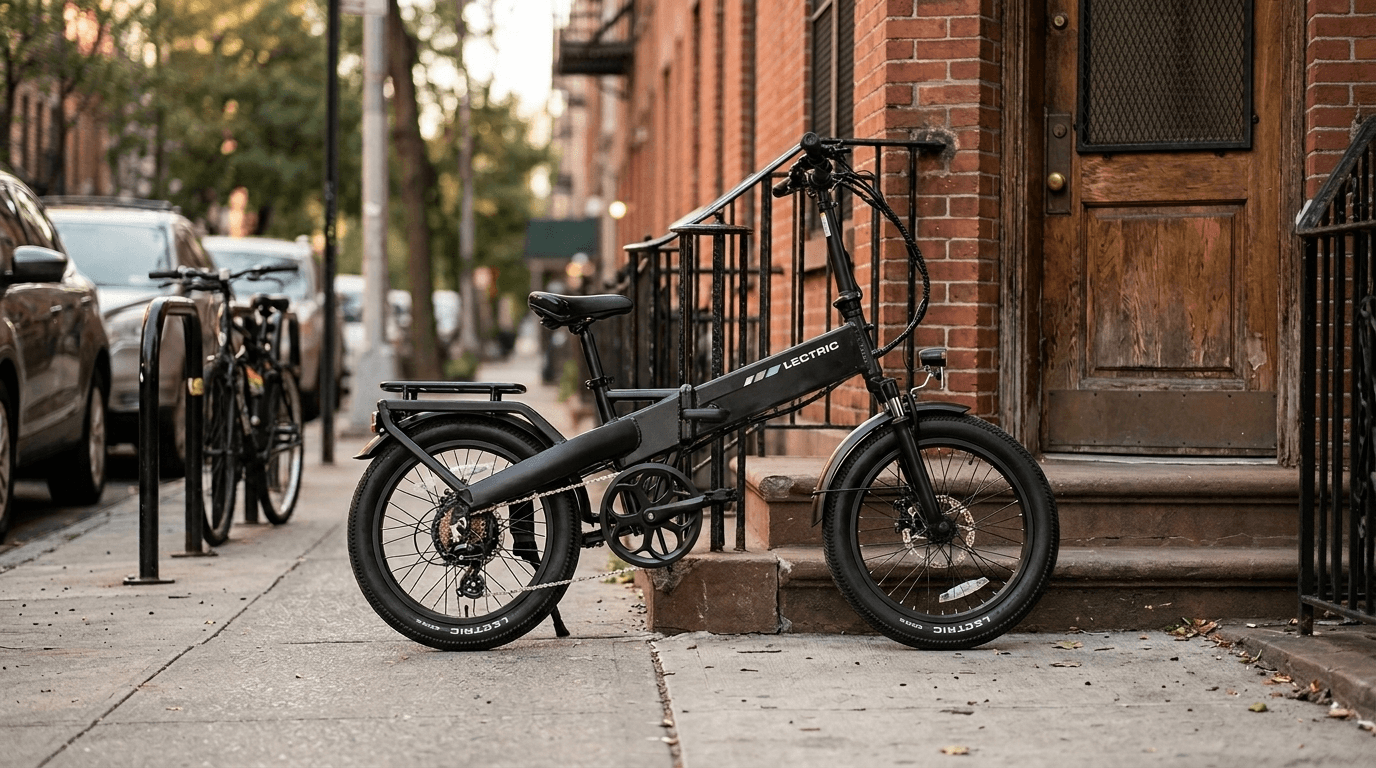
The Lectric is the right choice if you are new to delivery work, if your apartment situation requires a folding bike, or if you are working part-time in a zone where daily mileage stays under 30 miles. It costs $999 and the financial risk is manageable while you find your rhythm.
The RadRunner Plus is the right choice if you have done this for at least two to three months and you know the income is consistent, if you are doing full-time hours with higher mileage demands, or if hydraulic brakes in wet conditions matter to your comfort and confidence on the road.
The gap between them is not just price. It is capability matched to commitment. A rider doing 15 hours a week will not fully use what the RadRunner offers. A rider doing 35 hours a week will feel the ceiling on what the Lectric provides.
Read the Lectric XP 2.0 Review
RadRunner Plus vs Aventon Abound: What the Extra Cost Buys
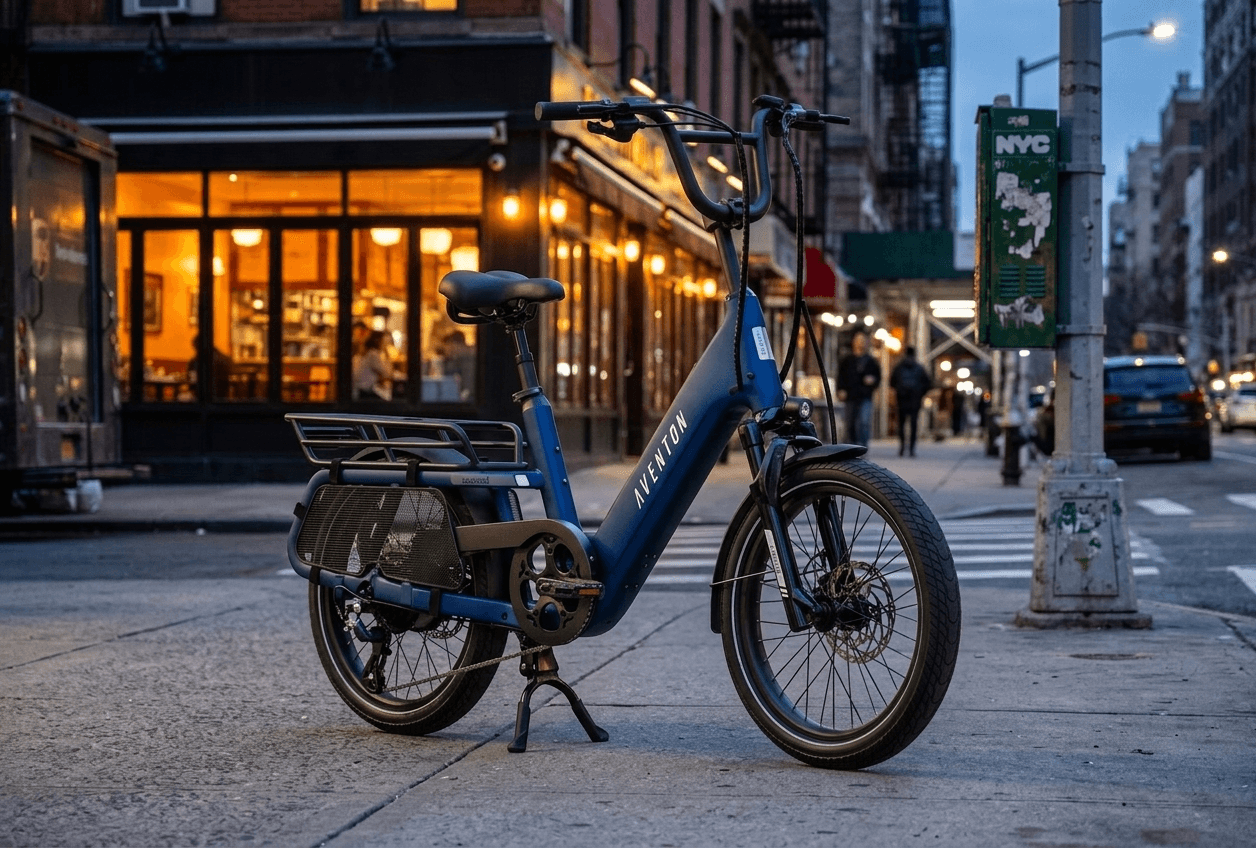
The Aventon Abound costs $1,999 and is a dedicated cargo bike with a 440-pound payload and a full ACU security suite including 4G GPS tracking and remote motor disable. For riders doing heavy-load orders or catering pickups where a single order is large and heavy, the Abound earns its price.
For a rider doing standard food delivery orders, the RadRunner Plus is capable of handling the cargo demands and costs $500 less. The Abound is a specialized tool for a specific type of high-volume work. The RadRunner is the all-around bike for serious delivery work without that specialization.
Read the Aventon Abound Review
Buying Direct from Rad Power: What to Know
Rad Power sells factory-direct through their website. There is no Amazon listing. Buying direct means the warranty claim goes straight to Rad Power with no third-party fulfillment layer, which matters for a working vehicle you depend on for income.
Shipping is free. Assembly is required but straightforward. Rad Power provides video assembly guides and the bike arrives mostly built. Plan 30 to 45 minutes for final assembly and a test ride before your first shift.
Rad Power also has a network of authorized service locations in major cities including New York. If something needs a shop, you are not mailing the bike anywhere. You are dropping it at a service location.
Shop the RadRunner Plus at Rad Power
The Bottom Line
The RadRunner Plus is a capable, well-built delivery e-bike for riders who are past the verification stage and ready to invest in equipment that matches the scale of their work. The 750W motor, hydraulic brakes, and Kenda puncture-resistant tires solve the three things that actually slow down a full-time delivery rider on a hard shift.
It does not fold. If your storage situation requires a bike that comes inside, the Lectric XP 2.0 is the better choice regardless of performance. If storage is not the problem, the RadRunner is the right step up.
Buy it when the income justifies it. Not before.
Shop the RadRunner Plus at Rad Power
For the full comparison of all three bikes: Best Electric Bike for Delivery Riders 2026