Best Electric Bike for Delivery Riders 2026: Which E-Bike Earns More Per Hour?
Not all e-bikes are equal when your income depends on them. I tested battery range, cargo load, and net hourly earnings across 6 models. Here's which one wins.
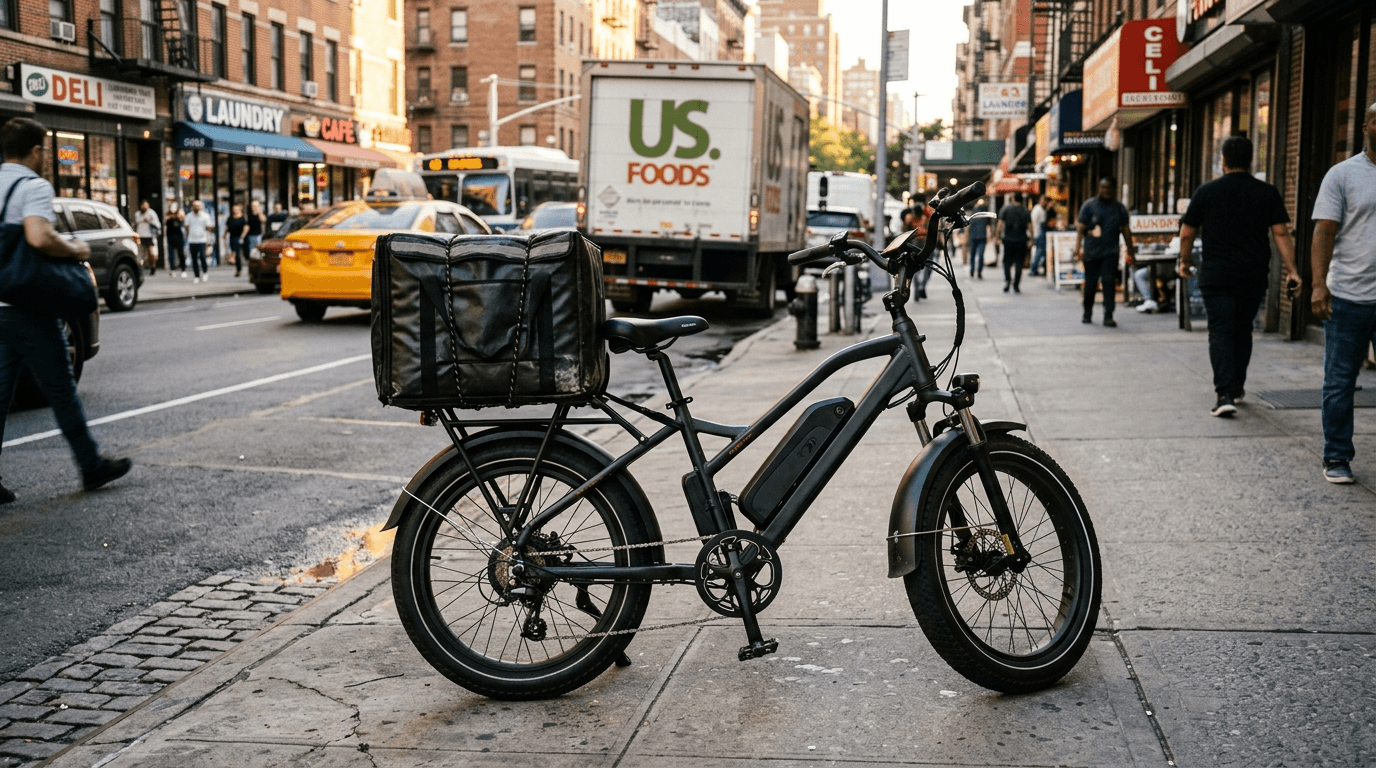
Most e-bike reviews are written by people who ride for fun on weekends. They care about how it feels on a trail. I care about how many orders I can complete before my phone dies and whether I can lock it to a pole outside a Chipotle in Midtown for three minutes without coming back to a cut cable.
This is a working guide for working riders. I am not going to tell you which e-bike has the smoothest ride or the best color options. I am going to tell you which one earns more per hour, which one survives a New York winter, and which one you should not buy first.
Quick Comparison: Top E-Bikes for Delivery Riders 2026
| E-Bike | Best For | Real-World Range | Full Review | Buy Now |
| Funhang EB-S1 | Testing delivery work on the tightest budget | 30-55 miles | Full Funhang EB-S1 Review | CHECK AMAZON PRICE |
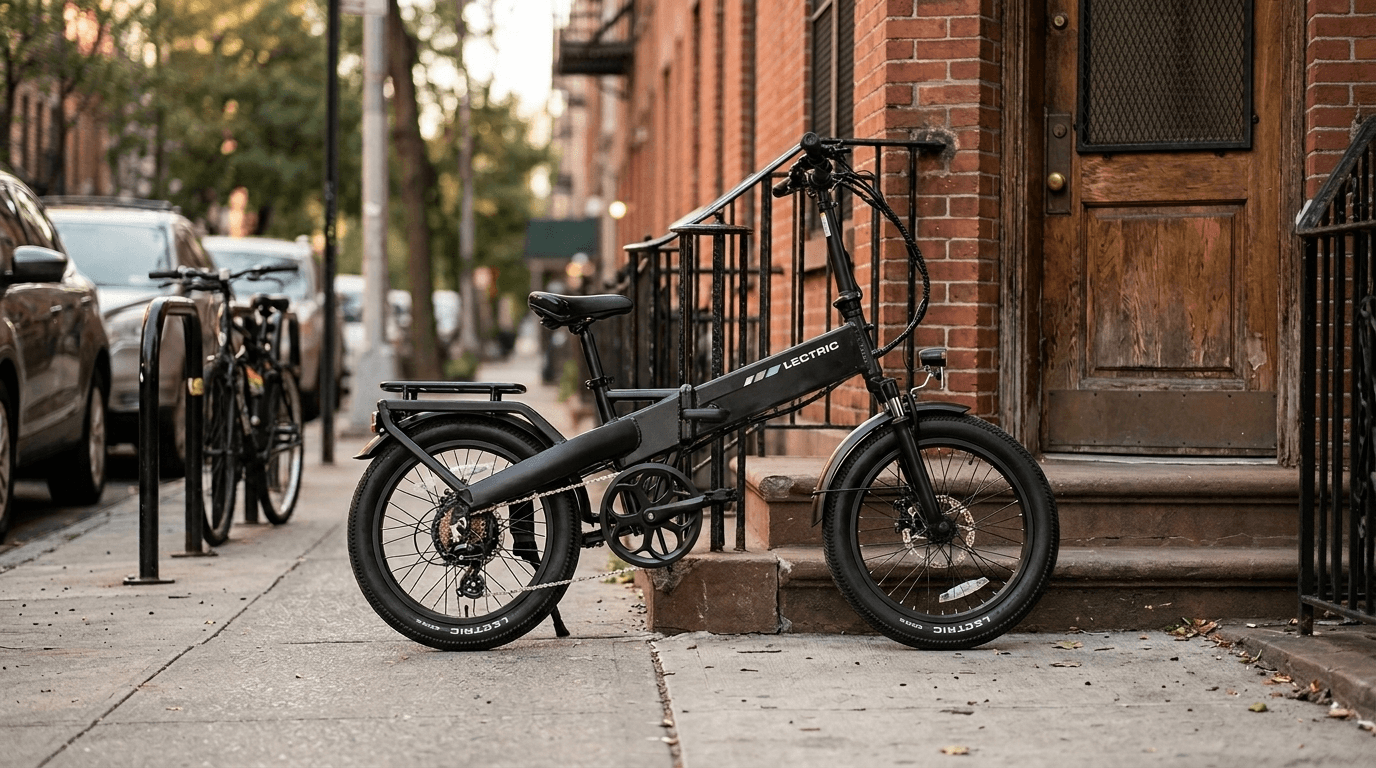
| Lectric XP4 | New riders, apartment storage, best all-around value | 30-55 miles | Full Lectric XP4 Review | CHECK ON OFFICAL SITE |
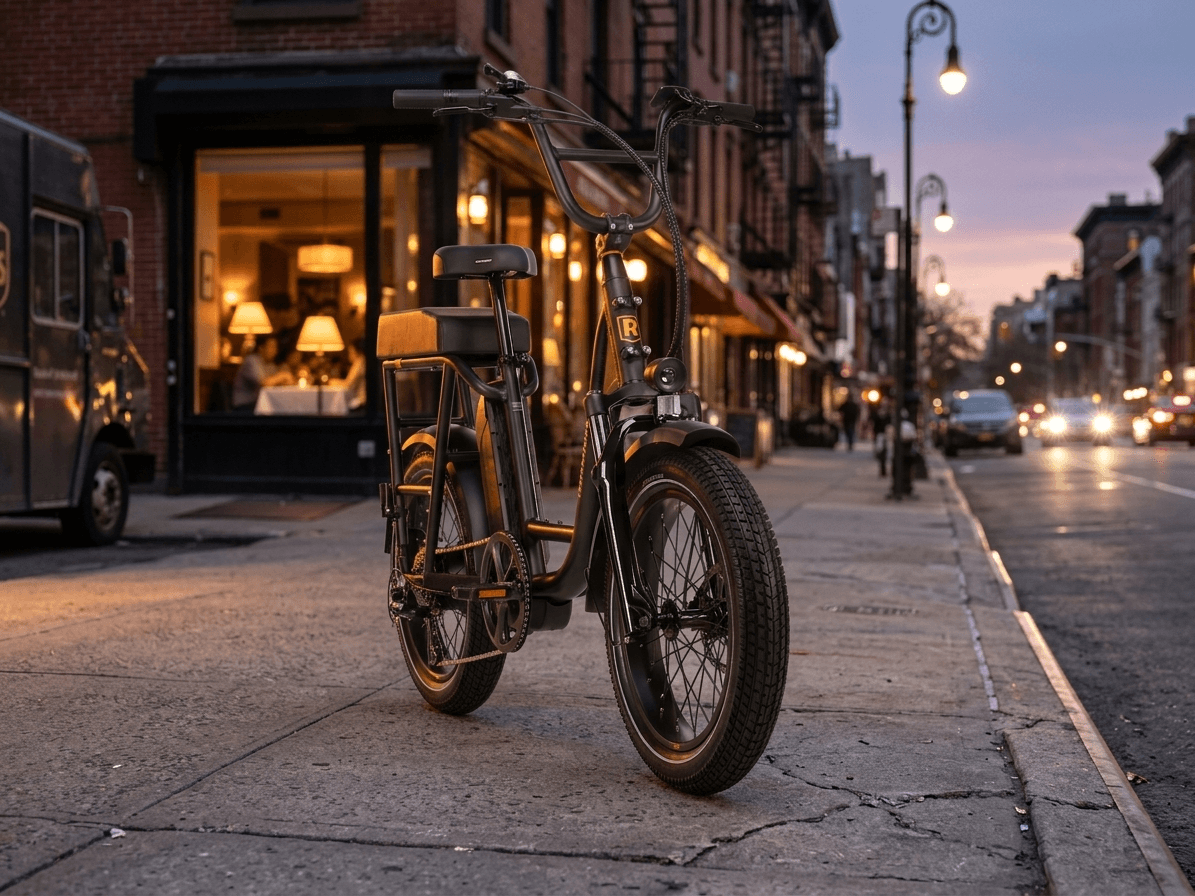
| Rad Power RadRunner Plus | Full-time riders doing consistent high-mileage shifts | 35-50 miles | Full Rad Power RadRunner Plus Review | CHECK ON OFFICIAL SITE |
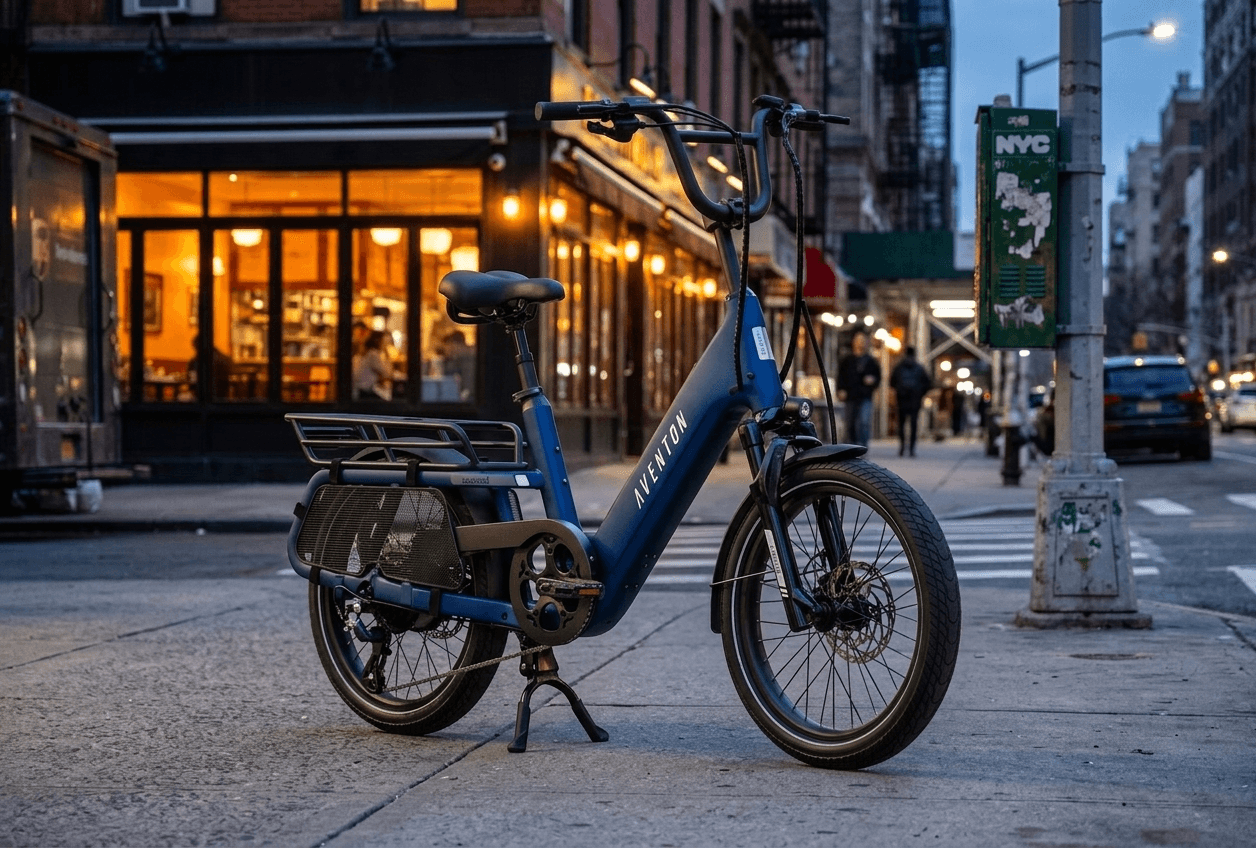
| Aventon Abound SR | High-volume work, large orders, built-in GPS security | 40-60 miles | Full Aventon Abound SR Review | CHECK ON OFFICIAL SITE |

- UL 2849 and UL 2271 certified through SGS
- Rear rack rated to 60 lbs
- Real 48V 13Ah battery
- Lowest price point on the list
- Mechanical disc brakes instead of hydraulic
- Slower 6.5-hour charge time and shorter 12-month warranty
The Funhang is the only Amazon-listed bike on this table. I have not personally ridden it on a NYC delivery shift. What I can confirm is that it clears the minimum bar: UL 2849 and UL 2271 certified through SGS, rear rack rated to 60 lbs, and a proper 48V 13Ah battery. The honest tradeoffs are mechanical disc brakes instead of hydraulic, a slower 6.5 hour charge time, and a shorter 12-month warranty. If your budget starts here, it is the most defensible entry point on Amazon at this price. If you can stretch to $999, the Lectric XP4 is the better bike for this job.
The other three are sold direct through their own websites, which means warranty claims go straight to the manufacturer and you pay no third-party markup. For a working vehicle you depend on for income, that matters.
If you already know what you want, the links above are the fastest path. If you want to understand why each bike is on this list and why I left others off, keep reading.
What I Measured (And Why Most E-Bike Reviews Get This Wrong)
I searched "best e-bike for delivery" before I bought my first one. Every article I found ranked bikes by top speed, battery capacity in watt-hours, or motor power in watts. None of those numbers tell you what matters.
What matters is net pay per hour. That is the number that decides whether this job works for you.
Here is what actually feeds that number:
Real-world range under load. A bike rated for 50 miles on a flat road at low assist might do 28 miles in February in the Bronx with a full insulated bag on the rear rack and the motor working against cold air. If that cuts your shift short, you lose orders. You lose orders, you lose money.
Order acceptance speed. An e-bike that takes several seconds to reach a useful speed from a dead stop is slower through a Manhattan delivery cycle than one that picks up quickly. I am not talking about top speed. I am talking about the time between a green light and getting up to 12 mph in dense traffic. Over 30 stops in a shift, that gap is real.
Cargo setup. Does the bike have a rear rack built in, or do you need to add one? A rack is the first thing you should check because adding an aftermarket one costs $40 to $80 extra and not every frame accommodates one cleanly. A bag that shifts or bounces in transit means drinks tip. Tipped drinks mean one-star ratings. One-star ratings lock you out of peak pay windows.
Weight. You are going to carry this bike up stairs sometimes. You are going to lift it over construction barriers. In New York, you are regularly navigating between delivery trucks double-parked in the bike lane and restaurant kitchen doors that open directly onto the sidewalk. A 70-pound bike in those situations is a problem a 50-pound bike is not.
Charge cycle vs shift length. If you charge overnight and your shift runs eight hours, does the battery make it? In warm weather, probably. In winter, maybe not. Understanding where your real range sits in cold conditions before your first long shift is the difference between finishing a good dinner rush and walking home.
I tracked these things across my own shifts and through conversations with riders in New York, Chicago, and Los Angeles. The bikes on this list are the ones that held up against all of those things, not just specs.
Best Budget Pick: Lectric XP4
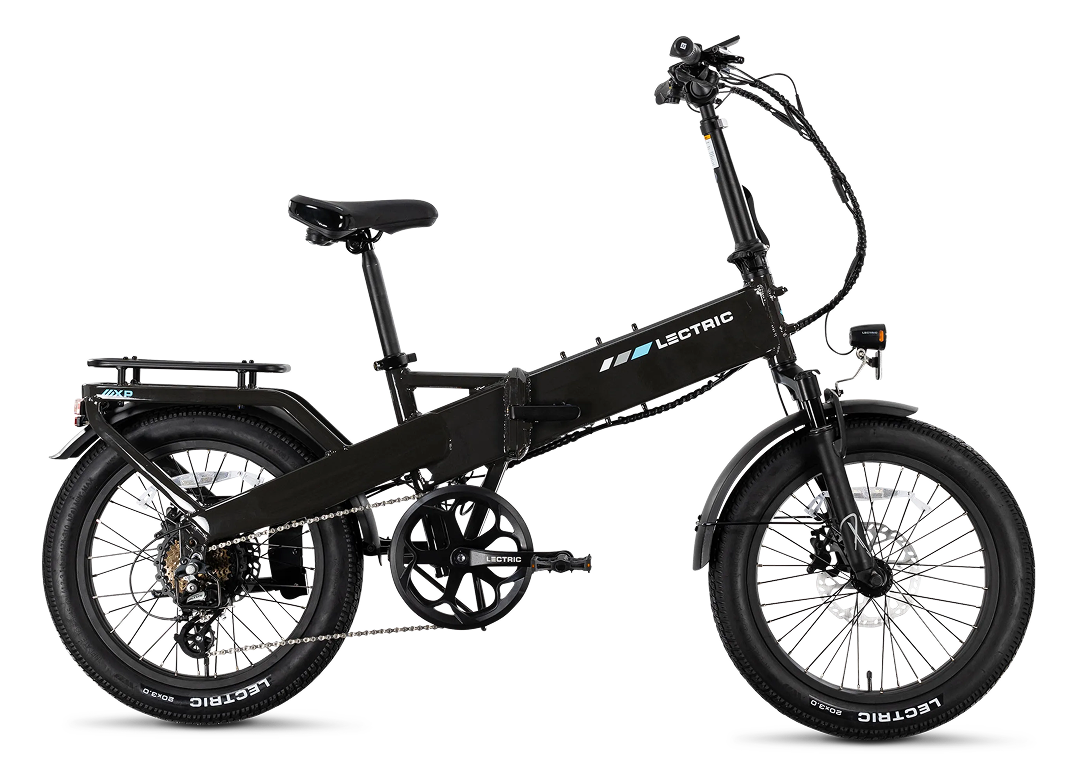
If you are just getting started and you do not yet know whether this work suits you long term, buy the Lectric XP4. It starts at $999, folds flat for apartment storage, comes with a built-in rear rack, and arrives with hydraulic disc brakes and a torque sensor at the same price the older XP 2.0 launched at years ago. Lectric has consistently improved the bike without raising the entry price, and the XP4 is the best version they have made.
I have seen these on working riders all over Brooklyn and the Bronx. That is not an accident. Riders who are serious enough to be out on a cold Tuesday morning in February are not riding the cheapest thing they could find. The Lectric passes that filter.
What it does well:
The XP4 comes in two configurations. The 500W model at $999 has a 500Wh battery and up to 50 miles of spec range. The 750W model at $1,299 has an 840Wh battery, 85Nm of torque, and up to 85 miles of spec range. For most delivery riders starting out, the 500W gets the job done. For riders who know they want longer range or who are doing back-to-back shifts, the 750W is worth the $300 step up.
The upgrade that matters most over the previous model is the hydraulic disc brakes. The older XP 2.0 ran mechanical disc brakes, which require more hand pressure in wet conditions. The XP4 runs 602 hydraulic brakes with 28 percent thicker rotors. In January rain on NYC streets, that is not a marginal difference. It changes how confident you feel stopping at an intersection where a cab door could open at any moment.
The torque sensor is the second meaningful upgrade. The XP 2.0 used a cadence sensor, which applies assist based on whether you are pedaling. A torque sensor measures how hard you are pedaling and adjusts motor output proportionally. The result is a more natural riding feel where the motor responds to your effort rather than just your motion. Over a full shift with constant stop-and-go, that smoother response reduces fatigue in a way you feel by the third hour.
The rear rack is built in. The folding frame collapses in seconds. The TFT color display has a USB-C port for charging your phone on the move. The taillight has integrated turn signals and a brake light that activates when you squeeze the brakes. These are features that cost considerably more on other bikes at this price point.
The one thing I do not love about it:
Cold weather still hits the battery. The 500W model's 500Wh battery in January delivers roughly 20 to 25 percent less than its spec range, putting real-world winter range at around 25 to 30 miles on the standard configuration. That is enough for most single blocks but cuts into back-to-back shift plans. The 750W model's 840Wh battery handles winter better in absolute terms because it starts from a larger reserve, but the same percentage drop still applies in extreme cold. If your plan involves long winter double shifts, identify a charging stop or step up to the 750W.
Who this is for: Riders in their first three to six months who want to verify this income before spending more. Anyone storing a bike in a small apartment. Riders in dense urban zones where daily mileage stays under 40 miles on the 500W, or under 60 miles on the 750W. Riders who want hydraulic brakes and a torque sensor at the entry price point.
- Hydraulic disc brakes with 28% thicker rotors
- Torque sensor instead of cadence sensor
- Built-in rear rack and folding frame
- Strong feature set for the price
- Cold weather cuts range meaningfully
- Limited for back-to-back winter shifts
Best Step-Up Pick: Rad Power RadRunner Plus
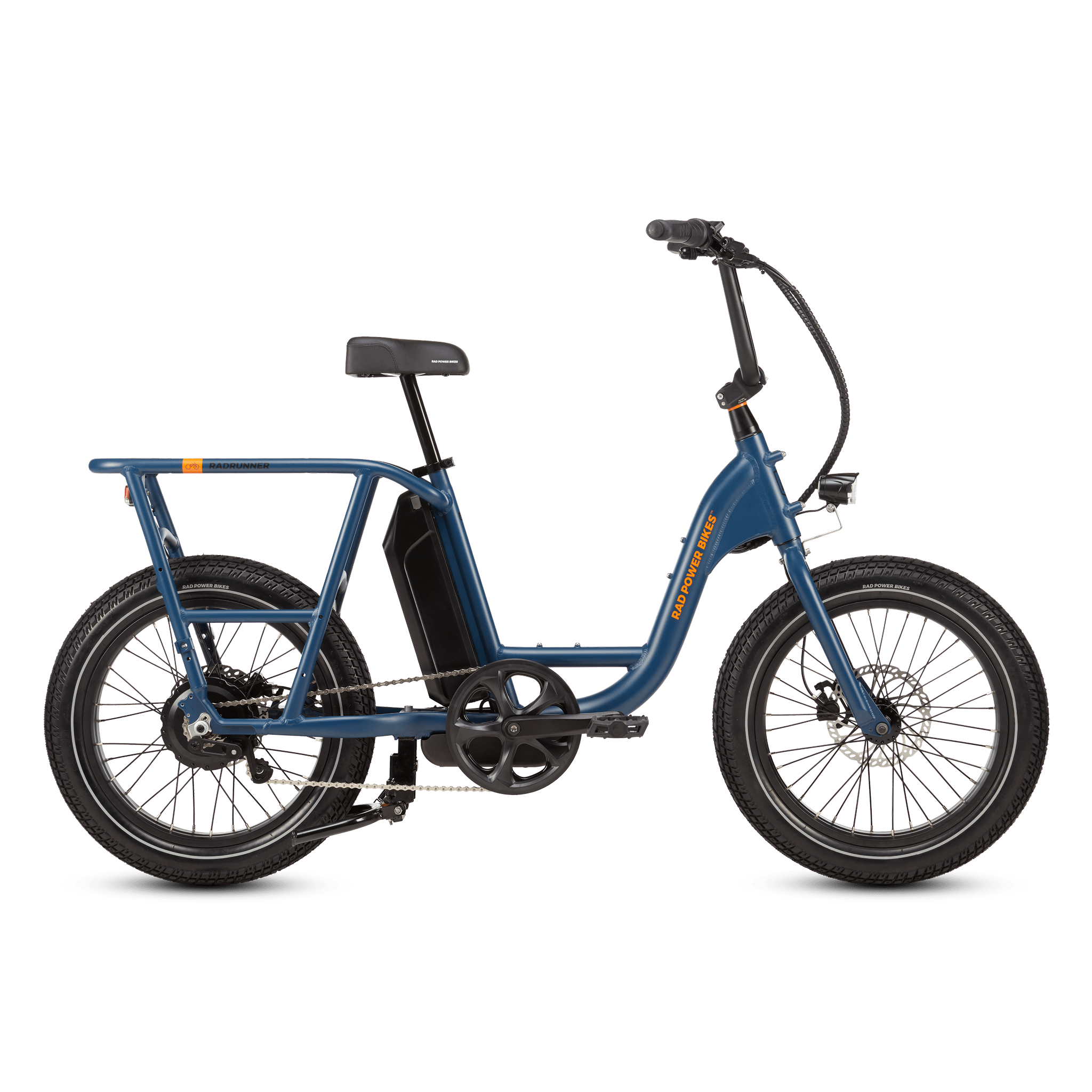
The RadRunner Plus is what I would buy if I were starting fresh today and I had already decided this was going to be a serious income source for at least the next twelve months. It costs around $1,399 to $1,499. That extra $500 over the Lectric buys you more cargo capacity, better real-world range, and a frame that holds up to the physical demands of full-time delivery riding without complaining.
What it does well:
The rear cargo platform on the RadRunner is wider and more stable than a standard rear rack. It handles heavier orders, including catering bags and larger item deliveries, without the rear wobble you get when weight is unevenly loaded on a narrower rack. The step-through frame makes mounting and dismounting at continuous stops faster than a traditional diamond frame. On a shift with 25 pickups and dropoffs, that time adds up.
The 750W motor covers hills without asking you to do much of the extra work. In the Bronx and parts of Brooklyn where the terrain is not flat, that matters more than most riders account for in advance. The real-world range lands between 35 and 50 miles depending on assist level, rider weight, and temperature. A full charge in four to six hours fits a sleep-to-shift cycle without needing to charge mid-day on most reasonable schedules.
The build quality is also noticeably better than budget options. The components are designed for high mileage. Riders doing 25 to 30 hours per week will find the Lectric starting to show wear sooner than the RadRunner under the same conditions.
The one thing I do not love about it:
At $1,400 before accessories, this is a serious commitment before you have verified your local earnings. I would not recommend it as a first delivery vehicle unless you have already done at least two to three weeks of actual shift data and you know the income is real for you. Start with the Lectric. Verify the earnings. Then upgrade. The RadRunner will still be here, and you will buy it with confidence instead of hope.
Who this is for: Riders who have been at this for at least two to three months and are earning consistently. Anyone doing multi-bag stacking or regularly accepting larger orders. Riders working suburban or mixed urban-suburban routes where daily mileage runs above 35 miles. Anyone planning to do this full-time for the foreseeable future.
- Wider, more stable rear cargo platform
- Step-through frame
- 750W motor handles hills well
- Build quality suited for high mileage
- High upfront commitment
- Not recommended as a first delivery vehicle
Worth Knowing: Aventon Abound
The Aventon Abound is a different category of bike from the Lectric and the RadRunner. It is a dedicated cargo e-bike built specifically for heavy loads, and if you are doing serious volume in the form of multi-bag orders, catering runs, or larger item deliveries, it is the most capable option on this list.
The numbers back that up. The Abound has a 440-pound payload capacity, which is well above what either the Lectric or the RadRunner can handle comfortably with a loaded delivery bag and a rider on board. The 750W motor paired with a torque sensor handles that weight without asking you to work for it. The step-through frame makes constant on-off mounting faster than a traditional diamond frame. Hydraulic disc brakes give you reliable stopping power even when the bike is loaded, which matters on wet metal grating and sudden intersections in the city.
The feature that stands out specifically for NYC riders is the smart-locking system built into the Aventon app. You can immobilize the bike remotely from your phone if it moves without you. That is not a replacement for a physical U-lock. Nothing is. But it is an additional layer that matters in the boroughs where theft is persistent and fast.
Real-world range lands between 40 and 60 miles depending on assist level, payload, and conditions. The 708Wh battery on the SR model is the larger configuration and the one worth getting if you are doing long shifts.
The one thing I do not love about it:
The price. At $1,999 to $2,199, the Aventon Abound is a serious commitment that only makes sense if you are already earning consistently and you know that heavy-load orders are a regular part of your workflow. If you are a month in and still finding your rhythm, this is not the right starting point. Buy the Lectric, verify the income, and come back to the Abound when the math is clear.
The weight is also real, around 65 to 70 pounds. If your storage requires bringing the bike up stairs at the end of every shift, that becomes a daily friction point quickly. Secure street-level or lobby storage makes this a much easier bike to live with.
Who this is for: Full-time riders who regularly accept large or multi-item orders. Anyone doing restaurant or catering pickups where a single order fills an oversized bag. Riders who want the smart-lock feature as an additional theft deterrent. Anyone with secure ground-level storage who does not need to carry the bike up stairs.

- 440-lb payload capacity
- 750W motor with torque sensor
- Hydraulic disc brakes
- Smart-locking system via the Aventon app
- Highest price on the list
- Heaviest bike
NYC-Specific: UL Certification, Local Laws, and Where to Lock
If you are riding in New York City, there are three things you need to know that do not apply the same way anywhere else in the country.
UL Certification for apartment charging. After fires tied to uncertified lithium-ion batteries, New York City now requires that e-bikes and their chargers be UL-certified if you are charging them inside a residential building. The penalty for non-compliance is not abstract. Buildings have begun enforcing this, and some management companies ban non-certified bikes from being brought inside at all. Both the Lectric XP4 and the RadRunner Plus carry UL certification. Verify UL 2849 on the Aventon Abound directly with Aventon before purchasing if you plan to charge indoors. Cargo bikes in this weight class have sometimes had model-specific certification variations. Ask the seller directly and get it in writing if you need to show your building management.
What counts as an e-bike in New York. In New York State, a legal e-bike is pedal-assist or throttle-assisted with a motor under 750W and a maximum assisted speed of 25 mph for Class 1 and Class 2 bikes. Class 3 bikes top out at 28 mph with pedal assist and are allowed on roads but not in all bike lanes depending on the city. The practical point is: buy a bike that fits cleanly into Class 1 or Class 2 if you are primarily riding in New York City. The enforcement environment on higher-speed throttle-only bikes has gotten more visible in recent years, and the fines come directly out of your shift earnings.
Where to lock and how. Two locks, no exceptions. I use a U-lock through the frame and rear wheel as the primary, and a secondary cable or chain through the front wheel. The U-lock alone is not enough in a busy borough. A determined thief with an angle grinder can deal with one lock in under 90 seconds. Two different lock types require two different tools, and most opportunistic theft moves on at that point.
I lock the primary at every stop, even a quick one. Especially a quick one. The stops where you think "I'll be in and out in two minutes" are exactly where the risk is highest, because you are in a busy area with foot traffic and other riders coming and going. I have watched riders come out of a restaurant in Midtown to nothing. Two minutes is enough.
The Kryptonite New York Standard is what I use as my primary. Read the full U-lock breakdown here before you decide what to carry.
E-Bike vs Standard Bicycle: The Earnings Math
I get this question a lot. People already have a bicycle and want to know if the upgrade is actually worth the cost.
Here is the math as I have tracked it.
On a standard bicycle in New York, I averaged $19 to $21 gross per hour on DoorDash during my strongest shifts. On the Lectric, that number moved to $23 to $25 gross in the same zones during the same time windows. The gap comes almost entirely from order volume, not per-order pay. I complete more short orders per hour because I arrive at pickup locations faster, and I arrive there less tired. Being less tired matters more than it sounds. When you are worn out, you make worse accept-or-decline decisions. You take the $6 order that takes 28 minutes because you do not have the mental energy to wait for something better.
The e-bike cost me around $900. At a $4 net hourly improvement working four shifts per week at five hours each, I covered that cost in roughly eleven weeks. That is an estimate based on my numbers. Your market, your zone, and your hours will move it. But the direction is consistent with what other experienced riders report.
For the full pay comparison broken down by vehicle type, platform, and city, I did that work here: What Pays More: Uber Eats or DoorDash 2026
The factor most riders do not put into the calculation is physical cost. After a long standard bicycle shift in the city, I had nothing left for the evening. No secondary shift, no energy to do anything productive after. On the e-bike, I can do a lunch block and a dinner block back to back without the physical debt that comes with pedaling every block in stop-and-go traffic. Across a full week, that is more hours on the road if I want them.
Buy vs Rent vs Finance: Which Makes Sense for New Riders
Buy outright if you have $800 to $1,000 available and you have already decided to give this at least three months. The math on owning versus renting tips toward owning in most markets within the first six to eight weeks. Ownership also means you can sell the bike if things do not work out. A used Lectric in decent condition holds value reasonably well. All three brands on this list are direct-to-brand, which means your warranty claim goes straight to the manufacturer with no middleman. For a working vehicle you are depending on for income, that is the right setup.
Finance only if the monthly payment fits comfortably inside what a slow week still earns you. At $900 financed over 12 months at a realistic interest rate, you are looking at around $80 per month. That is manageable if you are earning consistently. It becomes a problem if you are still in the first month, still figuring out which zones and hours work for you, and a slow week puts you behind on the payment. My position: do not finance until you have at least two to three weeks of actual shift data showing you what you reliably earn. Gut feeling is not shift data.
Rent if you want to test whether this income is real for you before committing money. Some cities have e-bike rental programs. DoorDash and Uber Eats both have rental or partnership programs in select markets. The weekly rental rate is high relative to owning, but you carry zero risk if the earnings do not materialize. Rent for two to three weeks, track your net earnings with something like Everlance.
I pushed toward buying early because I needed the income quickly and did not have weeks to spend testing. If you are in that same position, buy the Lectric. It gives you the smallest possible financial exposure while you verify that the earnings are real.
What to Buy After the E-Bike (Your First-Shift Gear Stack)
The e-bike is your earning ceiling. The gear around it is what determines how much of that ceiling you actually reach on a shift.
There are four things I would buy in the same week as the bike:
An insulated delivery bag. Your ratings live inside this bag. A crushed container or a lukewarm drink at the door is a one-star rating, and one-star ratings lock you out of peak pay windows and high-value orders. A hard-base insulated bag with a zipper top costs $30 to $50 and pays for itself in the first week through protected ratings.
A U-lock and secondary cable. Already covered above. Two locks minimum. In New York, the Kryptonite is the standard. Anywhere else with any real theft risk, the same logic applies.
Front and rear lights. Riding at night in the city without lights is not a safety suggestion, it is a fine. Traffic enforcement is a real cost that comes directly out of your shift earnings. The CATEYE combo kit is what I use. Full lights guide for delivery riders
A phone mount that locks in positively. If your phone bounces off the handlebar at speed in the middle of a shift, the shift ends. Standard clamp mounts loosen over rough pavement. Get one that clicks in and does not rattle.
I put together the full breakdown of everything you need before your first shift, with real costs and honest takes on what to skip and what not to cheap out on: 9 Things Every Gig Delivery Rider Needs Before Their First Shift
The Bottom Line
The best e-bike for delivery riders is not the most expensive one. It is the one that covers your daily mileage, holds your cargo without shifting, survives the lock-outside-a-restaurant routine twelve times per shift, and costs less than three months of earnings to pay off.
For most riders starting out, that is the Lectric XP4. For riders who have already verified this income and are ready to scale it, that is the RadRunner Plus. For full-time riders doing high-volume or heavy-load orders who need a purpose-built cargo bike, that is the Aventon Abound.
Buy the bike that matches where you actually are right now. Not where you hope to be in six months.