Delivery GearArticle
Insulated Food Delivery Bag Review – Cheap to Pro-Grade
How much should you spend on an insulated food delivery bag? I will break down what each price tier actually delivers so you stop wasting money on the wrong bag.
Quick Picks by Tier
| Situation | Best Pick | Price |
| Short runs / first bag | FRESHIE XL Pro | CHECK PRICE |
| Grocery or mixed orders | Bodaon XXXL Delivery Bag | CHECK PRICE |
| Best all-round mid-range | Espmotic Insulated Backpack | CHECK PRICE |
| Best mid-range for daily use | GoHimwl Food Delivery Backpack | CHECK PRICE |
| Best mid-range step-up | Trunab with Side Support Boards | CHECK PRICE |
| Multi-app part-time riders | Packir PK-GV | CHECK PRICE |
| Full-time high volume | Packir PK-92V | CHECK PRICE |
| Multi-order stacking | Packir PK-76F Doubledeck | CHECK PRICE |
Why This Decision Matters More Than Your Route
You have had a temperature complaint and now you are trying to decide how much bag you actually need. I have been through this. I started with a $15 tote, upgraded to a mid-range backpack after my third cold-food flag, and eventually settled on a premium bag when delivery became my main income.
The number one mistake riders make is buying the cheapest bag available and then blaming their route when the complaints come in. A $40 mid-range bag with a rigid bottom and a 5mm foam liner changes the outcome faster than any route optimisation.
This guide shows you what each price tier actually delivers in real delivery conditions so you can make the right call for your volume without overspending.
What the Price Tiers Actually Buy You
Budget: Under $30
Thin foam lining, aluminium or PEVA film liner, tote or soft box design. Holds one to three orders. Realistic heat retention of 15 to 30 minutes under typical street conditions. Zippers and seams are the first things to fail. These bags fix the worst temperature complaints for short runs. They do not survive heavy daily use.
Mid-Range: $30-$60
Thicker foam, semi-rigid or hard bottom plate, backpack options available. Holds three to six orders. Realistic retention of 30 to 60 minutes. Seams and zippers are meaningfully better. Water-resistant on most models. This is where most riders get their best return on spend - enough retention for standard delivery windows without the full premium price.
Premium: $60 and Above
Multi-layer insulation, heat-sealed seams, waterproof outer shell, ergonomic harness with chest and waist straps. Holds six or more orders. Retention above 60 minutes in most conditions. Built for full-time riders doing long shifts and high order volume. The durability and rider comfort at this tier pays back over a season of heavy use.
What to Judge Before You Buy
Insulation thickness and liner type. This is the number that determines whether your food arrives warm or lukewarm. Thin film liner with minimal foam loses heat quickly. A 5mm to 10mm foam core with a reflective aluminium liner holds heat meaningfully longer. The difference between a budget and mid-range bag is almost entirely here.
Rigid bottom. Boxes tip and slide on bikes and scooters. A rigid base plate prevents orders arriving spilled or crushed. It is the single feature that prevents the most rating complaints and it is often absent on budget bags. Once you have ridden with a rigid-bottomed bag you do not go back.
Capacity and organisation. How many hot orders fit without stacking damage. Cup holders and padded dividers matter when you carry drinks and fries in the same bag. If you regularly handle multi-restaurant picks, you need compartment separation.
Weather resistance. A waterproof outer shell and sealed zippers are essential if you ride in rain. Water that seeps through chills the bag from the outside and cuts your effective retention window in half. Mid-range bags handle light rain. Premium bags handle real downpours.
Cleanability. A wipeable liner and a removable base plate save time between shifts. Bags that cannot be easily cleaned develop smells that customers notice. This is not glamorous but it matters for ratings.
Head-to-Head Comparison
| Product | Tier | Capacity | Rigid Bottom | Waterproof | Retention | Backpack |
| FRESHIE XL Pro | Budget | 1-3 orders | NO | Interior only | 15-30 min | NO |
| Bodaon XXXL | Budget | 1-3 orders | YES | Interior only | 20-35 min | NO |
| Espmotic Insulated | Mid | 3-5 orders | YES | YES | 30-50 min | YES |
| GoHimwl Food Delivery | Mid | 3-4 orders | NO | YES | 30-45 min | YES |
| Trunab Side Support Boards | Mid | 4-6 orders | YES, Boards | YES | 40-60 min | YES |
| Packir PK-GV | Mid/Pro | 4-6 orders | YES, PP board | YES | 45-60 min | YES |
| Packir PK-92V | Premium | 6-10 orders | YES, PP board | YES | 60+ min | YES, Rack |
| Packir PK-76F Doubledeck | Premium | 6-8 orders stacked | YES, PP board | YES | 60+ min | YES, Rack |

The Reviews
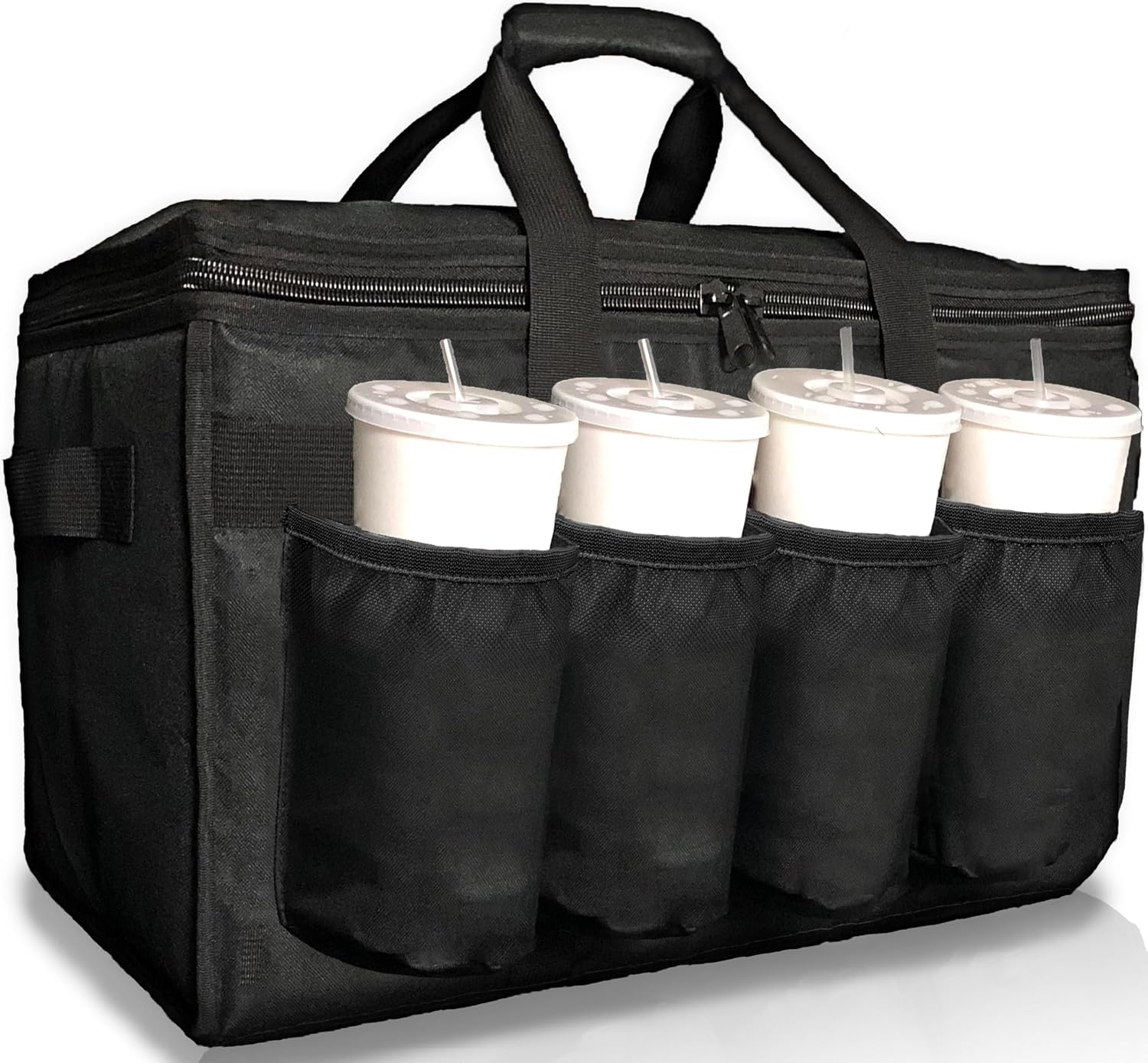
BEST FOR SHORT RUNS: FRESHIE XL Pro
· PEVA Lining · Cup Holders · Foldable · 600D Polyester Exterior
The FRESHIE is the bag that fixes most new rider complaints without asking you to commit to a full backpack setup. Large insulated cup holders built into the sides handle drinks and food in one carry, which removes the separate caddy problem on small orders. PEVA and polyethylene foam liner keeps food acceptable for runs under 30 minutes.
The zippers and seams are functional rather than durable. Under daily heavy use they will show wear within a few months. For occasional riders or anyone in their first few weeks of delivery, that is an acceptable tradeoff. The bag folds flat when empty, which solves the storage problem if you are not riding full-time.
Best for: Riders with fewer than 10 drops a week. First bag before you know whether delivery is a long-term income stream. Short urban runs under 20 minutes.
Not ideal for: Daily full-time use. Rain without something waterproof underneath. Any route where the bag sits in direct sun between pickups.
- Built-in cup holders handle drinks and food in one carry
- Folds flat when empty, easy storage off-shift
- Fixes most new-rider temperature complaints
- Very low cost of entry
- No rigid bottom, food can tip or shift on a bike
- Thin PEVA liner loses heat after ~30 min
- Zippers and seams wear out in months under daily use
- No waterproofing on the exterior shell
BEST BUDGET LARGE CAPACITY: Bodaon XXXL Delivery Bag
· Triple-Layer Insulation · Aluminium Foil Liner · Dual-Side Access · Foldable · High Load Capacity
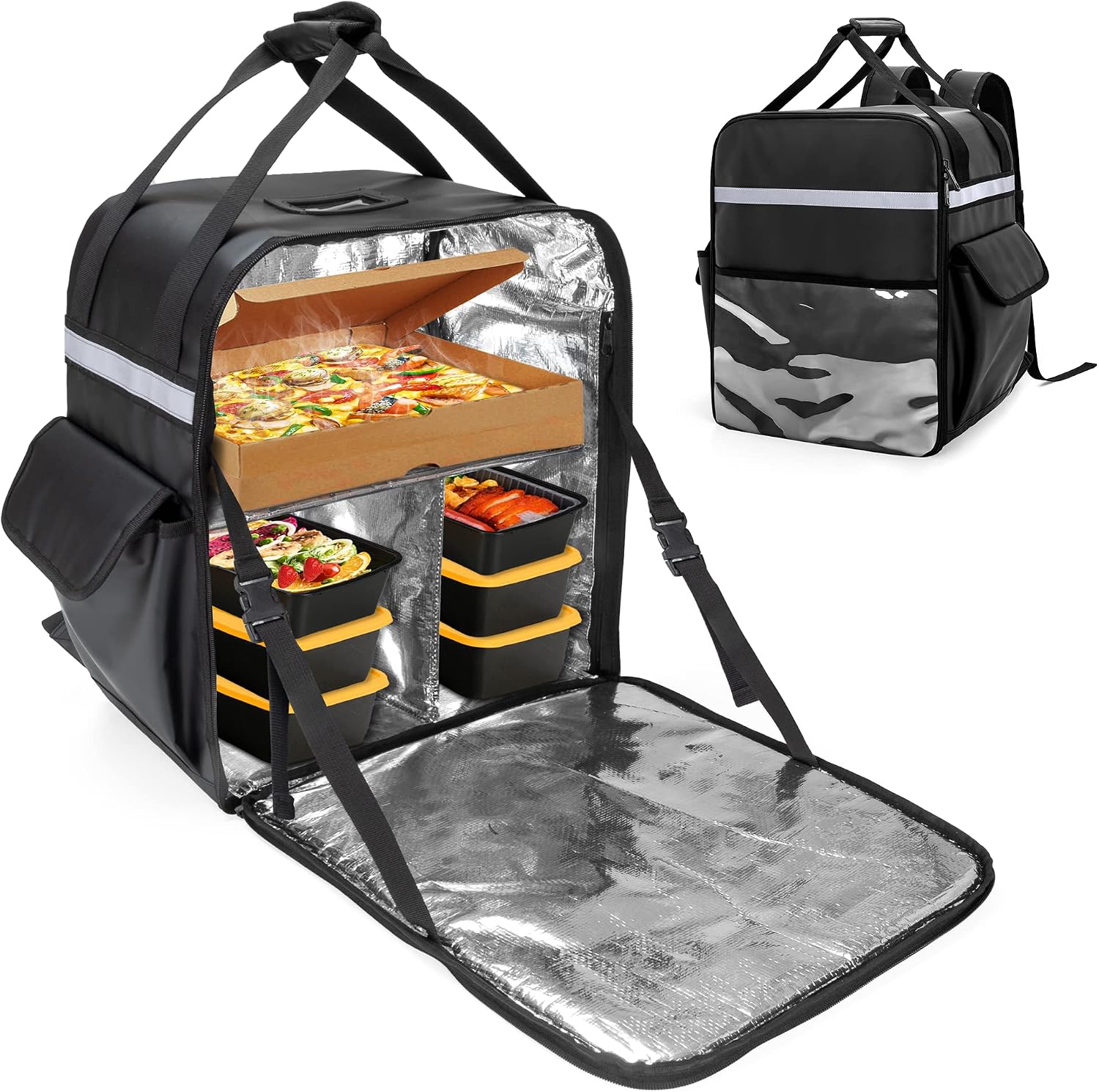
The Bodaon earns its place because the triple-layer insulation system does more work than any single-layer PEVA bag at this price. Aluminium foil inner lining, thick thermal foam, and high-density fabric outer work together to hold heat longer than budget alternatives. The XXXL capacity handles mixed orders including large pizza boxes without forcing you to stack awkwardly.
The non-woven exterior is wipe-clean rather than waterproof but handles light moisture. Dual-side access lets you reach items from either end during a stop without unpacking everything. Folds flat when empty, which solves the storage problem between shifts.
Best for: Riders who do mixed grocery and restaurant orders where capacity and insulation matter more than a rigid base. Anyone who has had a temperature complaint on a budget bag and needs a meaningful step up without going mid-range.
Not ideal for: High-volume shifts. Any route with sustained rain. Long retention windows above 35 minutes.
- Triple-layer insulation outperforms single-layer PEVA bags
- XXXL capacity fits large pizza boxes without awkward stacking
- Dual-side access, reach items without unpacking
- Has a rigid bottom plate, rare at budget tier
- Non-woven exterior handles light moisture only, not rain
- Not suited for high-volume shifts or long retention windows
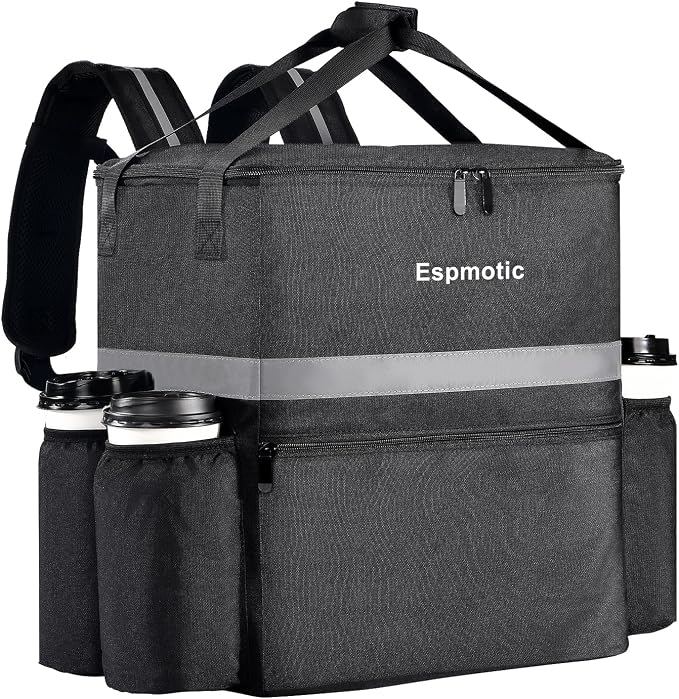
BEST ALL-ROUND MID-RANGE: Espmotic Insulated Food Delivery Backpack
· Expandable Design · Multiple Pockets · Reflective Strips · Leakproof Lining · Chest and Waist Strap
The Espmotic is the most versatile mid-range option in the lineup. The expandable design is the key feature: it starts compact for small orders and opens up when you have a multi-item pickup. That adaptability means you are not carrying a half-empty oversized bag on solo orders or cramming orders into a bag that is too small when volume picks up.
Leakproof lining handles spills from the inside. Multiple pockets give you organisation that budget totes do not offer. Reflective strips on the front and back are a practical addition for evening and night shifts. The padded chest and waist strap prevents sway on a bike, which matters more than it sounds after a three-hour shift.
Best for: Riders doing 10 to 25 drops a week who want one bag that adapts to variable order sizes. Bike and scooter riders who need a stable backpack with reflective visibility.
Not ideal for: Very high volume full-time shifts where the capacity ceiling becomes a constraint. Premium retention windows above 60 minutes.
- Expandable design adapts from solo to multi-item pickups
- Leakproof lining handles interior spills
- Reflective strips for night and evening shift visibility
- Padded chest and waist strap, reduces sway on a bike
- Multiple pockets for organised carrying
- Capacity ceiling limits full-time high-volume use
- Cannot sustain 60+ min retention windows
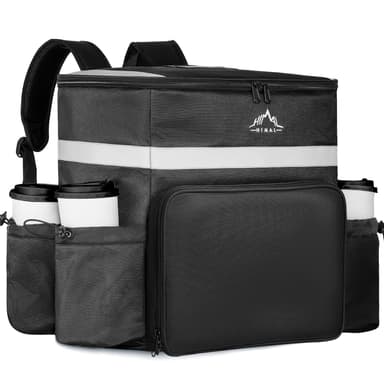
BEST MID-RANGE FOR DAILY USE: GoHimwl Food Delivery Backpack
· Insulated Design · Cup Holders · Durable Zippers · Multiple Access Points
The GoHimwl earns its place through solid construction details that hold up under daily open-close stress. In a bag that opens and closes 30 times a day, zipper and seam quality matters more than any insulation spec, and the GoHimwl delivers at this price point.
Cup holders handle drinks without a separate carrier. Sized right for daily use without being oversized when you have a single-order pickup. The practical layout suits riders who want a no-fuss bag that works consistently shift after shift.
Best for: Full-time daily riders who want a bag that holds up through a full season without the premium price. Anyone who has replaced a mid-range bag twice in one year.
Not ideal for: Very high volume or multi-order stacking. The capacity sits at three to four orders, which is enough for most shifts but not for riders doing large commercial catering pickups.
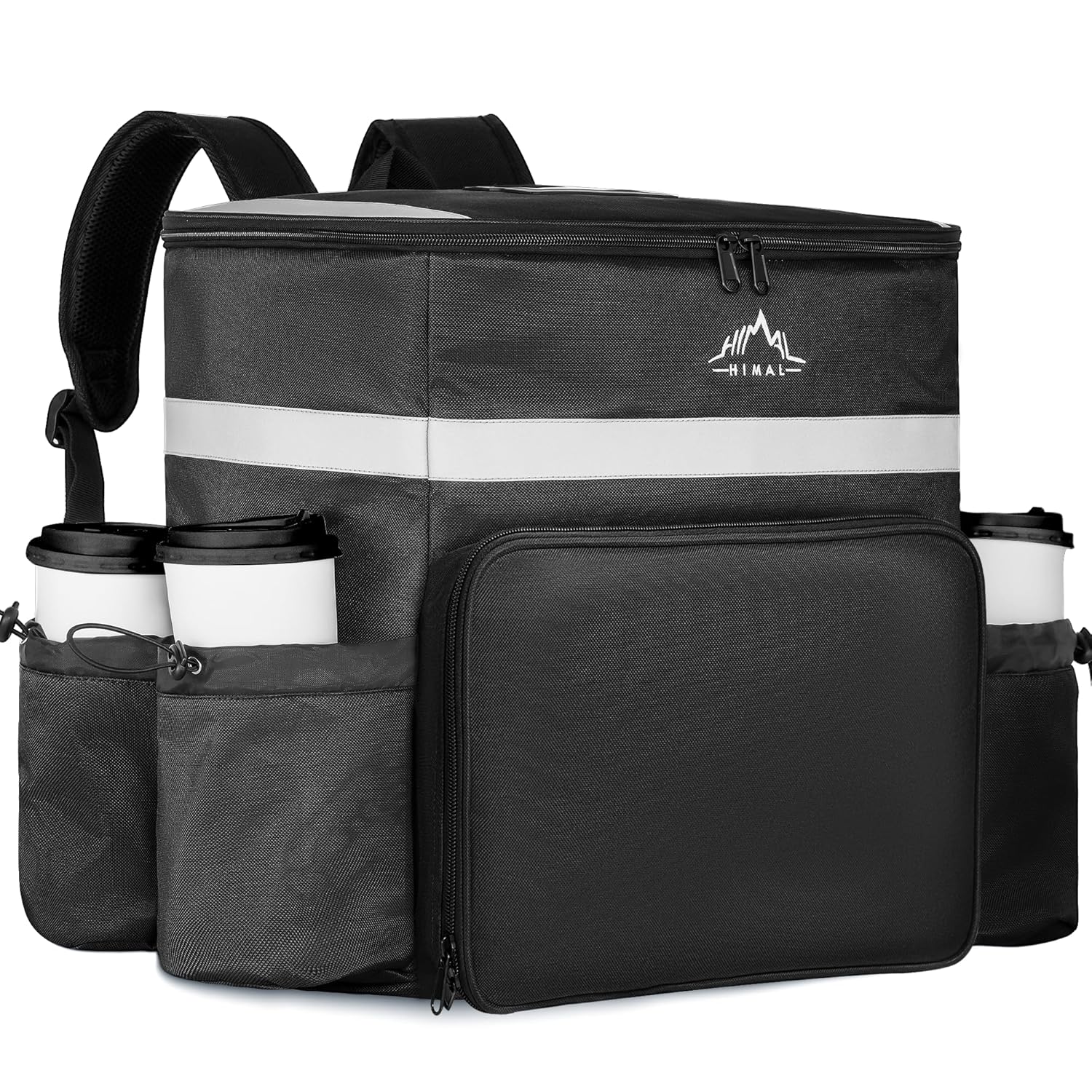
- Strong all-around performance
BEST MID-RANGE STEP-UP: Trunab with Side Support Boards
· 2 Side Support Boards · 3 Inner Spaces · Top and Front Loading · Patented Design · Waterproof
The Trunab sits at the top of the mid-range band and bridges to premium. The patented side support boards give the bag structure similar to what Packir achieves with PP hardboard at the premium tier, without the full weight of a rigid frame. Three inner spaces replace the single-compartment layout of most mid-range bags, letting you organise orders by temperature zone or restaurant.
Two loading points work together: top loading with velcro for quick single-item access and front loading with a zipper for full access when needed. Waterproof construction handles moderate rain without seam leakage. The comfortable back panel and padded shoulder straps with chest buckle mean this bag carries well on a bike without the sway of a lighter, flimsier option.
Best for: Riders moving from basic mid-range to higher volume who are not yet ready to spend premium. The closest you get to Packir-level structure without the Packir price.
Not ideal for: Scooter or rack mounting, this is a backpack-only option. The cup holder count is high but the holders are on the wider side, which can leave slim cups loose.
- Patented side boards give near-premium structural rigidity
- Three inner compartments for temperature zone separation
- Dual load points, velcro top for quick access + zipper front for full access
- Waterproof construction handles moderate rain
- Padded back panel and chest buckle for stable riding
- Backpack only, no scooter rack-mount option
- Cup holders are wide-set, which leaves slim cups loose
BEST FOR MULTI-APP PART-TIME RIDERS: Packir PK-GV
· Packir Rigid PP Hardboard · Extendable Design · Multi-Layer Insulation · 4-5 Hour Retention · Waterproof 1680D Nylon
The PK-GV is Packir's extendable model: the main compartment expands to accommodate larger orders when needed and collapses back for compact carrying on smaller pickups. It sits between the mid-range Trunab and the full premium PK-92Z in both price and capability.
PP hardboard on all six sides is the Packir construction standard that separates their bags from everything below this price. It gives the bag a rigid, box-like structure that keeps orders from compressing against each other. Multi-layer pearl cotton insulation with tinfoil lining achieves 4 to 5 hours of retention in controlled conditions and 60+ minutes in real delivery conditions.
Heavier than the Trunab or Espmotic. Riders who carry this all day notice the weight difference from lighter mid-range options. That is the tradeoff for the build quality.
Best for: Part-time riders doing 15 to 30 drops a week on multiple apps who need a bag that handles variable order sizes and lasts a full season without structural wear.
Not ideal for: Riders who want the lightest possible bag. New riders who are not yet sure of their volume - the PK-92V is a better long-term investment at full-time scale.
- Rigid PP hardboard on all 6 sides, premium construction
- Extendable main compartment handles variable order sizes
- 60+ min retention in real delivery conditions
- Waterproof 1680D nylon shell
- Lasts a full season under regular use
- Heavier than comparable mid-range options
- Overkill (and costly) for low-volume casual riders
BEST FOR FULL-TIME HIGH VOLUME: Packir PK-92V
· 17"x17"x17" · PP Hardboard All 6 Sides · Pearl Cotton Insulation · 4-5 Hour Retention · Rack Mount Included · Top Loading · Collapsible
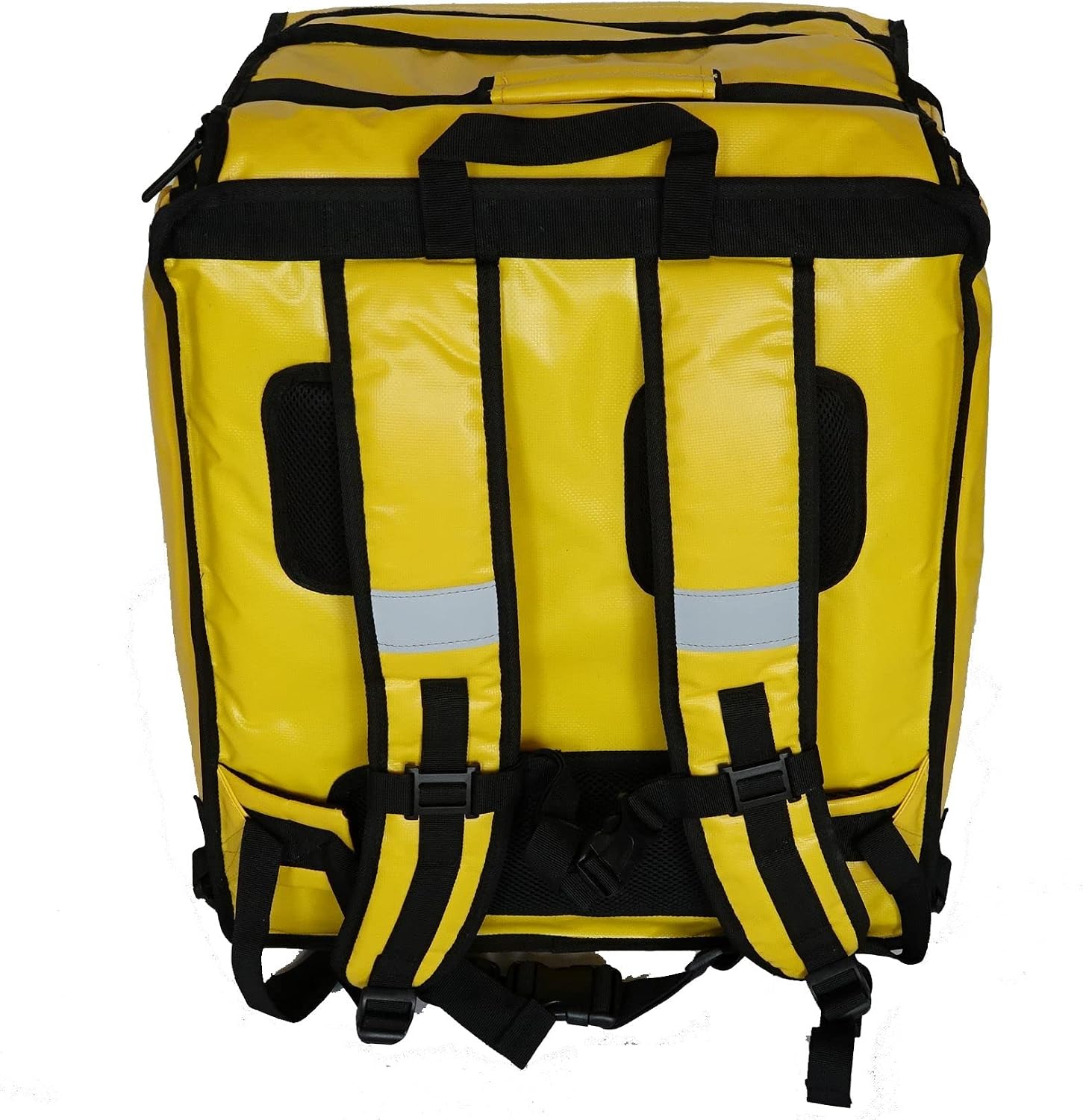
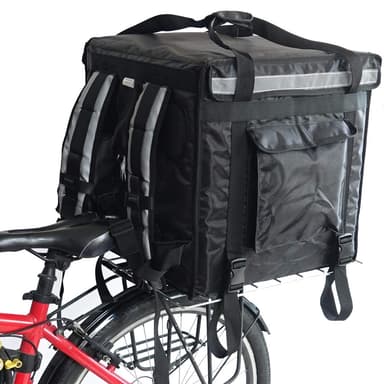
The PK-92V is the full-time rider's bag. The 17"x17"x17" interior handles ten 16-inch pizzas or the equivalent in mixed orders. The included metal rack mounts directly to a scooter or bike rear carrier, which means the bag is not on your back during peak volume. You carry it as a backpack when needed and rack-mount it when order size justifies the stability.
PP hardboard on all six sides means the bag holds its shape under any load. Top loading gives you fast access without repositioning the bag at each stop. The collapsible design means it folds down between shifts rather than taking up permanent space. Pearl cotton insulation across all six sides delivers 4 to 5 hours of retention in controlled conditions and well above 60 minutes in real delivery use.
Bulky when half-empty. At 11.2 lbs the bag itself is substantial before you load it. This is a tool for full-time volume, not occasional use.
Best for: Full-time riders doing 30 or more drops a week who need the retention, capacity, and rack-mount option to work at high volume without compromising food quality.
Not ideal for: Part-time or casual riders. Anyone who does not have a rear rack or does not want to commit to the weight of a professional-grade bag.

- 17×17×17" interior, fits 10 large pizzas or mixed orders
- Included metal rack mount, bag goes on the scooter, not your back
- PP hardboard all 6 sides, holds shape under any load
- Pearl cotton insulation on all sides, 60+ min real-world retention
- Collapsible, folds down between shifts
- 11.2 lbs empty, substantial weight before loading
- Bulky when half-empty on small orders
- Needs a rear rack, not suitable without one
BEST FOR MULTI-ORDER STACKING: Packir PK-76F Doubledeck
· 76L · Double Deck with Divider · PP Hardboard · Side Loading · Rack Mount · 4-5 Hour Retention
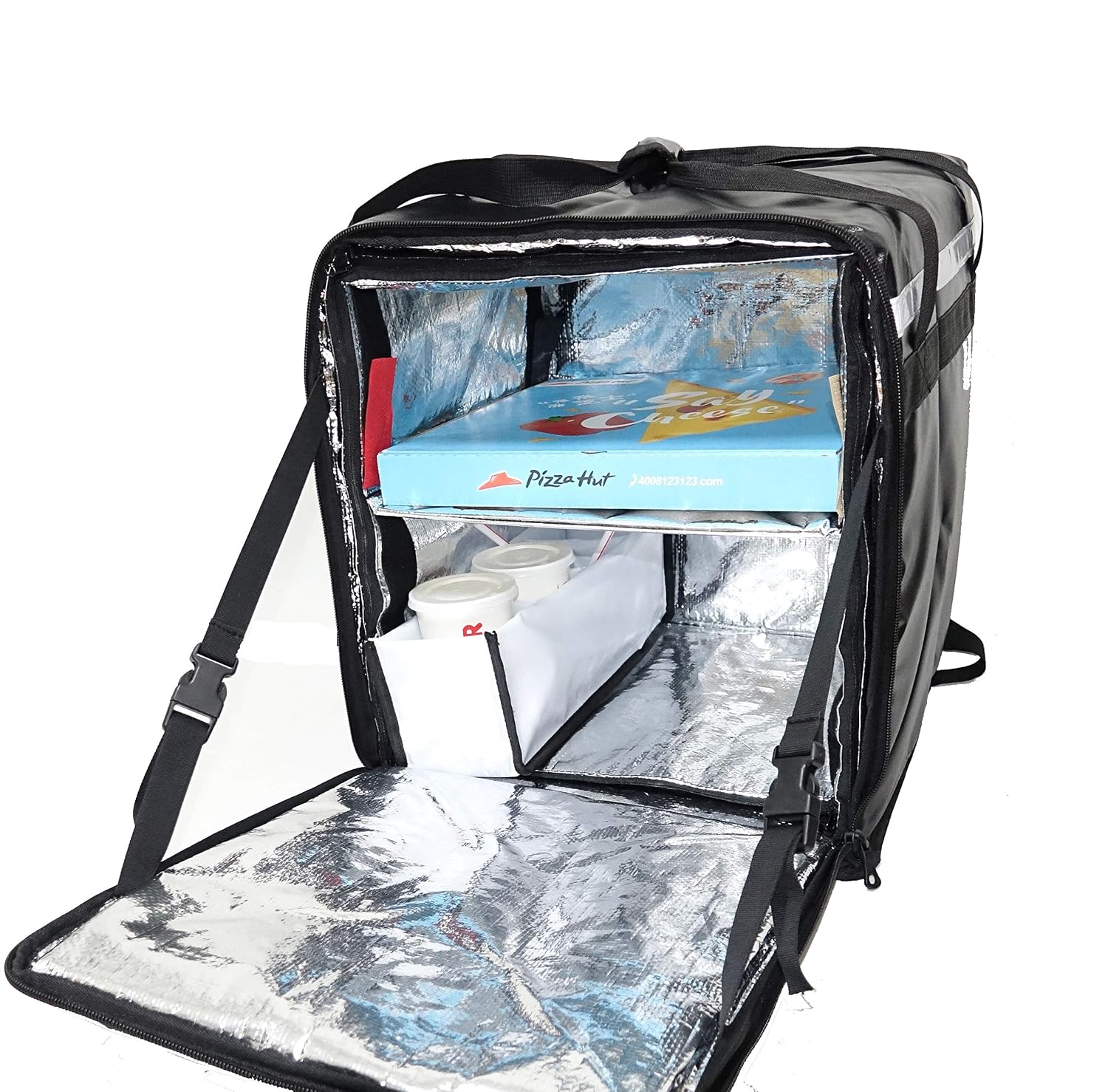
The PK-76F solves a specific problem: carrying two separate orders from two different restaurants without them merging into one temperature zone. The double-deck construction with a removable hardboard divider creates two independent compartments. Hot order on top, cold drinks on the bottom, or two separate restaurant orders kept separated for accuracy.
Slightly smaller than the PK-92Z at 76L but meaningfully more organised. For riders who regularly do multi-restaurant stacked orders on apps like DoorDash, the compartment separation reduces mix-up complaints that cost ratings. Side loading with two-way zipper on both decks means you can reach either compartment without disturbing the other.
The rack mount works the same as the PK-92V. Less compact than single-compartment options when carrying one order, which is the tradeoff for the double-deck structure.
Best for: Riders who regularly stack multi-restaurant orders and need compartment separation. High-volume riders where order accuracy matters as much as temperature retention.
Not ideal for: Riders who mainly do single-restaurant orders where the double-deck structure adds weight and bulk without benefit.
- Double-deck with removable hardboard divider keeps orders separated
- Solves multi-restaurant stacking without cross-contamination of temperature zones
- Two-way side zipper on both decks, reach either without disturbing the other
- Rack mount included, same scooter-mounting as PK-92V
- 60+ min retention with PP hardboard construction
- Less compact than single-compartment bags for single orders
- Double-deck structure adds weight and bulk when underused
- Value prop is low for riders who mainly do single-restaurant orders
Real Retention: What I Actually Observed
These are field observations from real shifts, not sealed lab tests. Hot pizza starting at around 165°F:
A budget tote held to roughly 135°F after 30 minutes, with noticeable moisture on the box bottom from heat escaping through the thin foam. A mid-range backpack held to around 150°F at the same point with the box intact and the crust still crisp. A premium bag reached the 60-minute mark at around 145°F, the difference being that it preserved texture as well as temperature.
The pattern is consistent: the rigid bottom and thicker insulation of mid-range and premium bags do more for food quality than the raw temperature number suggests, because they also prevent the compression and moisture damage that budget bags allow.
Who Should Spend What
Fewer than 10 drops a week. A budget bag under $30 solves most temperature complaints for short runs. If it fails after a few months you are still well under the cost of a mid-range replacement.
10 to 30 drops a week. The mid-range band at $30 to $60 is the right investment. You get retention good enough for most delivery windows, durability that lasts a season, and enough structure to keep orders intact on a bike.
30 or more drops a week, full-time. Buy premium. The retention, rider comfort, and build quality pay for themselves across a season in fewer complaints, fewer bag replacements, and less fatigue from carrying a poorly designed harness all day.
Bike or e-bike riders specifically. Prioritise a backpack with a chest strap over a box-style bag regardless of tier. The chest strap prevents sway that affects steering and tires you out faster. A rigid bottom is non-negotiable if you hit potholes regularly.
Pre-Heating: The Free Performance Upgrade
Regardless of which tier you buy, pre-heat the bag before your first pickup. Put a hot pack inside for five minutes before loading the order. This raises the starting interior temperature and extends your effective retention window by 5 to 10 minutes. In cold weather this is the difference between a warm delivery and a warm-enough one.
When to Replace
Replace the bag when it no longer holds the 20 to 40-minute window your routes require. Signs to watch for:
Orders arriving noticeably cooler than they used to. Visible foam compression that does not spring back. Seam separation at the bottom or corners. A liner that retains smell despite cleaning.
Minor zipper damage is fixable with a replacement pull. Small seam splits on non-structural areas can be sealed with waterproof seam tape. Compressed foam is not fixable. When the foam goes, replace the bag.
The Final Verdict
| Situation | Pick | Link |
| Short runs / first bag | FRESHIE XL Pro | CHECK PRICE |
| Grocery or mixed orders | Bodaon XXXL | CHECK PRICE |
| Best all-round mid-range | Espmotic Insulated Backpack | CHECK PRICE |
| Daily use durability | GoHimwl Food Delivery Backpack | CHECK PRICE |
| Mid-range step-up | Trunab Side Support Boards | CHECK PRICE |
| Multi-app part-time | Packir PK-GV | CHECK PRICE |
| Full-time high volume | Packir PK-92V | CHECK PRICE |
| Multi-order stacking | Packir PK-76F Doubledeck | CHECK PRICE |
Spend according to your volume. A budget bag gets most new riders past the initial complaints. A mid-range bag is where most part-time riders settle and should. Full-time riders doing 30-plus drops a week need premium build quality and rider comfort to protect both their ratings and their body across a long season.
For bike-specific setups with rack fit details and strap configurations, see the Best Insulated Food Delivery Bags for Bike Riders.