Tech & LightingArticle
Best Motorcycle Helmet Camera for Delivery Riders 2026: Road Evidence on Every Shift
A helmet camera is not just for crashes. For delivery riders it is evidence after a restaurant dispute, a false one-star rating, or a customer complaint. Here are the cameras worth mounting.
Every helmet camera article you will find online is written around the crash scenario. How does the footage look at 60 mph? What happens to the image in a high-speed fall? How does the stabilization hold up on a mountain road?
Those are real questions for weekend riders. They are not the questions that matter most for a delivery rider doing stop-and-go shifts in Brooklyn.
The crash scenario is real and the camera helps with it. But the scenario that comes up far more often for delivery riders is the dispute scenario. A restaurant manager who claims you damaged something on your way out. A customer who marks an order not delivered when you have a photo of the doorstep. A driver who cuts you off and then files a complaint claiming you were the one at fault. A platform deactivation triggered by a complaint you cannot disprove because you have no footage.
A camera running every shift is documentation. Documentation protects your account. A deactivated account means no income. That connection is what makes a helmet camera a business expense for a delivery rider, not just a safety accessory.
Why Delivery Riders Need a Helmet Camera Beyond Crash Footage
Let me walk through the specific scenarios because they are more common than most riders realize before they happen the first time.
The restaurant dispute. You pick up an order. Something is missing from the bag when it was sealed. The restaurant claims you took something. You have no footage of the pickup or the handoff at the door. Your word against theirs. With a running camera, you have footage of the sealed bag at pickup and the delivery at the door. The dispute resolves in your favor without requiring the platform to take anyone's word for anything.
The false one-star rating. A customer claims the food arrived cold, spilled, or in the wrong condition. You know it was fine when you handed it over. Without footage of the delivery handoff, you cannot demonstrate anything. With footage, you have a timestamped record of what was in the bag and how it was handed over. Platforms take documented evidence more seriously than customer word in most dispute workflows.
The traffic incident. A driver cuts you off, clips you, or causes a near miss and then claims nothing happened. In a city as dense as New York, these happen regularly. Having footage of an incident means you have something to bring to the police report or the insurance claim. Without footage, you have a verbal account against a driver's verbal account.
The account deactivation complaint. Platforms receive complaints from customers, restaurants, and other drivers. A significant portion of those complaints are inaccurate or exaggerated. A rider with camera footage can often dispute a deactivation with specific evidence rather than a general appeal. A rider without footage cannot.
None of this requires the camera to be a professional production device. It requires the camera to be running, pointed in the right direction, and storing footage reliably. Those are the specifications that matter for delivery riders.
Quick Comparison: Best Helmet Cameras for Delivery Riders 2026
| Camera | Best For | Resolution | Battery Life | Waterproof | Buy Now |
| GoPro Hero 13 Black | Best overall, best stabilization | 5.3K / 4K60 | ~90 min (4K) | Yes (IPX8) | CHECK AMAZON PRICE |
| DJI Osmo Action 5 Pro | Best low-light, best for night shifts | 4K120 | ~160 min (1080p) | Yes (IP68) | CHECK AMAZON PRICE |
| Insta360 GO 3S | Best compact, lightest option | 4K / 2.7K | ~70 min (4K) | Yes (IPX8) | CHECK AMAZON PRICE |
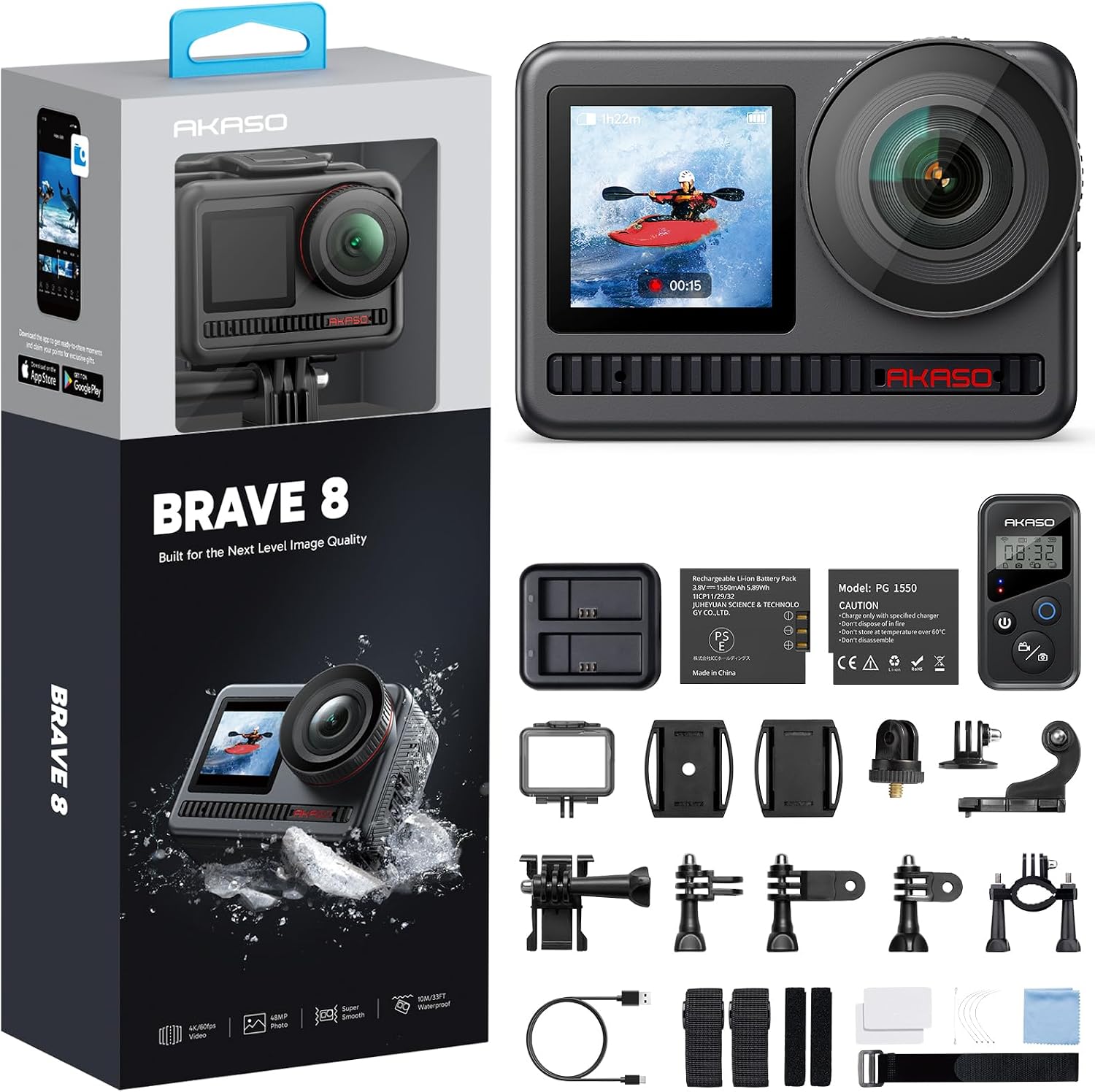
| AKASO Brave 8 | Best budget, adequate for disputes | 4K30 | ~90 min | Yes (IPX7) | CHECK AMAZON PRICE |
Loop recording note: all four cameras support loop recording, which overwrites old footage when the memory card is full. This is the correct setting for delivery riders. You are not documenting every shift as archive footage. You are maintaining a rolling record that saves you when something happens. When something happens, save the relevant clip before the loop overwrites it.
Best Overall: GoPro Hero 13 Black
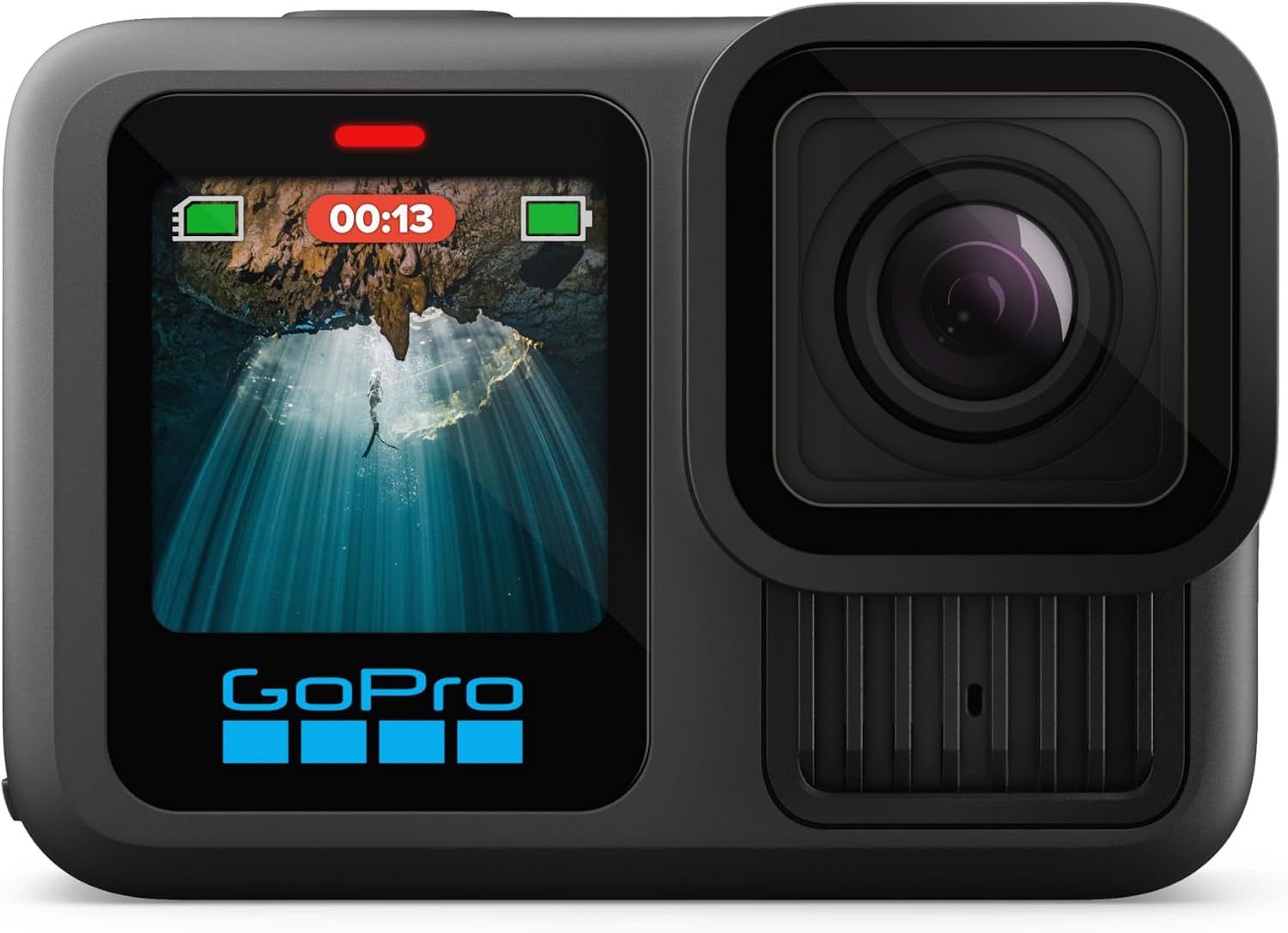
The GoPro Hero 13 Black is the benchmark for a reason. In independent testing across 600 miles of varied riding conditions including city streets, the GoPro Hero 13 Black stood out for stabilization, build quality, and ecosystem completeness. For a delivery rider who needs a camera that handles stop-and-go city riding, vibration from rough pavement, and occasional heavy rain without producing shaky unusable footage, the Hero 13 is the most proven option.
The HyperSmooth 6.0 stabilization is what earns its premium. Footage from rough NYC pavement, over metal grates, and through potholed stretches looks stable and readable. For dispute purposes, stable footage that clearly shows a sealed bag, a door number, or a license plate is more useful than high-resolution but shaky footage where the relevant detail is impossible to read.
The magnetic mounting system on the Hero 13 is the delivery-specific feature that matters most. You mount and dismount quickly. You do not want to be fumbling with a locking screw at a pickup in the dark. The magnetic quick-release system allows the camera to snap in and release with one motion, which is the right interface for a working rider rather than a weekend photographer.
The native waterproofing to 10 meters means you do not need a separate housing for rain. You ride, it rains, the footage continues. No adjustment needed.
The one thing I do not love about it:
Battery life is around 90 minutes at 4K resolution. For a four-hour dinner block, you are swapping batteries or bringing a second battery. A spare battery costs around $25 and fits in a jacket pocket. It is a solvable problem but it is a logistics step that other options on this list handle differently. Set a reminder between shift blocks to swap and charge.
- Best in class HyperSmooth 6.0 stabilization, even on rough NYC pavement and potholes
- Magnetic quick release mounting allows fast on/off with no fumbling for screws
- Native waterproofing to 10m means no separate housing needed
- Most established mount and accessory ecosystem, making replacements easy to find locally
- Battery life is capped at around 90 minutes on 4K, requiring a spare battery for full dinner blocks
- Most expensive option on the list
Best for Night Shifts: DJI Osmo Action 5 Pro
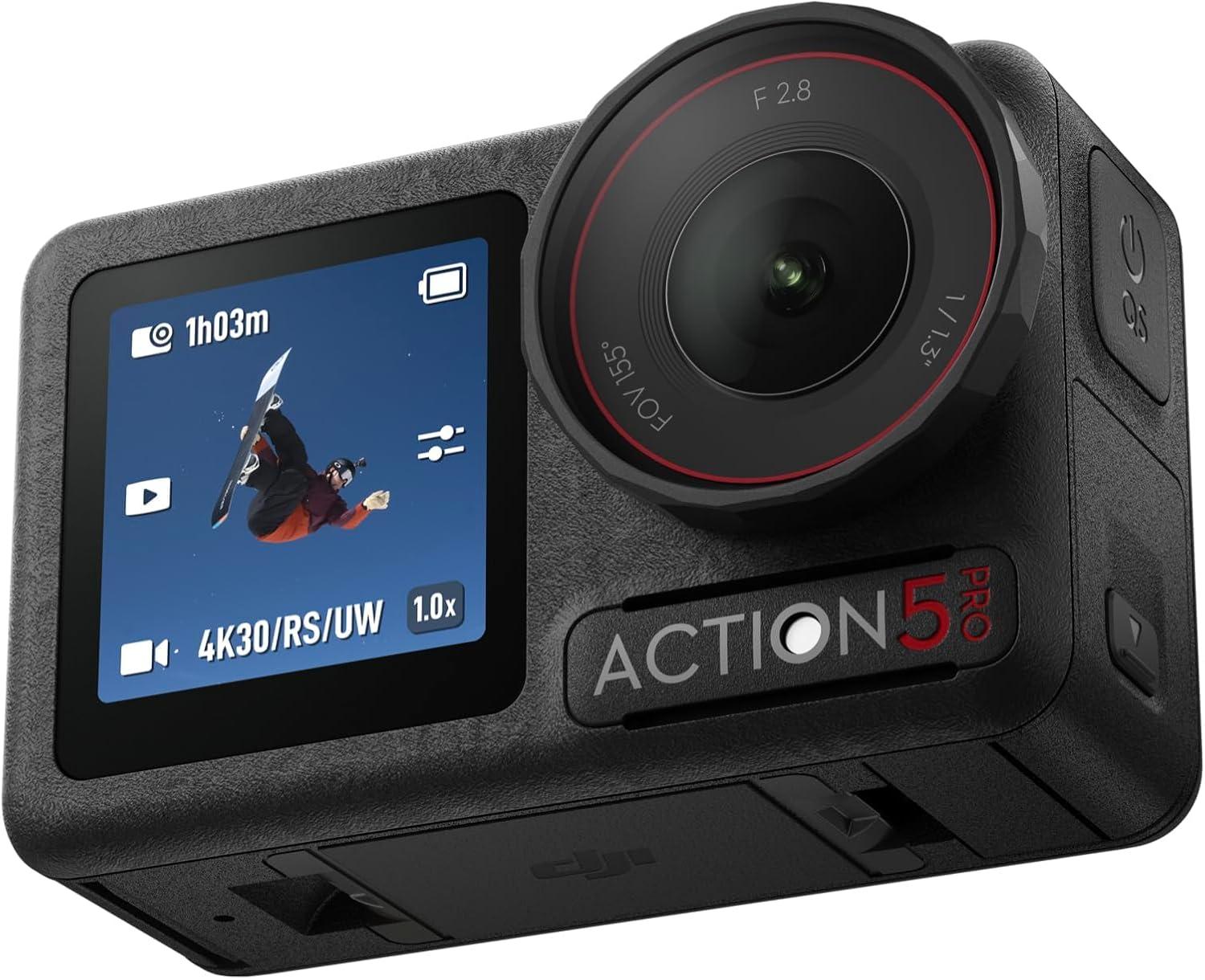
New York dinner blocks run into the evening. In winter, that means several hours of night riding. Standard action cameras produce noisy, grainy footage in low light that is often too degraded to be useful as documentation. The DJI Osmo Action 5 Pro is specifically the camera that addresses this.
Riders who prioritize low-light performance should strongly consider the DJI Osmo Action 5 Pro and that assessment holds specifically for delivery riders doing evening and night shifts in city environments. The larger sensor and advanced night mode produce footage in street-lit conditions where the GoPro Hero 13 produces noticeably noisier images.
For dispute documentation specifically, this matters at night. A restaurant doorstep handoff at 10pm under a single streetlight, captured clearly on the DJI, provides useful evidence. The same handoff captured on a standard action camera may produce footage where the relevant detail is obscured by noise.
The IP68 waterproofing matches the GoPro. The battery life is significantly better, around 160 minutes at 1080p, which covers most dinner blocks without a swap.
For delivery riders whose shifts are primarily in the evening, this is the stronger choice.
The one thing I do not love about it:
The DJI magnetic mounting accessory system is less established than GoPro's. GoPro mounts are available at more locations, compatible with more third-party accessories, and more likely to be carried by camera shops and sporting goods stores if you need a replacement. If you lose or break a DJI-specific mount, you are waiting for an Amazon delivery rather than walking into a local shop.
- Strongest low light performance thanks to a larger sensor and advanced night mode
- Longest battery life (around 160 minutes at 1080p), often covering a full shift without a swap
- IP68 waterproofing matches the GoPro
- Lower price while outperforming GoPro specifically in the dark
- Mounting and accessory ecosystem is less established than GoPro's
- Replacement mounts are harder to find at local shops, requiring more reliance on online orders
Best Compact Option: Insta360 GO 3S
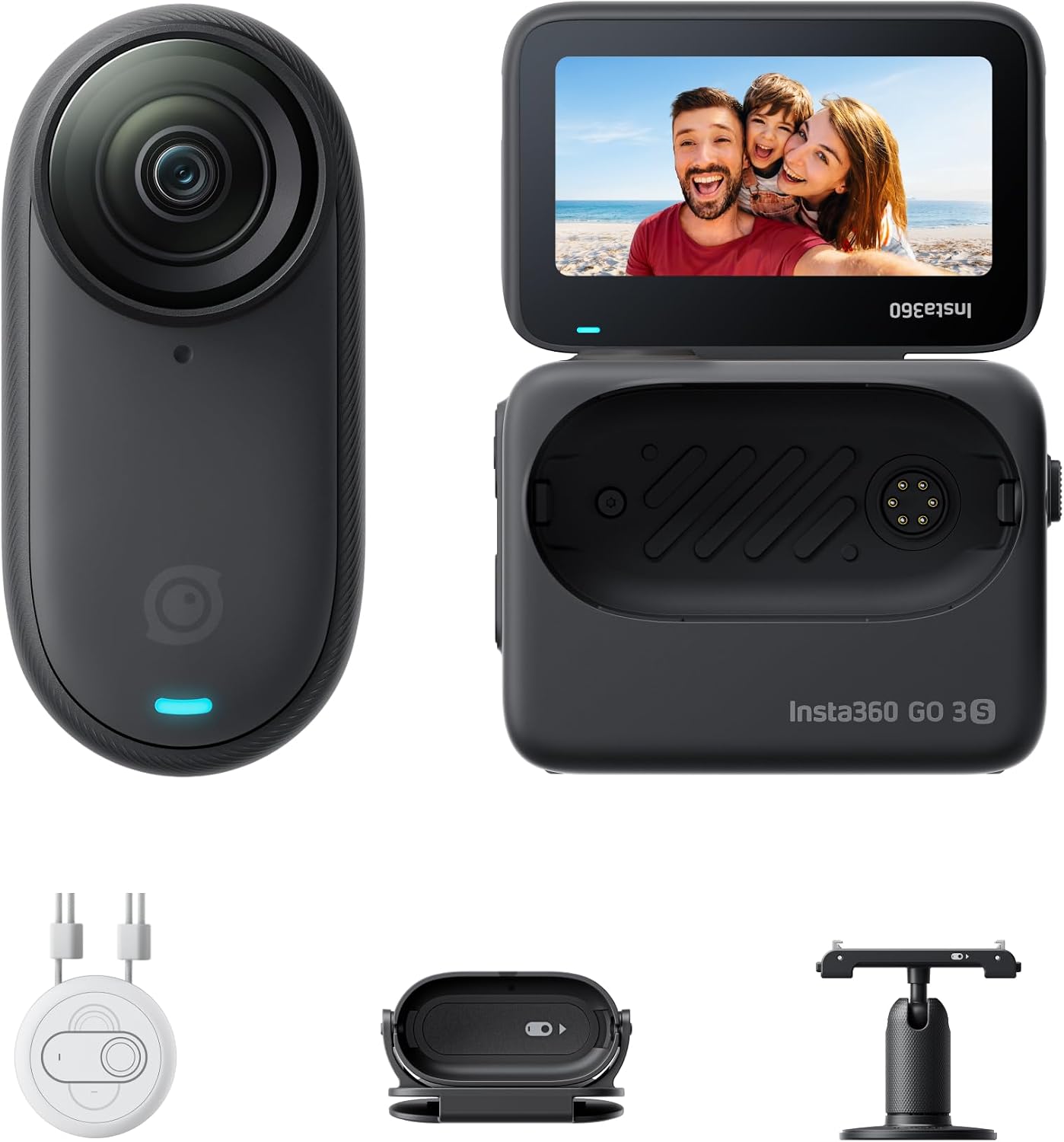
The Insta360 GO 3S weighs 39 grams. Mounted to a helmet chin bar, you will not feel it. After 30 minutes of riding you will forget it is there. That is the point.
For delivery riders who want continuous documentation running in the background without any awareness of the camera, the GO 3S is the most frictionless option. The small size means it mounts cleanly on almost any helmet without protruding in a way that catches wind or creates aerodynamic drag. For riders who have been put off by the bulk of standard action cameras on a helmet, the GO 3S removes that objection entirely.
The Action Pod that comes with the GO 3S functions as a live preview screen and remote control. You can check framing before a shift, review recent footage between blocks, and trigger recording without touching the camera itself.
The one thing I do not love about it:
Battery life is around 70 minutes at 4K. That is the shortest on this list and it means managing battery swaps more actively on a long shift. The small battery is an unavoidable consequence of the compact size. If long uninterrupted recording is the priority, the DJI handles that better. If compact and forget-it-is-there is the priority, the GO 3S is the right trade-off.
- Extremely lightweight (39g) so it disappears on a helmet with no wind drag
- Action Pod adds a live preview screen, remote control, and easy footage review between blocks
- Mounts cleanly on almost any helmet shape without bulk
- Shortest battery life of the group (around 70 minutes at 4K), requiring more active management
- Not the best fit for riders who need long, uninterrupted recording across back to back blocks
Best Budget Pick: AKASO Brave 8
If you want to start running footage before spending $200 or more, the AKASO Brave 8 is the most defensible entry point at $80 to $100. It records 4K at 30fps, is IPX7 waterproof, includes multiple mounting options in the box, and produces footage that is usable for documentation purposes under most delivery shift conditions.
It will not match the stabilization of the GoPro or the low-light performance of the DJI. Footage from rough pavement will show more shake than on premium options, and night footage will be noisier. For dispute documentation in reasonable lighting conditions, the footage is adequate. For riders who primarily want a record running in case something happens rather than high-quality footage for other purposes, the AKASO is a legitimate starting point.
The one thing I do not love about it:
The ecosystem support is minimal. Mounts, accessories, and replacement parts are less available than GoPro or DJI equivalents. If something breaks or you need a specific mounting solution, the options are limited. For a primary delivery shift camera that you are relying on, this creates a fragility that the premium brands do not have.
- Lowest cost by far, making it the easiest entry point
- Records 4K at 30fps with IPX7 waterproofing
- Multiple mounts are included in the box, so no extra accessory purchases are needed
- Footage is adequate for dispute documentation in decent lighting
- Shows noticeably more shake on rough pavement due to weaker stabilization
- Produces noisier, less usable footage at night or in low light
- Minimal ecosystem support leaves limited options for mounts or parts if something breaks
How Loop Recording Works and Why You Need It
Every camera on this list supports loop recording. This is the setting every delivery rider should enable before the first shift.
Loop recording continuously overwrites the oldest footage on your memory card when it reaches capacity. A 64GB card at 4K30fps holds roughly 2.5 to 3 hours of footage. When the card fills, the camera overwrites the oldest segment and continues recording. Your card always contains the most recent footage from the last 2 to 3 hours of your shift.
The implication: if nothing happens on a shift, the footage automatically disappears within hours of recording. You never need to manage a library of footage from uneventful shifts.
If something does happen, you have a window to save the relevant clip before the loop overwrites it. Save the clip to your phone through the camera's app, transfer to a computer, or lock the segment through the camera interface if that option is available. Do this before ending the shift.
A 64GB card is the recommended minimum for delivery shift use. A 128GB card doubles the rolling window to 5 to 6 hours and gives you more buffer time after an incident to save the relevant footage.
Mounting Position: Where to Put the Camera for Dispute Footage
Most action camera content recommends a top-of-helmet mount for the most stable, unobstructed view. For a delivery rider, that is the wrong position.
The top mount captures sky and forward road but does not capture your face, your hands, or the interaction at a restaurant door. For dispute purposes, what matters is footage that shows the sealed delivery bag, the handoff at the door, and your face and hands in the interaction. None of that is captured from a top mount.
The chin mount is the right position for delivery riders. A chin mount angled slightly downward captures the forward road, your gloved hands on the handlebars, and the scene at a pickup or dropoff stop. When you approach a restaurant door, the chin mount captures the interaction at roughly the height and angle of a witness standing beside you.
Chin mount adapters for the GoPro, DJI, and Insta360 systems are available on Amazon for $10 to $25. They attach to the chin bar of any full-face or open-face helmet with a strap or adhesive base.
What to Do When Something Happens
You are at a pickup and something goes wrong with the restaurant. Or you witness an incident involving your delivery.
Stop the loop from overwriting the relevant segment. Do this before doing anything else. Open the camera app on your phone and save or lock the relevant clip. If you do not have the app open, do not end the shift until you have transferred the footage to your phone.
Note the timestamp. Loop recordings are timestamped. Know the approximate time the incident occurred so you can locate the right segment quickly.
Do not delete anything from the card until you have a backup copy. Copy to your phone, then to a cloud service or computer, before you clear the card.
For restaurant disputes specifically, the footage shows the sealed bag at pickup and the delivery state at the door. Submit it through the platform dispute process with the timestamp noted. Most platforms have a mechanism for attaching documentation to a dispute. A video clip is more compelling than a written account.
The Full Tech Setup
Camera handles documentation. The rest of the setup handles income.
Phone mount keeps navigation running so you can focus on riding rather than holding the phone. Best Motorcycle Phone Mount for Delivery Riders
Power bank keeps the phone alive for the full shift so the navigation does not cut off mid-block. Best Wireless Power Bank for Delivery Riders
Lights keep you visible to traffic during evening and night blocks. Best Motorcycle Lights for Delivery Riders
The full first-shift setup is in the guide that covers all nine pieces of equipment together: 9 Things Every Gig Delivery Rider Needs Before Their First Shift
The Bottom Line
A crash is the scenario you hope never happens. A restaurant dispute, a false rating, or a traffic incident is the scenario that happens with meaningful frequency to every delivery rider who works long enough.
A camera running loop recording during every shift creates a rolling record of the last two to three hours of your work. Most of that footage is never viewed. The segments that matter, the ones that protect your account, your income, and your ability to dispute false claims, are there when you need them.
The GoPro Hero 13 is the pick for daytime and mixed conditions. The DJI Osmo Action 5 Pro is the pick for evening and night shift riders where low-light performance is the deciding factor. The Insta360 GO 3S is for riders who want a camera they genuinely forget is there. The AKASO Brave 8 is for riders who want documentation running before committing $200 or more.
Start the recording. Run it every shift. Save the clips that matter.