
Safety GearArticle
Best Motorcycle Cooling Vest for Summer Delivery Shifts 2026: Beat the Heat, Keep Earning
Heat kills productivity faster than cold does. A cooling vest is the summer equivalent of a rain suit, the gear that keeps you on the road when most riders quit. Here's what actually works in NYC summer humidity.
July in New York is not just hot. It is humid. The heat index on a Tuesday afternoon in Flatbush in the middle of a dinner block can make 88 degrees feel like 98. The difference between riding in that and being in an air-conditioned car matters, but the more immediate difference is between a rider who stays on the road through a full shift and one who calls it early because they feel sick.
Heat is not just discomfort. When your core temperature rises, your decision-making slows. Studies have found that cognitive function and reaction time degrade noticeably as body heat builds. For a delivery rider making rapid accept-or-decline decisions and navigating city traffic, that degradation has a real earnings cost.
A cooling vest does not make summer delivery comfortable. It makes it sustainable. That is the standard it should be judged against.
The Most Important Thing to Know Before You Buy
This article is going to tell you something that most cooling vest articles skip because they were written by and for riders in dry climates.
Evaporative cooling vests do not work as well in humid conditions.
Evaporative cooling works by absorbing water and then releasing it slowly into the air. As the water evaporates, it carries heat away from your body. This works well in dry heat because dry air can absorb that moisture efficiently.
New York City in July is not dry. Average humidity sits above 60 percent in summer, with heat indexes routinely pushing conditions where the air is close to saturated. When the air is already carrying significant moisture, your wet vest cannot evaporate as quickly, and the cooling effect is significantly reduced.
The HyperKewl vest, which appears in nearly every cooling vest roundup online, is rated up to 10 hours of cooling per soak. In Arizona in July at 20 percent humidity riding at highway speed, that may be accurate. In Brooklyn in July at 70 percent humidity stopping every two blocks outside a restaurant, it is not. Multiple Amazon buyers report this directly: the vest performs noticeably worse in humid climates and at lower speeds.
Delivery riders in New York, Miami, Houston, Atlanta, Chicago in summer, and any other humid market need to factor this in before choosing a vest type.
Ice pack vests work regardless of humidity. They cool by direct contact with a cold medium, not evaporation. The humidity in the air is irrelevant to how well they work.
I am going to cover both types honestly.
Quick Comparison: Best Cooling Vests for Delivery Riders 2026
| Vest | Best For | Cooling Type | Works in Humidity? | Buy Now |
| CHILLSWIFT Ice Pack Cooling Vest | NYC and humid city markets, any conditions | Ice pack (PCM) | Yes | CHECK PRICE ON AMAZON |
| MR.ICE Cooling Vest | Full-shift sustained cooling, humid conditions | Ice pack | Yes | CHECK PRICE ON AMAZON |
| HyperKewl Evaporative Sport Vest | Dry climates, sustained highway-speed riding | Evaporative | Reduced | CHECK PRICE ON AMAZON |
| Cooling Neck Wrap (budget) | Supplemental cooling, quick and cheap | Evaporative | Reduced | CHECK PRICE ON AMAZON |
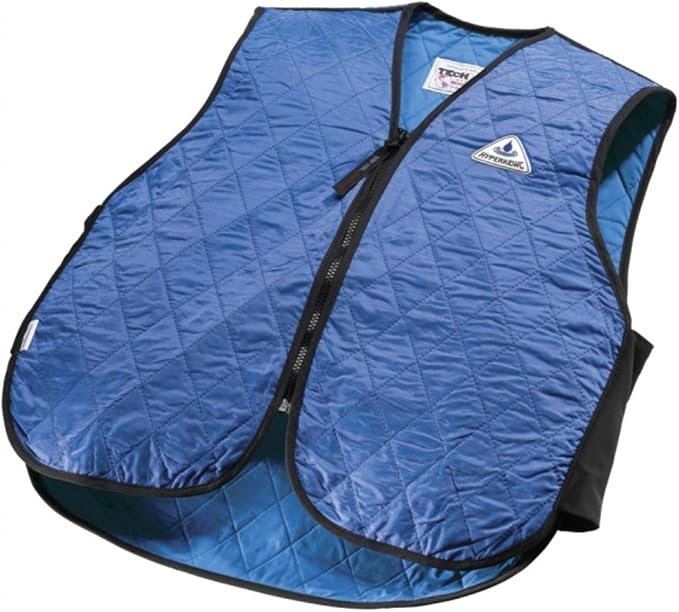
HyperKewl Evaporative Sport Vest
Brand: TechNiche International
BUY ON AMAZON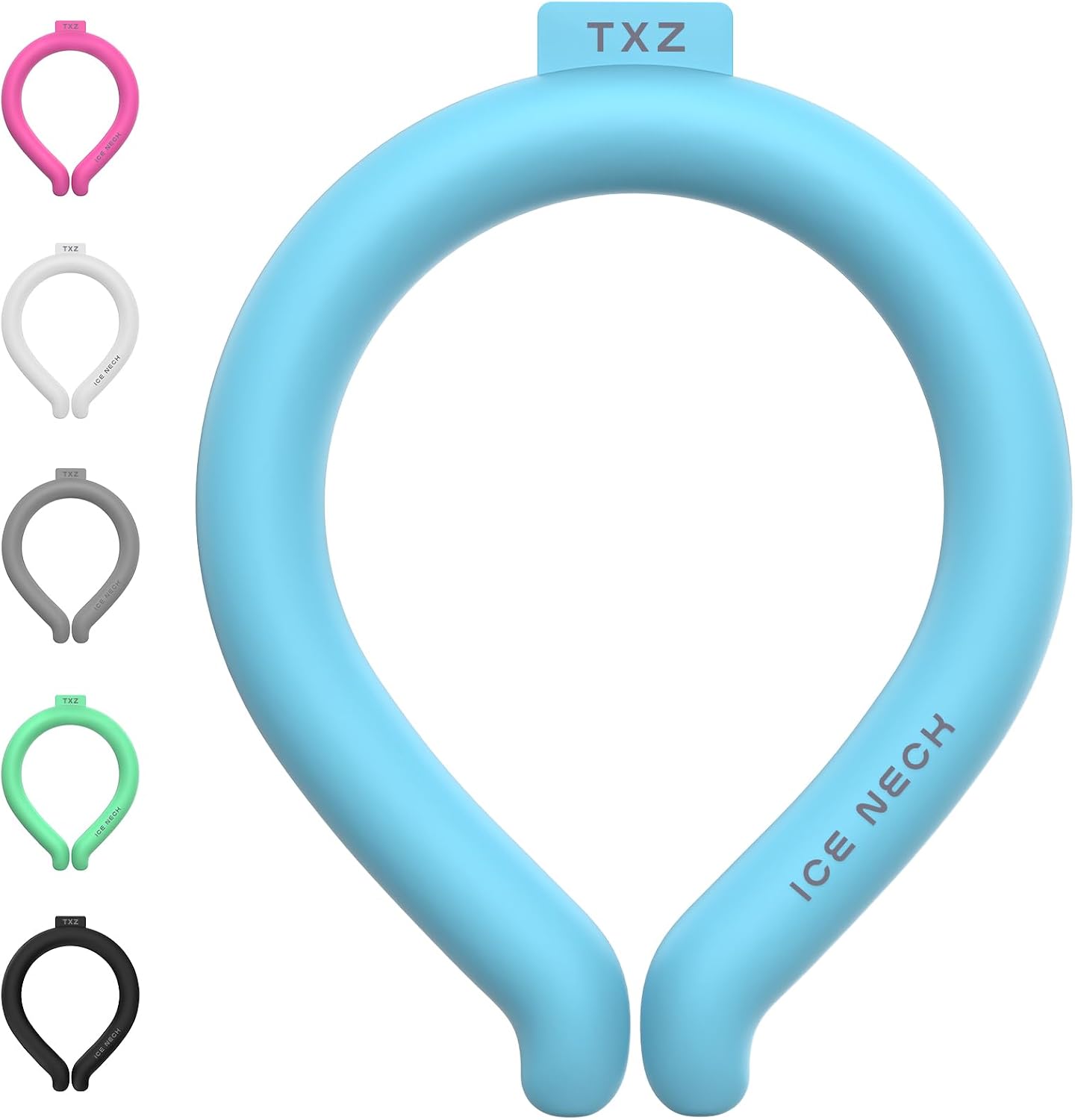
Best for NYC and Humid Markets: CHILLSWIFT Ice Pack Cooling Vest
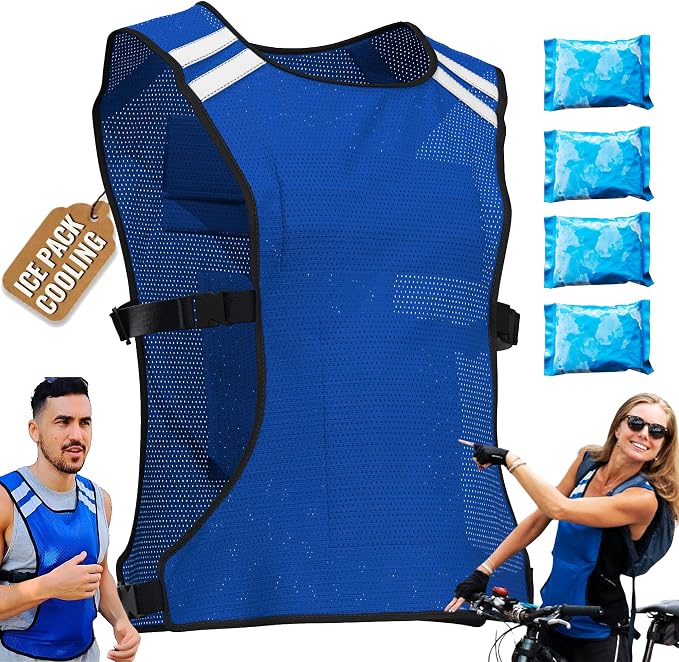
The CHILLSWIFT vest comes with four reusable ice packs that slot into pockets across the chest and back. You freeze the packs overnight, load them in the morning, and the vest provides direct cold-contact cooling regardless of ambient humidity. There is no evaporation mechanism to fail. Cold is cold.
For a delivery rider doing a dinner block in Midtown in late July, this is the reliable choice. You freeze the packs the night before, load them into the vest before your shift, and wear it under a mesh or vented jacket. The cooling is immediate and consistent. The packs stay cold for two to four hours depending on ambient temperature. For a standard four-hour evening block, you get through the peak heat window of the shift before the packs begin to warm.
The vest itself is adjustable with side straps that accommodate a range of body types. It is lightweight enough to wear under a jacket without significant additional bulk. The pockets are designed to sit flat so the ice packs do not create pressure points during the riding position.
The one thing I do not love about it:
The ice pack logistics. You need a freezer. If you are doing a morning and evening shift back to back with a gap in between, you need a place to refreeze the packs during the break. At home that is easy. On the road in the middle of a gap between blocks, it is not. Some riders keep a small insulated bag with extra frozen packs at their base location. Others plan their mid-day break around returning home for a charge and a refreeze. Neither is difficult, but it requires forethought that an evaporative vest does not.
The packs also add weight. The CHILLSWIFT with all four packs loaded weighs more than a wet evaporative vest. Not prohibitively so, but noticeable if you are sensitive to added weight.
- Works regardless of humidity or riding speed
- Immediate and consistent direct cold-contact cooling; four ice packs cover chest and back
- Adjustable side straps fit a range of body types
- Flat pocket design prevents pressure points in riding position
- Lightweight enough to wear under a jacket
- Requires overnight freezer access, problematic during back-to-back shifts away from home
- Noticeably heavier than evaporative vests with all four packs loaded
- Requires logistical planning an evaporative vest doesn't
Also Strong: MR.ICE Cooling Vest
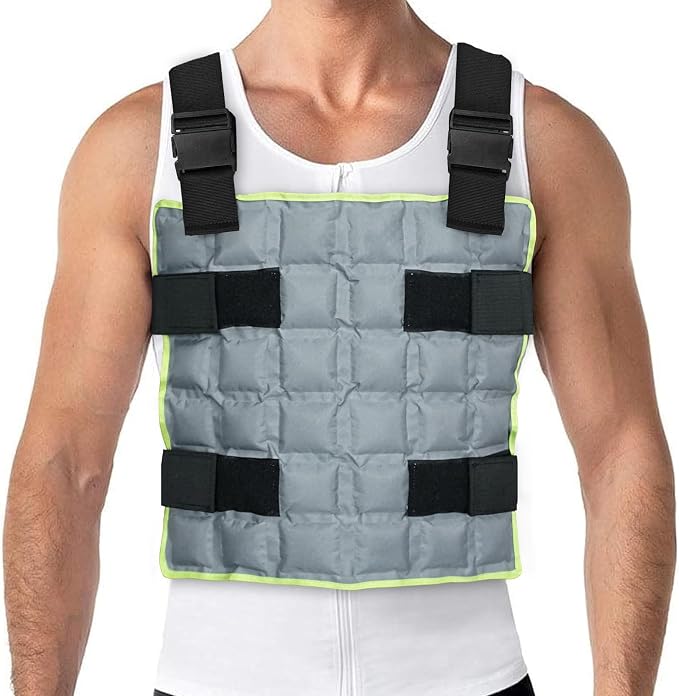
The MR.ICE runs on the same ice pack principle as the CHILLSWIFT. Ice packs slot into pockets, direct contact cooling, humidity irrelevant. It is worth considering alongside the CHILLSWIFT based on current Amazon availability and pricing in your size, as both vests perform similarly in real conditions.
The adjustable fit on the MR.ICE accommodates a wider range of body sizes than some competitor ice pack vests that run restrictively small. For riders who found other ice pack vests too tight under a jacket, the MR.ICE fit is worth checking against your measurements before ordering.
The one thing I do not love about it:
Same logistics issue as the CHILLSWIFT. Ice packs need to be frozen before each use. At $30 to $50, picking up a second set of ice packs so you can have one set freezing while the other is in use makes the back-to-back shift problem more manageable.
- Same humidity-proof ice pack cooling as the CHILLSWIFT
- Accommodates a wider range of body sizes than most competitor ice pack vests
- Comparable real-world performance to the CHILLSWIFT
- Same freezer logistics issue as the CHILLSWIFT
- A second set of ice packs (extra cost) is effectively necessary for riders doing consecutive shifts
- Less distinctly differentiated from the CHILLSWIFT beyond fit
Best Evaporative Pick: HyperKewl Sport Vest
If you are in a dry climate, if you are riding at sustained speeds rather than stop-and-go delivery cycling, or if you want a vest you can activate in any sink without logistics planning, the HyperKewl is the most tested and well-reviewed evaporative option on Amazon.
The HyperKewl fabric absorbs water, holds it in a layered structure, and releases it through evaporation over time. The vest activates in two to three minutes of soaking in any sink or bucket. At a full soak it claims five to ten hours of cooling. Real-world conditions will land you somewhere in the lower half of that range in most cases.
The key advantage over ice pack vests: no freezer needed, no logistics, no weight from ice. You find a sink, soak it for three minutes, wring out the excess, put it on. On a shift in a market with moderate humidity and riding speeds above 15 mph, this works well.
The key limitation for NYC delivery riders specifically: at the stop-and-go speeds of city delivery, with 70 percent humidity in July, the cooling effect is notably reduced compared to what the specifications suggest. Multiple Amazon buyers who ride in humid climates confirm this directly. The vest still provides some cooling benefit, but the gap between the dry-climate performance and the humid-climate performance is significant enough to know before you rely on it.
The one thing I do not love about it:
The performance drop in humidity is real and most marketing for this product does not acknowledge it. If you are buying this for New York, Miami, Houston, or any humid summer market, go in with realistic expectations. It will help. It will not perform at the level it does in a dry heat environment at highway speeds.
A reviewer who took it into Thailand in high humidity said it made them feel hotter and reduced airflow compared to just soaking their mesh jacket in water. That is the extreme end, but it illustrates the humidity limitation clearly.
- No freezer needed, activates in any sink in 2–3 minutes
- Claims 5–10 hours of cooling per soak
- Lighter than ice pack vests; zero logistics overhead
- Well-tested and widely reviewed
- Significantly reduced effectiveness in humid conditions (NYC, Miami, Houston)
- Stop-and-go city delivery limits airflow, further degrading performance
- Marketing specs reflect dry-climate performance that most delivery riders won't experience
- One reviewer in high humidity reported it felt worse than a wet mesh jacket alone
Budget Option: Cooling Neck Wrap
If you want to test the concept of body cooling before spending $30 to $60 on a vest, a cooling neck wrap is a $10 to $15 entry point. These are PVA material wraps that soak up water and provide localized cooling around the neck and upper chest. They activate the same way the HyperKewl does, have the same humidity sensitivity, and provide a smaller but meaningful cooling effect at the pulse points on the neck.
For riders who are skeptical about whether a cooling garment will actually help on their specific shifts, a neck wrap is the cheapest way to find out. If it makes a difference, the ice pack vest becomes an easy next investment.
The one thing I do not love about it:
It only covers the neck. A full vest distributes cooling across the chest and back, which is where core temperature management matters most. The neck wrap is a supplement, not a substitute for a vest on genuinely hot shifts.
- Very low cost
- Activates the same way as the HyperKewl, just a sink and a few minutes
- Provides meaningful cooling at the neck pulse points
- Good way to test whether body cooling helps before committing to a vest
- Only covers the neck, no chest or back cooling where core temperature management matters most
- Same humidity sensitivity as all evaporative products
- A supplement at best, not a replacement for a full vest on serious summer shifts
Evaporative vs Ice Pack: The Decision for Your Market
| Evaporative (HyperKewl type) | Ice Pack (CHILLSWIFT / MR.ICE type) | |
| NYC, Miami, Houston | Works but reduced effectiveness | Works fully regardless of humidity |
| Phoenix, Las Vegas, LA | Works well | Works fully but heavier |
| Stop-and-go delivery | Less effective (needs airflow) | Works regardless of speed |
| Highway / sustained speed | More effective | Works regardless of speed |
| Logistics | Just a sink and 3 minutes | Needs freezer overnight |
| Weight | Lighter | Heavier (ice packs) |
| Cost | $40-$60 | $30-$50 |
For most NYC delivery riders doing stop-and-go blocks in humid summer conditions, ice pack wins. For riders in dry climates or riders doing longer transit sections at sustained speed, evaporative is simpler with no logistics overhead.
How to Wear a Cooling Vest Under a Jacket
Cooling vests are worn under your outer layer, not over it. This is not obvious from most product listings.
For riders in mesh or vented jackets: the airflow through your jacket helps evaporative vests perform better and allows the cold from ice pack vests to reach your core more effectively. A mesh jacket over an ice pack vest is the best combination for stop-and-go city summer delivery.
For riders in non-vented jackets or heavy gear: the vest still helps, but significantly less so. The more your outer layer breathes, the more effective any cooling vest becomes.
Fit matters more than most vest buyers expect. A cooling vest should sit snugly against your torso with minimal gap. A loose vest holds cold air against fabric rather than against your skin, and the cooling effect is reduced. If you are between sizes, go smaller rather than larger.
Managing Recharge Between Shifts
For evaporative vests: any sink works. A restaurant bathroom, a gas station restroom, your home sink. Three minutes of soaking and wring out the excess. Simple.
For ice pack vests: plan your shift schedule around a freezer. If you have a morning and evening block with a three-hour gap at home, the packs refreeze in that window. If you are doing continuous shifts without returning home, a second set of ice packs and a small insulated bag at your staging location solves the problem. The extra set of packs typically costs $10 to $15 on Amazon.
The Full Summer Shift Stack
Cooling vest handles the core temperature. For a complete summer shift setup:
Mesh gloves for ventilation and grip. Standard riding gloves trap heat. Summer mesh gloves breathe without giving up protection. Best Motorcycle Gloves for Delivery Riders
Hydration. A cooling vest slows your heat buildup. It does not eliminate it. Drink water before a summer shift, not when you feel thirsty. By the time you feel thirsty in July heat you are already behind on hydration and your decision-making is already slightly impaired.
Timing. The worst heat in most cities is between 1pm and 5pm. If you have flexibility in your schedule, structuring your summer shifts around morning and evening blocks and avoiding the peak heat window is the most effective heat management strategy of all, and it costs nothing.
The Bottom Line
Heat ends shifts early. A cooling vest extends how long you can ride effectively in summer without the cognitive degradation and physical discomfort that causes riders to call it early and go home.
For NYC and other humid markets, the ice pack vest is the honest recommendation. It works in any conditions, at any speed, without logistics complexity beyond overnight freezing.
For dry climates or riders who want zero logistics, the HyperKewl is the simpler option with the caveat that humidity reduces its performance in a way the specs do not fully acknowledge.
Buy one before your next July dinner block. A $30 to $50 vest that keeps you on the road for an extra two hours pays for itself in the first shift where you would otherwise have gone home early.