
Safety GearArticle
Best E-Bike Helmet for Delivery Riders 2026: What You Actually Need and Why
Most adult delivery riders on Class 1 and 2 e-bikes are not legally required to wear a helmet in New York. Here is why the speed of an e-bike makes that a bad calculation, and which helmets are actually worth buying.
I am not going to lecture you about wearing a helmet. You already know the argument. What I am going to do is give you the information that changed my own calculation, because it was not the standard safety lecture that did it.
It was a number: 20 mph.
At 20 mph, which is the top assisted speed of a Class 2 e-bike, your stopping distance in an emergency is roughly three to four times longer than at 10 mph on a standard bicycle. The kinetic energy involved in a crash at 20 mph is four times higher than at 10 mph. Standard bicycle helmets are tested to CPSC standards that were developed primarily for crashes at lower speeds. They are not the wrong choice. They are just not the same protection level as what the speed of a delivery e-bike actually demands.
That is the factual case for an e-bike specific helmet. Make your own decision with that information.
The Legal Reality First
In New York State, adults over 14 are not legally required to wear a helmet on a Class 1 or Class 2 e-bike. Class 3 e-bikes, which assist to 28 mph, have additional requirements in some jurisdictions. For Class 1 and 2 delivery e-bikes, the law does not require a helmet for adults.
Other states vary. California does not require helmets for adults on Class 1 or 2 e-bikes. Some states, including New Jersey, require helmets for all e-bike riders regardless of age. Check your specific state before assuming.
This article is not about what the law requires. It is about what a delivery rider operating an e-bike in city traffic at up to 20 mph should understand about their options.
Why E-Bike Speeds Change the Helmet Calculation
A standard bicycle moves at 8 to 12 mph for most urban riders. An e-bike assists to 20 mph and most riders cruise between 15 and 20 mph between stops. The difference in speed is modest. The difference in impact energy is not. Kinetic energy scales with the square of speed. A crash at 20 mph does not have twice the energy of a crash at 10 mph. It has four times the energy.
Standard CPSC-certified bicycle helmets are designed around typical bicycle crash scenarios. They meet a safety standard that has served millions of riders well. But that standard was developed before e-bikes became a significant part of urban cycling.
The Dutch NTA 8776 certification was created specifically for e-bike speeds. It tests helmets against higher impact forces, requires the helmet to sit lower on the head to cover more of the skull, and extends coverage around the sides and back of the head beyond what the CPSC standard mandates. For a delivery rider operating an e-bike in stop-and-go NYC traffic where cars, pedestrians, and unexpected obstacles are constant, NTA 8776 represents the relevant safety baseline.
MIPS (Multi-Directional Impact Protection System) is a separate technology that addresses rotational forces in angled crashes. Most crashes do not involve a direct perpendicular impact. They involve the head striking a surface at an angle, which creates rotational forces that a non-MIPS helmet does not address. MIPS adds a low-friction layer inside the helmet that allows the outer shell to move relative to the inner liner, reducing the rotational force transmitted to the brain. For delivery riders navigating complex city traffic where the direction of a crash is unpredictable, MIPS is worth having.
Quick Comparison: Best E-Bike Helmets for Delivery Riders 2026
| Helmet | Best For | NTA 8776 | MIPS | Integrated Light | Buy Now |
| Bern Hudson MIPS | Best all-around, proven safety ratings | Yes | Yes | Rear LED | CHECK PRICE ON AMAZON |
| Giro Camden MIPS | Best for riders wanting turn signals | Yes | Yes | Rear LED + turn signals | CHECK PRICE ON AMAZON |
| OutdoorMaster Gem 2 MIPS | Best budget NTA pick | Yes | Yes | Rear USB-C LED | CHECK PRICE ON AMAZON |
| Lumos Ultra | Best for maximum city visibility | Yes | Yes | 360° integrated LEDs, turn signals | CHECK PRICE ON AMAZON |
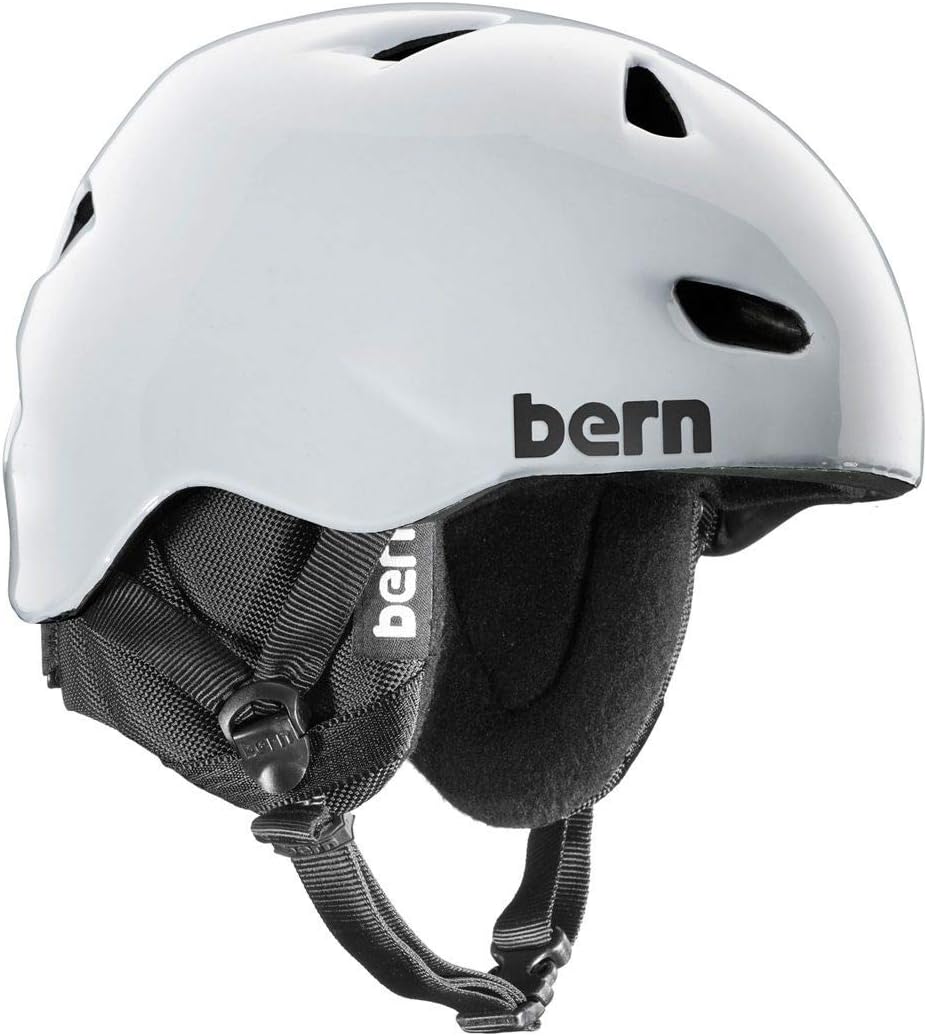
Best All-Around Pick: Bern Hudson MIPS
The Bern Hudson MIPS is the helmet I would buy first. It earned a 5-star Virginia Tech rating, which is the independent laboratory testing standard that matters alongside manufacturer certification. NTA 8776 tells you the helmet was designed for e-bike speeds. The Virginia Tech 5-star rating tells you an independent lab confirmed it performs at that level in controlled testing. The combination of both is what you want.
The Bern Hudson has a built-in rear LED light that runs off a USB-C rechargeable battery. For night delivery shifts, having a rear light integrated into the helmet rather than mounted on the bike adds a visibility point that moves with your head, which faces the traffic behind you more directly than a seat-mounted or rack-mounted rear light does.
The MIPS liner sits inside the shell with a low-friction layer that reduces rotational forces in angled impacts. The fit system uses a dial adjuster that allows micro-adjustment to get a snug, even contact around the head without hot spots.
The one thing I do not love about it:
The Bern Hudson runs warm compared to high-ventilation road helmets. It sits lower on the head for the NTA 8776 coverage requirements, which means less of the head is exposed to airflow. On a July dinner block, that is noticeable. The trade-off is more coverage where it matters. For riders in warm climates doing long summer shifts, factor the ventilation limitation in. For spring, fall, and winter delivery work, it is a non-issue.
- 5-star Virginia Tech independent rating
- NTA 8776 certified
- MIPS protection
- integrated USB-C rechargeable rear LED
- strong safety credentials at a reasonable price point
- Runs warm in hot weather due to lower-sitting NTA coverage
- No turn signals
- No ventilation adjustment
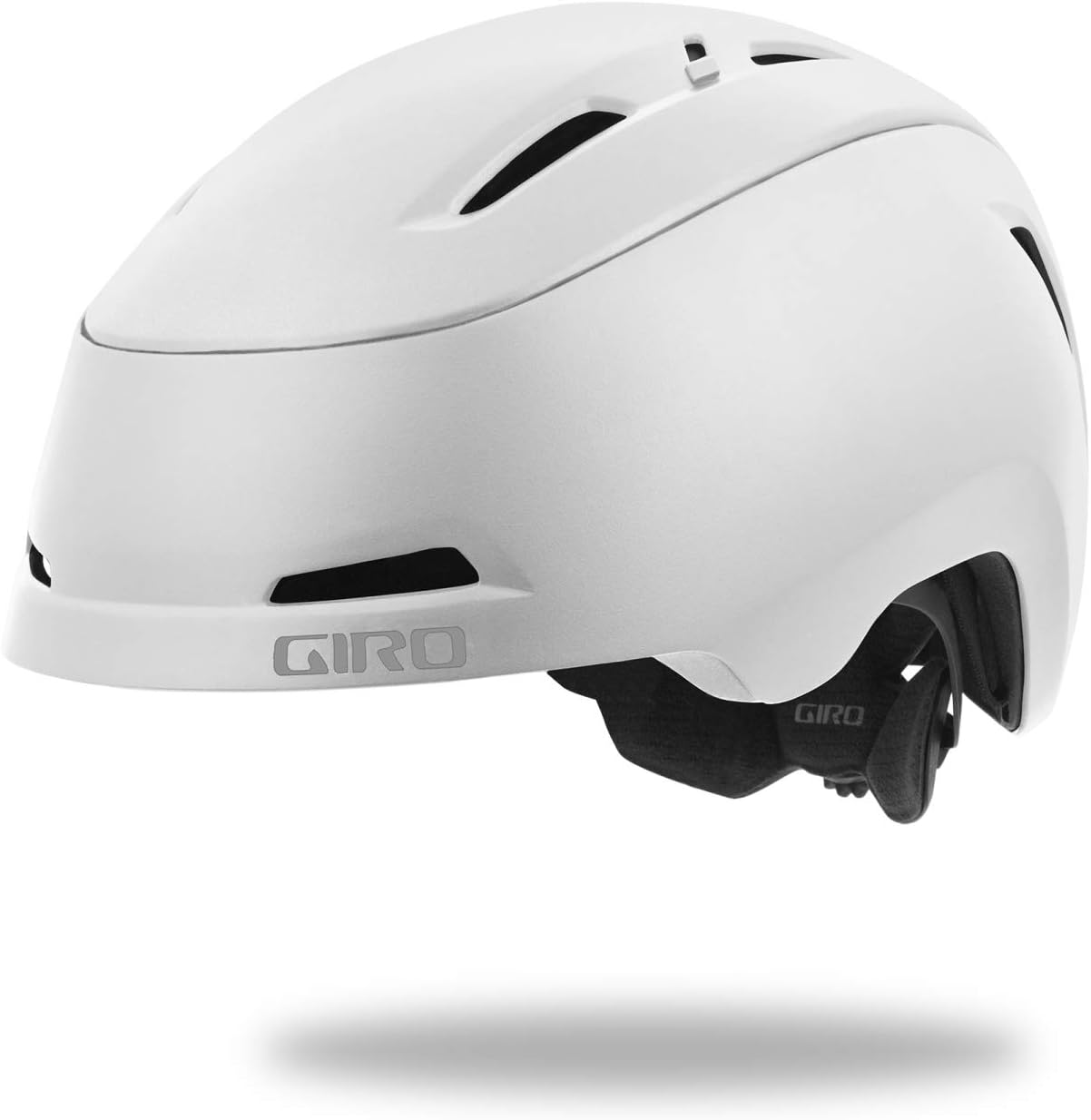
Best Premium Pick: Giro Camden MIPS
The Giro Camden MIPS is the helmet for delivery riders who prioritize being seen by drivers. It has integrated turn signals controlled from a handlebar remote, a large rear LED, NTA 8776 certification, MIPS protection, and adjustable vents that open for warmer conditions and close for cold.
The turn signal system is more useful for delivery riders than most reviews acknowledge. Signaling turns in NYC traffic while riding at 18 mph requires either taking a hand off the handlebar for an arm signal or accepting that your turn intention is invisible to drivers behind you. A helmet-integrated turn signal that operates from a handlebar button lets you signal without taking either hand off the controls.
The adjustable vents are genuinely useful across seasons. Open them for summer blocks, close them for cold weather, and the helmet covers a broader range of conditions than a fixed-vent design.
The one thing I do not love about it:
At around $200, the Giro Camden is a significant purchase for a delivery rider. The turn signals and adjustable vents earn the premium for riders who do long hours across all seasons. For a rider doing weekend shifts in moderate conditions, the Bern Hudson at $120 delivers the same core safety profile for significantly less.
- Integrated turn signals via handlebar remote
- Adjustable vents for year-round use
- NTA 8776 certified
- MIPS protection
- Large rear LED
- Premium price, hard to justify for part-time riders
- Turn signal feature may feel excessive for some
- No independent Virginia Tech rating highlighted
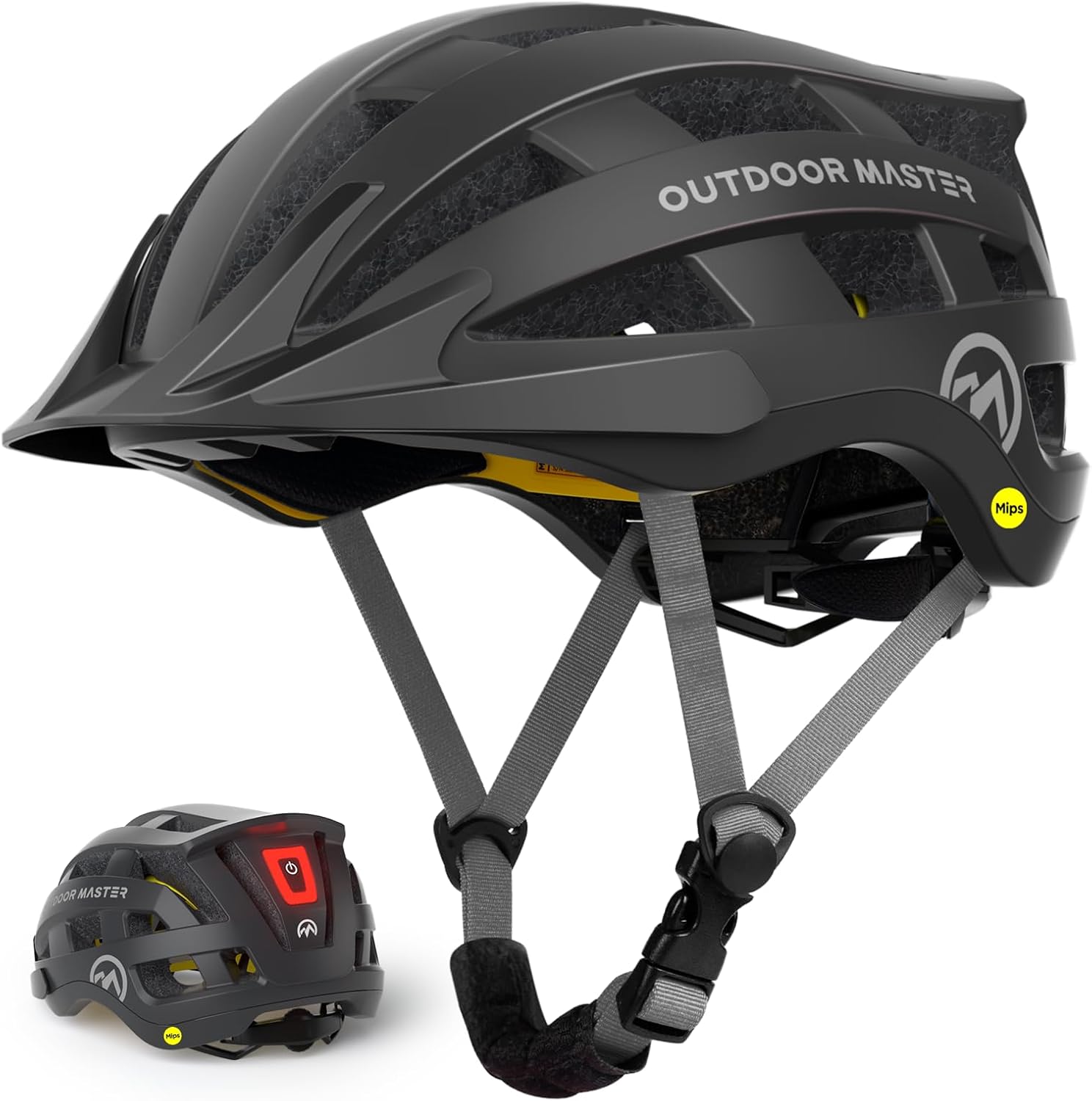
Best Budget NTA Pick: OutdoorMaster Gem 2 MIPS
The OutdoorMaster Gem 2 MIPS is the best argument that NTA 8776 certification and MIPS protection do not have to cost $150 or more. At $80 to $100, it brings both the certification and the technology at a price point that makes the upgrade from a standard CPSC helmet much smaller.
The helmet is lightweight with good ventilation, a removable visor, and a USB-C rechargeable rear light. The MIPS liner is standard technology working the same way it does in more expensive helmets.
The one thing I do not love about it:
The Virginia Tech rating for the OutdoorMaster is not as prominent in independent testing as the Bern Hudson or Giro Camden. The NTA 8776 certification is real, but the third-party independent performance testing that gives you confidence beyond the manufacturer's own claims is less established. For a delivery rider on a strict budget who wants NTA coverage, it is a defensible choice. For a rider who can stretch to the Bern Hudson, the additional confidence from the Virginia Tech 5-star rating is worth the extra $20 to $40.
- Most affordable NTA 8776 + MIPS option
- Lightweight
- Good ventilation
- Removable visor
- USB-C rear light included
- Limited independent third-party testing data
- Less established brand credibility compared to Bern or Giro
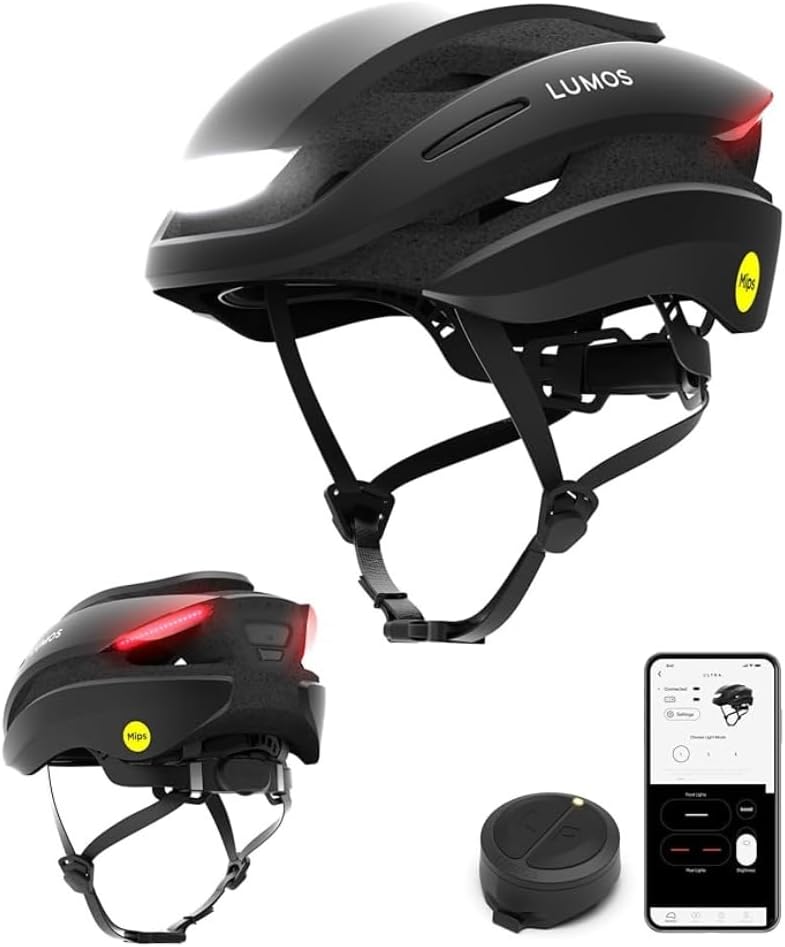
Best for Maximum City Visibility: Lumos Ultra
The Lumos Ultra is in its own category. NTA 8776, MIPS, and a full 360-degree integrated LED lighting system with turn signals operated from a handlebar remote and an automatic brake light that activates when you decelerate.
For night delivery riders in high-traffic urban environments, the Lumos changes the visibility equation. Front lights, rear lights, side visibility, and turn signals all integrated into the helmet and moving with your head. At an intersection, your helmet is facing the driver who might fail to see you more directly than any bike-mounted light.
The one thing I do not love about it:
The Lumos Ultra weighs around 520 grams. It is the heaviest helmet on this list by a meaningful margin. After an hour of riding, that weight is noticeable at the neck. After four hours, it is significant. For shorter shifts or riders not sensitive to helmet weight, it is not a problem. For riders doing eight-hour shifts, the neck fatigue from the Lumos is a real consideration.
The battery also needs regular charging. The light system is the core feature of the helmet, and a dead battery means the lights are off. Build charging into your pre-shift routine the same way you charge your phone.
- 360° integrated LEDs, front and rear lights
- Turn signals, automatic brake light
- NTA 8776 certified
- MIPS protection
- Exceptional visibility for night shifts
- Heaviest helmet on the list (~520g)
- Noticeable neck fatigue on long shifts
- Battery must be charged before every shift
NYC-Specific Notes
Class 1 and 2 e-bikes in New York. Adult riders on Class 1 and 2 e-bikes are not legally required to wear a helmet in New York State. That is the law. The traffic environment in New York is among the most demanding for urban cyclists anywhere in the country. The law says you do not have to. The traffic says the calculation is more complicated than that.
The Lectric XP4, RadRunner Plus, and Aventon Abound SR are all Class 2 e-bikes when configured at their default settings. At up to 20 mph in NYC traffic, the NTA 8776 speed range is directly applicable to the bikes reviewed on this site.
Night delivery shifts. The majority of high-earning delivery blocks happen in the evening. After dark in New York, helmet-integrated rear lights and the Lumos turn signal system are visibility upgrades that are difficult to replicate with bike-mounted lighting alone.
Locking the helmet. Leaving a $120 to $200 helmet unsecured at every restaurant stop in New York is not realistic. The Thousand Chapter MIPS helmet includes a Poplock feature that allows you to lock the helmet through a vent hole with your bike's U-lock. The Bern Hudson and Giro Camden do not have this feature built in. A small retractable helmet cable lock costs $10 to $15 and allows you to secure any helmet through its chin strap to the bike frame alongside the primary U-lock.
Sizing Your E-Bike Helmet Correctly
Helmet fit is not subjective. A helmet that moves on your head when you press it is not the right size regardless of how it feels when stationary.
Measure the circumference of your head at the widest point, typically one inch above the eyebrows. That measurement in centimeters corresponds to the helmet size chart.
| Head Circumference | Typical Helmet Size |
| 51-55 cm | Small |
| 55-59 cm | Medium |
| 59-63 cm | Large |
| 63-67 cm | X-Large |
Put the helmet on and try to move it forward, backward, and side to side. If it moves more than half an inch in any direction with moderate hand pressure, it is too large. The helmet should sit level on your head with the front edge two finger-widths above your eyebrow line.
All the helmets on this list use a dial-fit or micro-adjust system that tightens the internal frame around the back of the head. Use this system after sizing to dial in the contact. A properly fitted helmet that does not move when you shake your head is the baseline requirement before any other specification matters.
What to Replace Your Helmet After
Replace your helmet after any impact that involves a direct strike to the helmet, regardless of whether the helmet shows visible damage. Helmet foam compresses to absorb impact energy and does not fully recover. A helmet that has taken an impact is compromised even if it looks fine externally.
Replace any helmet after three to five years of regular use regardless of impact history. UV exposure and wear degrade the foam and outer shell materials over time in ways that are not visible but that reduce protection.
Do not buy a used helmet. You cannot know its impact history.
The Bottom Line
The legal requirement in New York does not settle the question for delivery riders operating e-bikes at 20 mph in city traffic. The physics does. At delivery e-bike speeds, NTA 8776 certification and MIPS protection are the relevant specifications, and they are available at price points that range from $80 to $220.
The Bern Hudson MIPS is the starting point. Five-star Virginia Tech rating, NTA 8776, MIPS, integrated rear light, $120. For delivery riders who want turn signals and adjustable vents, the Giro Camden steps up to $200. For maximum city visibility from integrated 360-degree lighting, the Lumos Ultra covers that at $220. For riders on a strict budget who want NTA coverage, the OutdoorMaster Gem 2 MIPS brings the standard in at $80 to $100.
Buy the helmet before the shift that requires it. That is the only timing that works.