Motorbike Gloves Review: Leather vs Textile for Delivery Riders
We ride and deliver in city traffic every week and have used both leather and textile gloves on real shifts. This guide compares leather and textile motorbike gloves with delivery riders in the US in mind, so you get a clear practical answer rather than a sales pitch.
At a Glance - Key Facts and Quick Specs
| Item | Detail |
| Target reader | Gig economy delivery riders using motorcycles, scooters, or electric bikes in the US |
| Core trade-off | Leather: superior slide protection and long-term durability. Textile: weather versatility and breathability. |
| Typical price | Both materials span budget to premium ranges; textile commuter gloves often start lower |
| Quick tip | Consider hybrid gloves if you stop frequently, check your phone, and ride in mixed weather |
Who This Review Is For
We wrote this for delivery riders who are early in the buying journey and deciding between leather and textile motorbike gloves. Our reader stops often, checks apps, and rides in mixed urban conditions rather than race tracks. Our perspective comes from hands-on hours on city streets, not a lab test.
Evaluation Criteria
We judge gloves by criteria that matter during delivery shifts:
- Durability and abrasion resistance under real wear patterns
- Breathability and comfort during long warm rides
- Waterproofing and how gloves perform in sudden rain
- Touchscreen compatibility for frequent phone use
- Break-in time and how quickly gloves feel comfortable
- Care needs and total cost of ownership over a season
Fit, Comfort, and Ergonomics
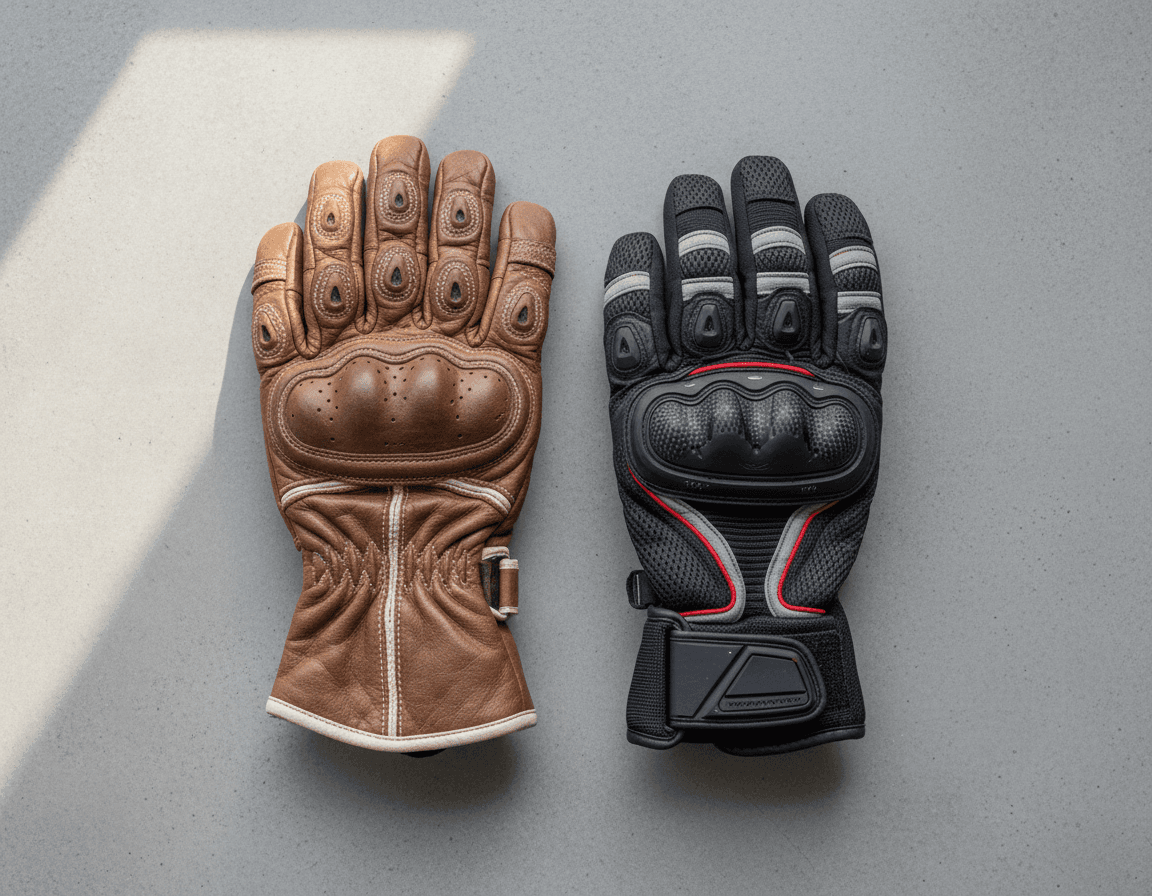
We need gloves that keep our hands agile for hours of stops and starts. Leather usually starts stiff and requires break-in to mold around levers and controls. Textile often fits comfortably from the first ride which helps on short shifts with many stops. Leather can become very snug after break-in which improves control on highways or faster segments. Textile tends to stay flexible which reduces hand fatigue during long urban shifts.
Our rule of thumb is to choose a slightly snug fit rather than a loose one because excess material cuts down on precise throttle feel.
Protection and Safety Features
Leather has an edge for raw slide protection - especially high-quality cowhide, goat, or kangaroo leather in palm and outer hand zones. Textile models use Cordura, Kevlar, or Dyneema reinforcements and can offer strong protection but often rely more on armor than material strength. We prefer gloves with reinforced palms and CE-rated armor whether leather or textile is chosen.
Weather Performance and Durability
Leather performs well against wind and can feel warmer on chilly morning shifts. Textile often shines when rain is likely because many models come with waterproof breathable membranes that keep hands dry and dry fast between orders. Leather will soak through unless treated and then takes time to dry - which hurts riders who need to continue working.
We notice leather holds up longer to abrasion when used daily for months but textile can show edge wear faster especially where repeated friction hits the palm and cuff.
Materials Compared: Leather vs Textile
Leather Motorcycle Gloves - Key Characteristics
- Strong abrasion resistance - matters if you take a slide at speed
- Needs break-in but then conforms to your hand for confident bar feel
- Can be warm in summer and needs extra care to remain water resistant
- Often costs more at the premium end but can last longer with proper maintenance
- Pairs well with hard palm sliders and stitched reinforcements
Textile Motorcycle Gloves - Key Characteristics
- More breathable; often includes waterproof liners for sudden city downpours
- Usually comfortable out of the box - reduces fatigue across long shifts
- Easier to add touchscreen fingertips, reflective panels, and insulation layers
- Shows wear faster under heavy abrasion but dries faster and cleans more easily
Practical Performance: Grip, Dexterity, and Touchscreen
Leather palms provide a natural grip and excellent bar feel for confident braking or precise throttle control. Textile gloves may include silicone print or sticky palm panels that achieve similar grip without the break-in. Textile gloves commonly include touchscreen-friendly panels on the index finger and thumb which saves time and keeps hands warm when interacting with apps.
Tip: Test touchscreen patches before a long shift - some panels fail in humidity or with sweat.
Maintenance, Longevity, and Cost of Ownership
Leather requires cleaning and regular conditioning to stay supple and water resistant. Textile gloves are usually machine or hand washable and dry faster. Leather often lasts longer under hard daily use; textile may need replacement sooner but initial cost is often lower.
Pros and Cons
Leather
- PROS: Excellent abrasion resistance, long-term durability, superior bar feel, secure fit after break-in
- CONS: Heavier, can be hotter in summer, not usually waterproof out of the box, needs care and longer break-in
Textile
- PROS: Breathable, more weather versatile, often waterproof and quick drying, touchscreen friendly, usually cheaper up front
- CONS: Lower abrasion resistance at the high end, may wear faster under daily heavy use, sometimes feels less substantial in a slide
Leather vs Textile - Direct Comparison
| Criteria | Leather Gloves | Textile Gloves |
| Durability | High with quality leather and proper care | Moderate to good, may wear faster under daily abrasion |
| Breathability | Lower, can be warm on summer runs | Higher, better for hot city stops and long walking deliveries |
| Waterproofing | Poor unless treated; slower to dry | Often built-in with membranes; dries faster |
| Touchscreen | Less common, may force glove removal | Common, index and thumb panels save time |
| Break-in time | Moderate to long, molds to hand | Minimal, comfortable out of box |
| Care | Needs cleaning and conditioning | Easier cleaning and quick drying |
| Price range | Mid to high depending on leather quality | Low to high, many budget commuter options |
Recommended Gloves for Delivery Riders
Leather Options
- Icon Anthem 2 CE - CE Level 1 certified, goat leather palm, mesh upper for airflow. Best all-round leather pick for urban shifts.
- Z1R 270 Perforated - Perforated goat leather for hot weather riding. Good fit and sustained grip control.
- Joe Rocket Eclipse - Budget leather-mix palm with hard molded knuckles. Best for riders on a tight budget who want real impact protection.
Textile Options
- Fox Racing Dirtpaw - Lightweight stretch textile, fast drying, padded knuckles. Best for riders who run hot.
- Alpinestars SP-8 V3 - Textile and leather hybrid with CE armor and waterproof option.
Best Hybrid Gloves for Delivery Riders
Hybrid gloves combine a leather palm with a textile upper to balance protection, ventilation, and weather handling. This is increasingly the go-to choice for full-time couriers who do not want to compromise.
What to look for in a hybrid:
- Leather or reinforced synthetic in the palm zone for abrasion resistance
- Mesh or perforated textile on the back of the hand for airflow
- CE-rated knuckle inserts for impact protection
- Touchscreen-compatible fingertips
Recommendations by Use Case
- Short urban shifts, many stops, frequent phone use: Choose textile for quick drying and built-in touchscreen function.
- Long shifts with highway runs or higher-speed sections: Choose leather for better slide protection and secure bar feel after break-in.
- Mixed weather and multi-hour shifts: Consider a hybrid glove that uses leather where abrasion matters and textile where breathability helps.
- Tight budget or testing gear options: Start with textile, then step up to leather for durability if needed.
Who Should Choose What
- Choose leather if you ride higher speeds, carry heavier loads, or want gloves that survive repeated abrasion.
- Choose textile if you ride in mixed weather, need easy phone access, or prefer lighter gloves for frequent stops.
- Consider a hybrid if you do a bit of everything and need both protection and weather versatility.
Buying Checklist
- Fit test with your bike controls on - check throttle and brake feel
- Look for reinforced palm zones, especially if you ride daily
- Check for touchscreen-reliable panels on index finger and thumb
- Prioritise waterproof liners if your routes often include rain
- Prefer reflective panels for night shifts and low-light rides
- Consider cuff style that works with your jacket sleeve
- Ask about replaceable liners or warranty for cost of ownership
Verdict and Final Recommendation
- Heat, heavy stop patterns, regular rain or sweat: Textile is the practical choice. Wins for breathability, waterproofing, quick drying, and touchscreen convenience.
- Long shifts, higher speed segments, or maximum abrasion protection: Leather delivers superior slide resistance, long-term durability, and secure bar feel once broken in.
- Both protection and weather versatility: Hybrid gloves place leather in impact zones and textile in areas needing airflow and weather protection.
Match the glove to the day, not the brand, and you will save time and keep your hands working longer.
Our Top Picks
Premium Delivery Backpack
Key Features
- Waterproof
- 40L capacity
- Insulated
Budget Courier Bag
Key Features
- Lightweight
- 25L capacity
- Reflective
Heavy Duty Carrier
Key Features
- Reinforced
- 60L capacity
- Multiple compartments
* Based on extensive testing and real-world delivery experience